This has been a truly trying weekend, but it was capped off with an incredibly intense divination session during which Dionysos-Óðr came through so strongly that hours later Galina had a contact high from the residual energy and could taste honey in the air. Hail Dionysos! Hail Óðr! Even now I’ve still got a buzz going and can feel his strength, joy and creative frenzy coursing through me. I needed this. Thank you for the grace of your presence, my Lord, and may you always be hailed.
Author: thehouseofvines
A Pantheon of Dionysoses

I suspect that I am unique in my treatment of the different epikleses of Dionysos not just as different pathways to the deity, but almost as different Gods in and of themselves with unique attributes, associations, rules for engagement, personalities, etc. Now obviously they’re all Dionysos – or as the Gurôb Papyrus proclaims, “εις Διόνυσος!” – but they’re also … something else, which is why all of the divergent parentages, mythologies, local cultuses, etc have never really bothered me or inspired a need to artificially reconcile them. (Things get really interesting when you encounter two or more Dionysoi simultaneously, let me tell you!) Here are the forms of Dionysos which are represented in the Bakcheion. (Note that I am alphabetizing them according to their English transliteration, not the original Greek. Also note that I am not including the God’s mortal avatars, many of whom are included on the Retinue Shrine. Though not all, which is never possible where Dionysos is concerned. Likewise, these are not all of the forms of Dionysos that I honor, just the ones represented in the Bakcheion.)
Asterios (Ἀστέριος) = “Starry”
Bakcheios (Βάκχειος) = “Frenzied”
Choiropsalas (Χοιροψάλας) = “Cunt-plucker”
Choroplekes (Χῶροπλέκες) = “The Danceweaving One”
Chthonios (Χθόνιος) = “Underground”
Dendrites (Δενδρίτης) = “He in the Trees”
Di-wo-nu-so (𐀇𐀺𐀝𐀰) = “[Cretan] Dionysos”
Eubouleos (Εὐβουλεος) = “Of Good Counsel”
Kradiaios (Κραδιαῖος) = “Sacred Heart”
Liber Pater = “Father Freedom”
Lusios (Λυσιος) = “Who Brings Release”
Mainomenos (Μαινόμενος) = “Whose Madness Spreads”
Melpomenos (Μελπόμενος) = “Who Celebrates with Song and Dance”
Oinos (Οίνος) = “Wine”
Omadios (Ὠμάδιος) = “Eater of Raw Flesh”
Phanes (Φάνης) = “Manifestation”
Phleos (Φλέως) = “Who Causes to Swell”
Thurepanoiktes (θὐρεπανοίκτης) = “Opener of the Door”
3 for Freyja
I found this image of Freyja over at r/polytheism, posted by u/Arkham_13 and entitled “Freyja, day 22 of Inktober [nsfw]”

And so I thought I’d share some older hymns for Freyja with y’all, it being her day and all (except when it belongs to Frigga.)
To the Mistress of the Silver Distaff
I call upon Freyja who tends the graves of the ancestors
and joins her deep, rich voice to theirs
in the ancient songs that stir life’s currents
and cause brightly hued flowers to unfurl,
branches to bend under the weight of swollen fruit,
animals to fatten and beget plentiful offspring
and fields of golden wheat to rise high
as the thigh of a thickly-muscled thrall;
Freyja who dances in darkest night
as bear-stars and waggon-stars
and stars of the hunt circle and shine overhead
and fey figures leap and laugh
in the leafy trees that surround her;
Freyja, whose delicate, knowing fingers tease
and twine, twist and untangle the fateful thread.
Oh gracious Goddess, hear our prayers
and bless the dead who are dear to us
that our entire line together may honor and serve
you and the other holy Immortal Ones too.
To the Charming One
O Goddess of Witches and Seers
pay heed to my prayers, and I plead
guide my studies and help me hunt power,
you who know the secret language of trees
and the properties of every plant,
runecarver, worldwalker, threadspinner,
limbloosener, shapechanger, farstriker,
corpseraiser, cursecaster and clamorstirrer;
skillful Freyja of the many wiles,
you who pour libations,
and delight in the drum,
you who walk in smoke,
and soar on falcon wing,
you who veil the mysteries,
and reveal what is hidden in the heart,
you who are expert in every sacrifice,
and mistress of the techniques of archaic ecstasy,
you who are found in the wild places,
and mindfully tending the hearth
– hail greatest Völva! Most potent
and most ruthless of the Ásynjur
who bent even Alföðr to her womanly will
in trade for weaving wisdom
and other secrets still;
further I beseech you,
keep every wicked, wrathful and ruinous thing
from me and from mine,
and Lady, I will sing your praises
the next day and every day after.
To the Lady of the House
To the home that ever honors you, O Glad-of-heart,
bestow health, wealth and overflowing good luck
that our neighbors may look upon us
and envy our pious and well-ordered existence,
especially the diligence and delight
with which we conduct your venerable domestic rites.
For you, Freyja, Keeper of the Keys,
are the model we imitate; the loving manner
in which you looked after your kin when but a tender girl,
especially your handsome brother
and dear old father Njörðr.
They wanted for nothing,
and back then you busied yourself always
with keeping your abode in Vanakvisl
gleaming clean, everything in its proper place
and the cupboards and pantry ever fully stocked.
Like a ferocious feral feline
you chase off all that does not belong,
especially the corrupt, unharmonious and malign,
and Freyja, Receiver of Many, it is you
who preside over guest-friendship and feasting,
you who banish cares
and bring refreshment with the mead-cup,
you who fill hearts
with precious love of their own,
an appreciation for what we have,
and what it took to get it,
respect for the labor of all
who keep a household running properly,
honor to the aged and responsibility
for the young and the vulnerable,
and above all the value
of distinct but complementary virtues.
Freyja, O Mistress of the Winding Way,
help us to be patient, understanding and kind
with those whose lives have been entwined with ours,
and always to cherish them and to see
the beauty and uniqueness in them.
This we pray Goddess
of daughters, sisters, wives, mothers, widows
and the good men who love and care for them.
To She Who Smiles
Hear my prayers Freyja,
as once you heard the cries of little Gersemi
when she was cutting her first teeth;
you held her close to your heart,
rocked her and kissed her treasured forehead,
but she was inconsolable;
even her precious sister Hnoss,
who never left your side back then,
shed pearlescent tears in sympathy
and you too suffered their sufferings
until that man, your husband, walked through the door
bearing a sack of toys he’d picked up in his wanderings
for your daughter’s tooth-gift.
He joked, made funny faces,
and his laughter was like the bellow of an aurochs
when his apple-cheeked Gersemi
stuck her tiny pink tongue out at him
and she forgot all her pain.
You smiled then;
all was right in Sessrúmnir.
Goddess, such potent love I feel
for all who are here with me,
and the members of my family and tribe
who live far from me
– watch over every one of them, I ask you,
bless and protect us all
and should your journey-loving daughters
ever set foot at our doorstep,
know that they will be well-received.
The Retinue Shrine Explained

My common shrine to Dionysos and his Retinue is a work in progress. For instance, I need to hang the masks on the wall above it and add representations for a number of important Gods and Spirits. But I’m picky and haven’t found the right representations for them yet. I am also patient, and willing to wait for those right representations to find their way to the Bakcheion. (Click the link and scroll down for pics.)
So far I’ve got:
- Framed picture of Dionysos Omadios (Eater of Raw Flesh)
- Hekate
- Cup with hound for Maira
- Top for Strobilos
- Comedy and Tragedy masks
- Beige urn for the Dionysian Dead
- Bowl of knucklebones for Astragaloi
- Bronze woman with tripod for Kirke
- Skull fountain for Ikarios
- Clown noisemaker for Krotala and the Harlequinade
- Freyja riding Hildisvíni
- Bust of Proserpina
- Dionysos’ Sacred Heart
- Castanets for Krotala
- Caryatid for Karya
- Headless Clown Spider for Arachne and the Harlequinade
- Apple with puzzle inside for Mela and Trochos
- Egg with skulls for Phanes and the Dead
- Dried pomegranate for Persephone
- Pomegranate seeds on tray for the blood of Dionysos
- Aniconic idol with Labyrinth and Boukranion for Di-wo-nu-so, the Cretan Dionysos
- Mask of Dionysos Eubouleus (Of Good Counsel)
- Oliver Stone’s The Doors dvd and The Doors Greatest Hits cd for Jim Morrison
- Spider husk in a jar for Arachne
- Fox face for the Bassarids
- Plaque of Ariadne
- Icon of Dionysos Choroplekes (The Danceweaving One)
- Terracotta statute of Erigone
- Bronze disc depicting the Harlequinade
- Aphrodite
- Bone bullroarer for Rhombos and the Dead
- Wood bullroarer for Rhombos
- White mask for the Titans
- Framed picture of Dionysos Mainomenos (The One Whose Madness Spreads)
- Brown face of Dionysos Dendrites (He in the Trees)
- Painting of Columbina
- Black urn for the Bacchic Martyrs
- Spider candle-holder for Arachne
- Double herm of Dionysos Phleos and Ariadne Antheia
- Red Wheel for Trochos
- Bronze disc depicting a Satyr
- Bowl with stars and lyre for Orpheus
- Taras
- Gold mask for Arlecchino
- Dryad
- Korybant
- Melampos under an arbor
- Bottle with Etruscan designs for Akoites
- Seilenos cup
- Grape candle-holder for Ampelios
- Mini-shrine for David Bowie
- Deck of David Bowie playing cards
Hunting the Wild Eastern Sow
The icon of Dionysos Choiropsalas and his female companion highlighted in my Bakcheion pic post is rather intriguing. I assumed that she was either a Nymph or Mainad since I’m not familiar with a Greek or Roman Goddess by that name, and I think I did a thorough search when I first acquired it which turned up zilch. It is an interesting name, however: Αυγέτρις, from the Ancient Greek αὐγή (augḗ, “sunlight, dawn”) likely derived from Proto-Indo-European *h₂ewg- (“to increase, to enlarge.”) Considering how often Daughters of the Sun and Dawn Goddesses show up in Starry Bull and Bear stuff and my poetry generally, that’s quite significant. Naturally this also reminds one of the Germanic word auge (“eye; to see.”)
Χοιροψάλας is, of course, one of my all-time favorite Dionysian epithets.
Do not Argives sacrifice to Aphrodite divaricatrix [lit. “with spread legs”] (Peribasos), Athenians to her as “courtesan” (Hetaira), and Syracusans to her “of the beautiful buttocks” (Kallipygos), whom the poet Nikander has somewhere called “of the beautiful rump” (Kallipluton)? I will be silent about Dionysos Choiropsalas. The Sikyonians worship Dionysos as the God who presides over the woman’s secret parts; thus they reverence the originator of licentiousness, as overseer of what is shameful. (Clement of Alexandria, Exhortation to the Greeks 2.39)
Many scholars, too, prefer to remain silent when it comes to this aspect of the God, often leaving it in untranslated Greek or blushingly rendered into Latin. It means “cunt-plucker” or more literally “pig-catcher,” from the Greek χοῖρος meaning “sow,” often slang for female genitalia.
While it’s true that Dionysos likes piggies, and not just in an Eleusinian context:
Swine are held by the Egyptians to be unclean beasts. Firstly, if an Egyptian touch a hog in passing by, he goes to the river and dips himself in it, clothed as he is; and secondly, swineherds, native born Egyptians though they be, are alone of all men forbidden to enter any Egyptian temple; nor will any give a swineherd in marriage, nor take a wife from their women; but swineherds intermarry among themselves. Nor do the Egyptians think right to sacrifice swine to any God save the Moon and Dionysos; to these they sacrifice their swine at the same time, in the same season of full moon; then they eat of the flesh. The Egyptians have an account of the reason why they sacrifice swine at this festival, yet abominate them at others; I know it, but it is not fitting that I should relate it. But this is how they sacrifice swine to the Moon: the sacrificer lays the end of the tail and the spleen and the caul together and covers them up with all the fat that he finds about the belly, then burns all with fire; as for the rest of the flesh, they eat it at the time of full Moon when they sacrifice the victim; but they will not taste it on any other day. Poor men, having but slender means, mould swine of dough, which they then bake and sacrifice. To Dionysos, on the evening of his festival, everyone offers a porker which he kills before his door and then gives to the swineherd himself who has sold it, for him to take away. The rest of the festival of Dionysos is ordered by the Egyptians much as it is by the Greeks, except for the dances; but in place of the phallos they have invented the use of puppets a cubit long moved by strings, which are carried about the villages by women, the male member moving and near as big as the rest of the body; a flute-player goes before, the women follow after, singing of Dionysos. There is a sacred legend which gives the reason for the appearance and motions of these puppets. (Herodotos, Histories 2.47-48)
From the rest of Clement’s passage I think it’s pretty clear which type of sow he hunts. (Though note that Herodotos also connects the pig-sacrifice to phallophoria.)
Also, let’s not be coy. While Dionysos has tons of epithets and cult practices associated with that nebulous concept “fertility” – this is straight up about genitals and fucking.
Now those of you who are familiar with the Starry Bear side of things are probably stroking your chins about now and going, “Hey wait, isn’t Dionysos’ other wife associated with pigs too?”
And you would be correct!
Freyja is most gently born (together with Frigg): she is wedded to the man named Ódr. Their daughter is Hnoss: she is so fair, that those things which are fair and precious are called hnossir. Ódr went away on long journeys, and Freyja weeps for him, and her tears are red gold. Freyja has many names, and this is the cause thereof: that she gave herself sundry names, when she went out among unknown peoples seeking Ódr: she is called Mardöll and Hörn, Gefn, Sýr. Freyja had the necklace Brísinga-men. She is also called Lady of the Vanir. (Gylfaginning 35)
Of course, pigs and more particularly the boar have tons of significance among the Norse, and within Vanic cults in particular representing war, valor, luck, kingship, the hunt, abundance, fertility, the domestic sphere, and yeah, raw sexuality. But note that Freyja isn’t just called Sýr — she also transforms her champion Óttar into the golden-bristled battle-swine Hildisvíni and rides him out to meet the Giant Völva Hyndla, something I’ve discussed at length in my piece comparing Freyja and Kírkē, the Daughter of Helios. Also note that while Sýr almost certainly means “sow” a number of Scandinavian and German Romantics attempted to make it mean “Syrian” connecting Freyja with Near Eastern Love and War Goddesses such as Ishtar, Astarte and Aphrodite whose lost love was slain by a boar.
Circles, etc.
A glimpse inside the Bakcheion
Since Anthesteria just wrapped, I figured I’d give y’all a guided tour of the Hudson Valley Bakcheion, formerly Galina’s library until I discovered and colonized it.
The entrance is protected by this apotropaic image:
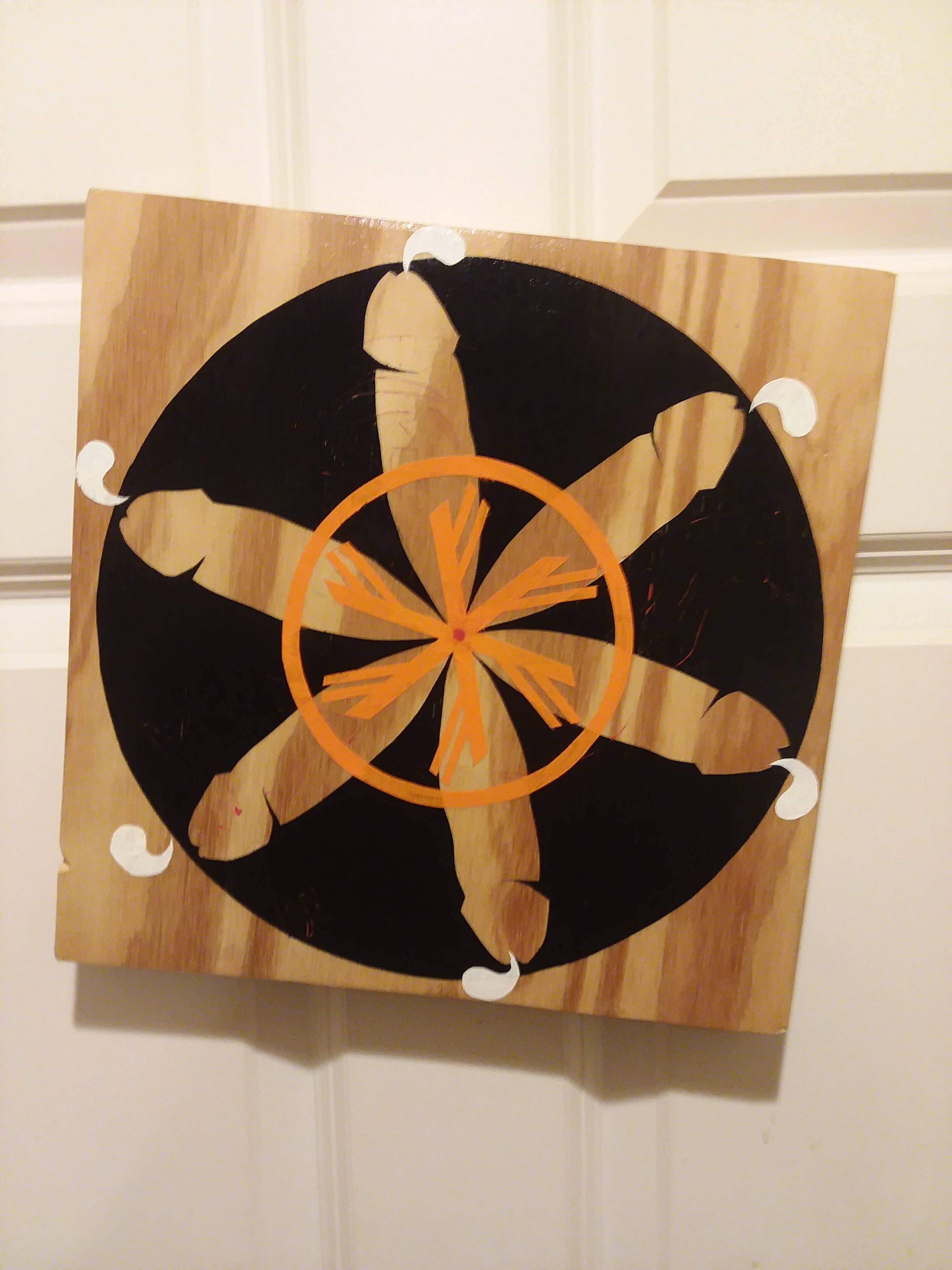
The first thing you’ll notice upon stepping through the door is a small round table upon which I’ve placed a bowl of chernips and methods of cleansing involving the other cardinal elements. (Not shown.) Above it is a representation of the World Tree, central to both Heathenry and Orphism — though interestingly not Greco-Roman religion generally. (Also not shown.)
To the right hang icons of Liber Pater and Iðunn, to ensure that this is a fertile place for devotion.

Facing out to the creek and the many backyard shrines below is my writing desk, numerous protective charms and amulets hanging from the lintel, and a shrine to the Gods and Spirits of the Green Way. (Not shown.)
Above it hangs this icon of Dionysos Choiropsalas and a Nymph.

The center of the room consists of a divination station, where all of my tools of the trade are kept. (Not shown.) Although it’s set up to read for clients I haven’t seen anyone here in the five years that the Bakcheion has been operational, preferring to deal with strangers downstairs in the living-room or better yet out by the yard shrines.
Here is βασσάρα, guardian of the temple. She bites atheists and other impious.
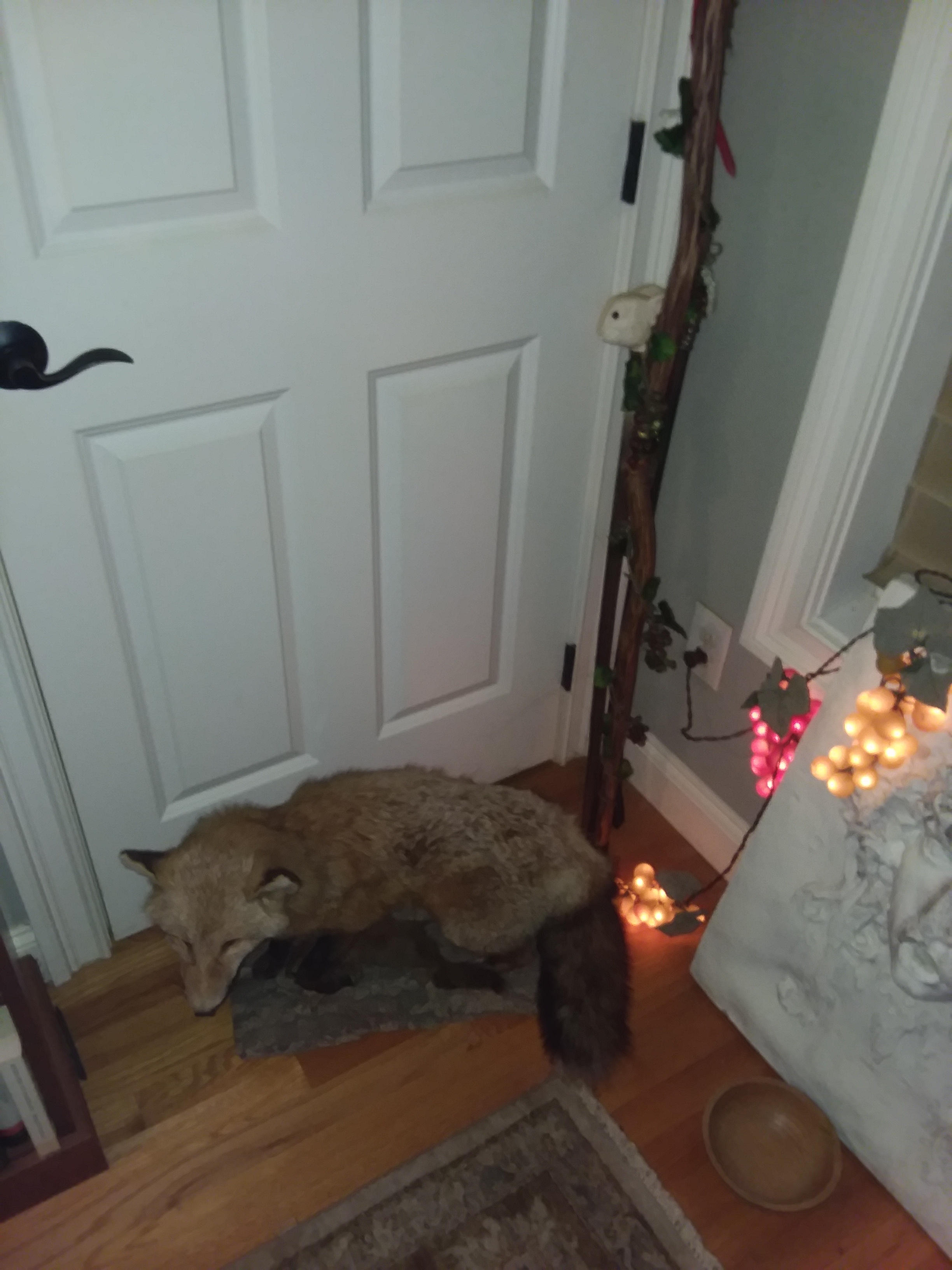
That is my thyrsos next to her, and a rabbit-topped walking stick.
Here are shrines to Dionysos Lusios and Bakcheios, respectively.

Between them is Arachne. She bites too.
Next to them is my oracular throne, which is covered by a bearskin when not in use. (Not shown.)
Here is my Starry Bull shrine, the centerpiece of which consists of the books I’ve written articulating the tradition.
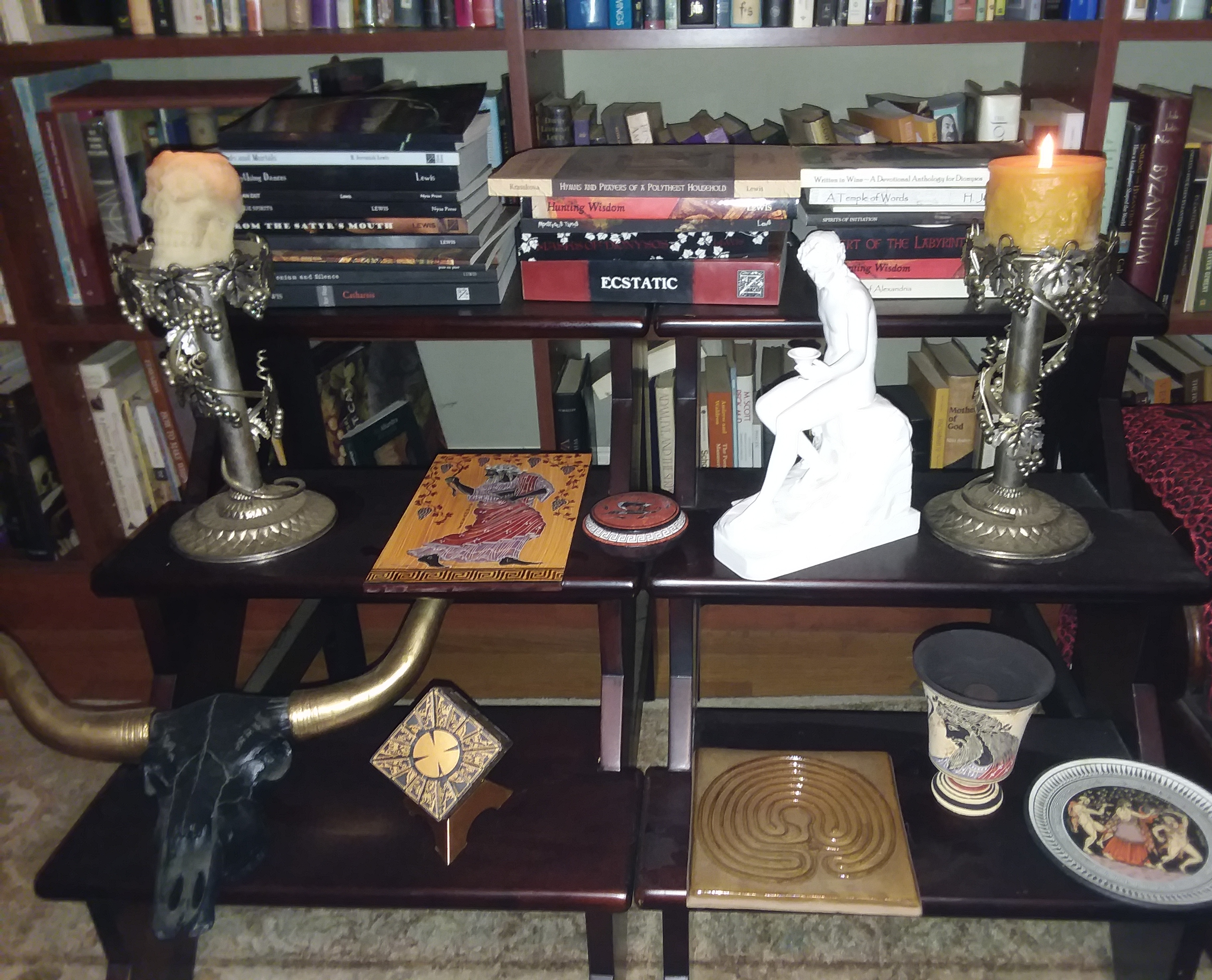
Normally there’s another shrine cloth and the books are better arranged, but there was an unfortunate incident involving beeswax which I need to remedy.
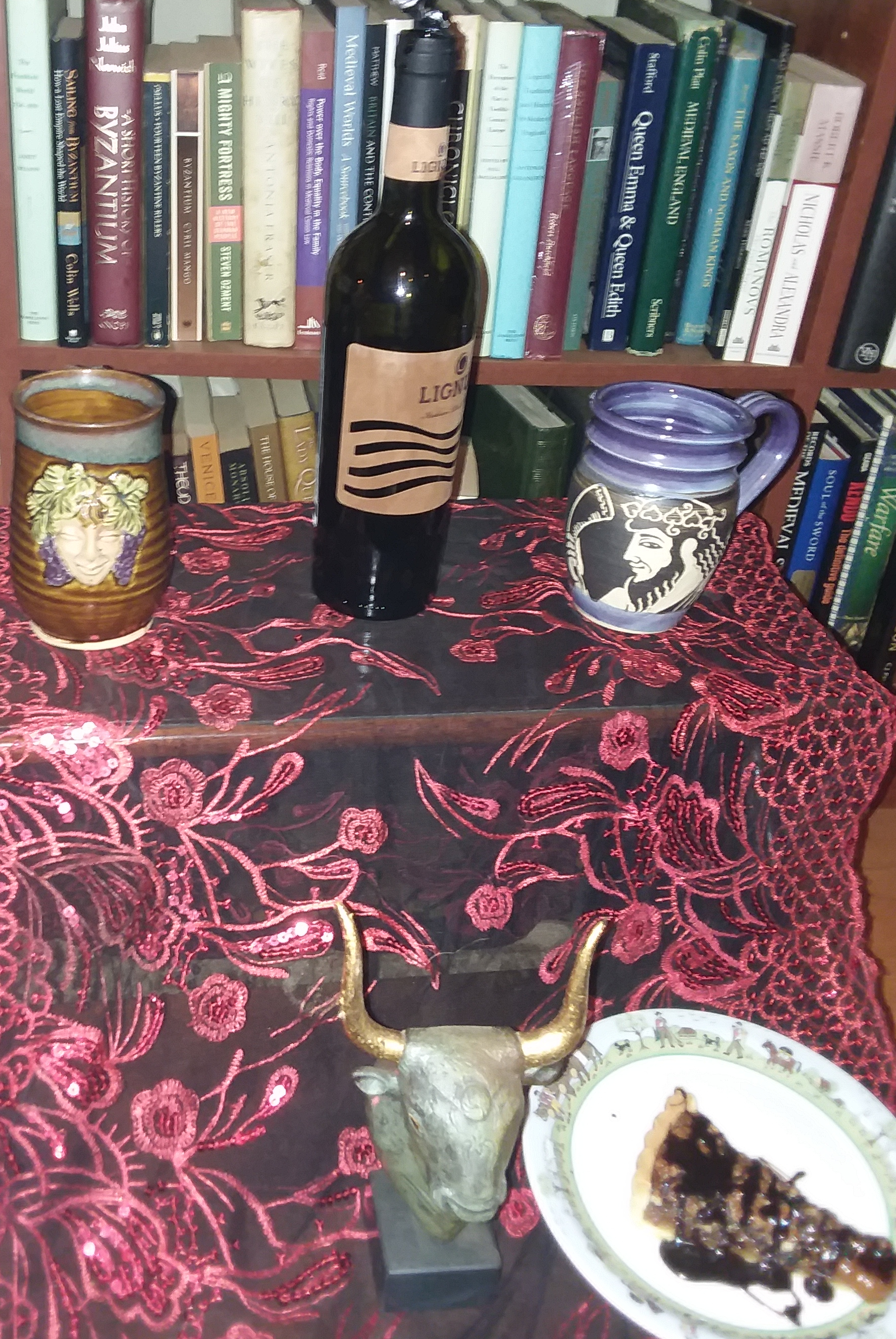
Dionysos Asterios got a slice of chocolate bourbon pie and a fine Spanish wine on Choes.
And here is the common shrine to Dionysos and his Retinue.

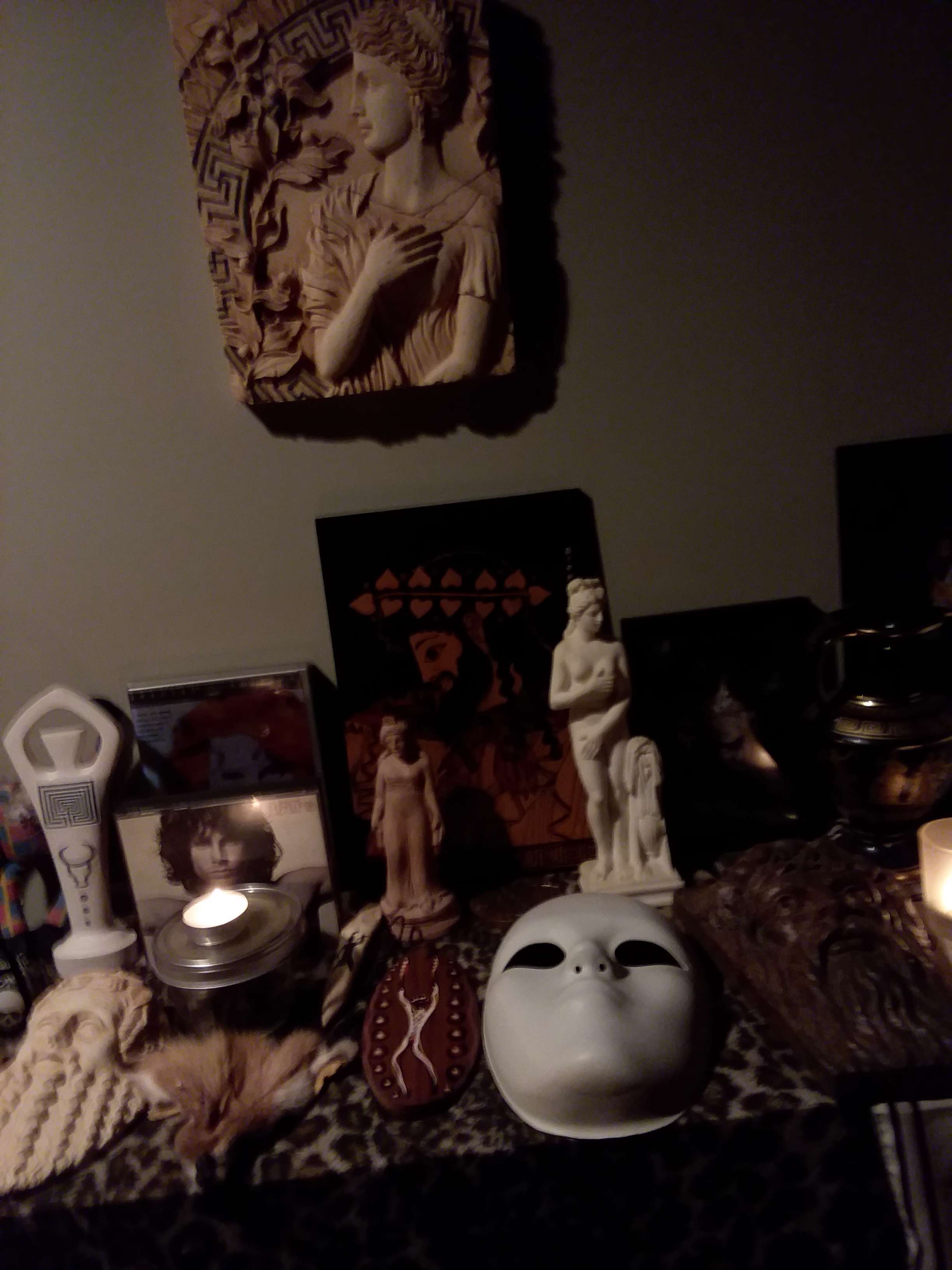
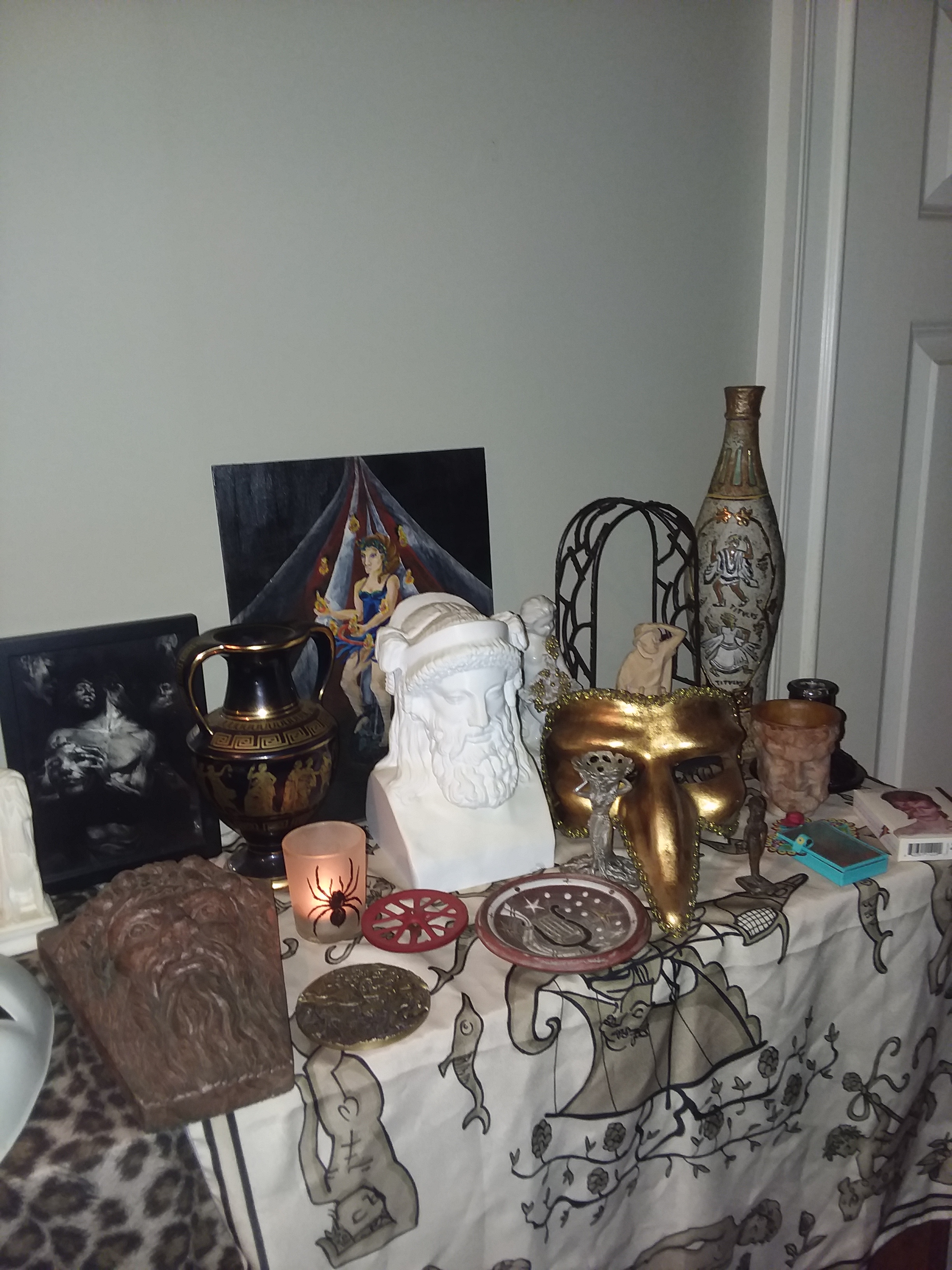
There’s more, but it’s not for public consumption.
Hope y’all had a wonderful Anthesteria!
Look who showed up for Anthesteria
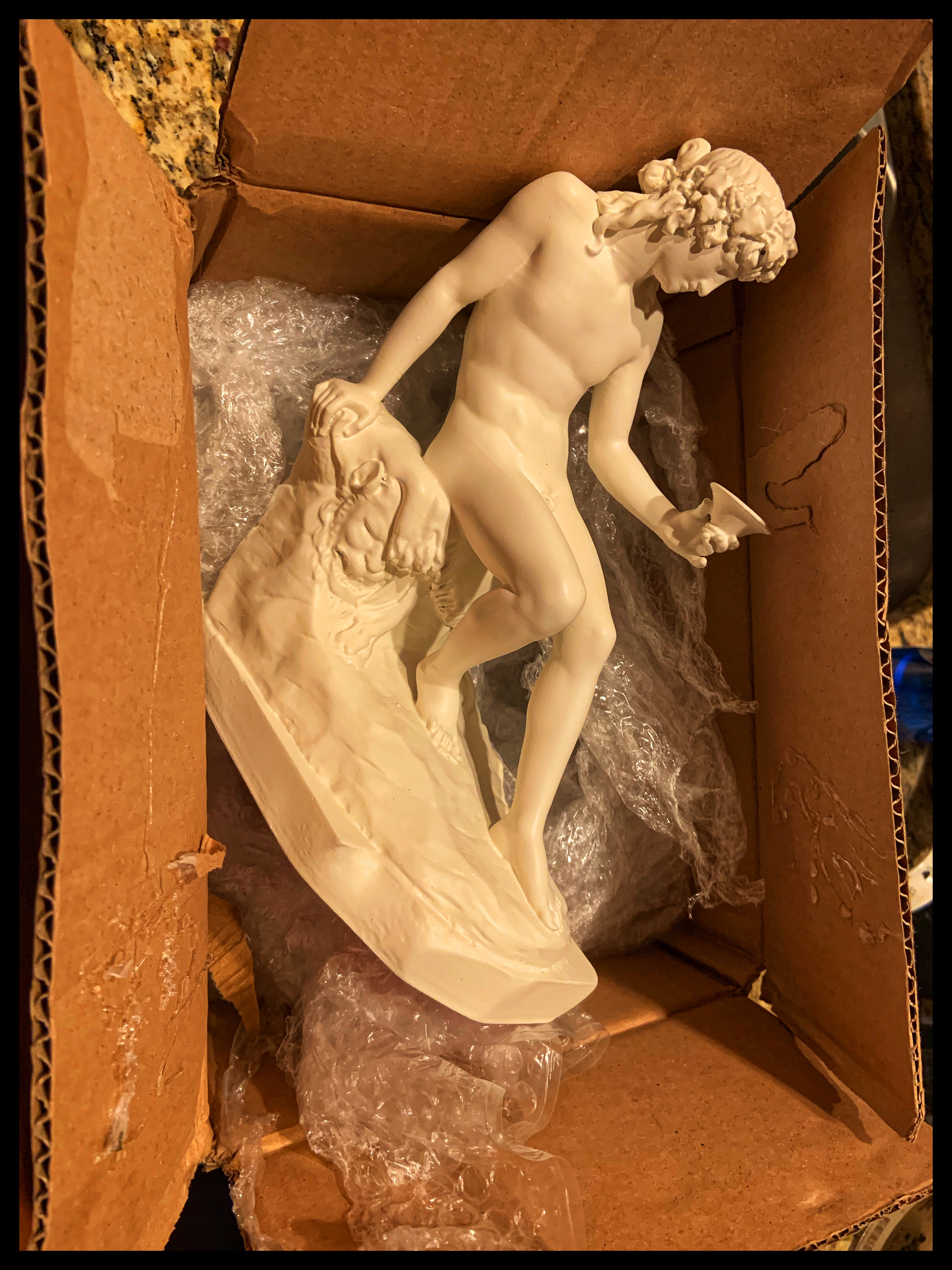
A while back Galina was doing some browsing on Etsy when this statue of Dionysos caught my eye. I am very difficult to shop for, so when I showed interest she jumped on the opportunity to gift me something special. Honestly, it’s been a while so I kind of forgot all about it until the box arrived on our doorstep just as we were going out for a rambling walk through our city on this first night of Anthesteria, which she has posted about here. Later tonight he will be formally installed in my temple space – either as part of the Starry Bull shrine or the one for the Retinue. (I don’t think he fits in with the other shrines, to Dionysos Bakcheios and Lusios respectively, or the Green Way station where I keep all of my φαρμακεία accouterments under his watchful eye. But I’ll feel things out and probably divine before beginning the installation ceremony.) Regardless I think he will make a wonderful addition to the Bakcheion and I take his arrival on Pithoigia of all days as a most favorable omen.
The Opening of the Jars
Io Εὔιος! Io io Dionysos!
Who Causes to Swell
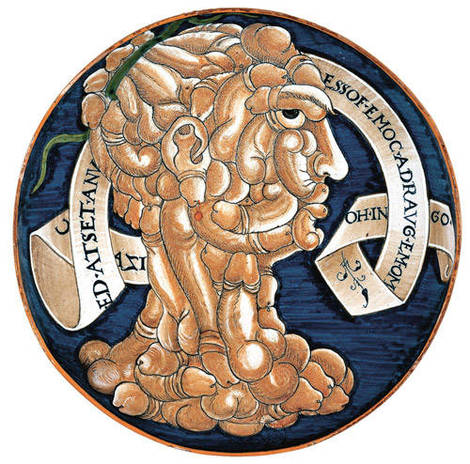
I was asked a good question, namely why do we at the Bakcheion associate the epiklesis Φλέως with Dionysos during the Anthesteria, to which I replied:
Phléos means “he who causes to swell” which can be interpreted in a number of ways. Dionysos causes the fruit to become swollen with moisture on the vine; he makes the flowers rise up from the cold, barren Earth with the dead following in their wake; just as the tides became swollen with rain and burst their bounds covering the Earth in a deluge during the days of Deukalion, the sweet sailor of the wine-dark seas in his Black Ship like the one paraded through the city on a wagon, full to bursting with the blessings of Dionysos; and the swollen goatskin, slick with oil on which men danced and grappled to commemorate the slaughter of the vine-munching beast by Ikarios, who himself was killed by people full of wine and wrathful madness; as well as the giant phalloi tumescent with life’s juices which were carried through the streets causing collective erotic mania until curative dances were instituted by the Pythia, pregnant with Apollon’s prophetic utterances, etc.
Kala Anthesteria, Year 5!
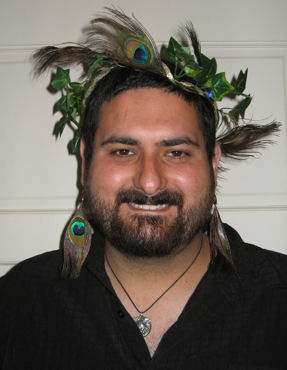
As ἱεροποιός of the Hudson Valley Bakcheion I would like to officially wish y’all a blessèd Ἀνθεστήρια, our most important festival of Dionysian epiphany, sex and death, wine and flowers — and many other mysterious things! (Which I’ve written about extensively, both here and at The Bakcheion, not to mention my poetry collection What Flowers in the Dark which explores the diverse traditions associated with the celebration of this festival in various locales and times.) I’m going to wait on the first batch of divination for the fundraiser until Monday after the Κῆρες have been driven from the doors, but will happily pass on any prayers, petitions or well wishes you might have, dear reader, for our Lord Διόνυσος Φλέως during this holy tide of his. Just shoot me an email at sannion@gmail.com between now and Χύτροι.
Good health to you and yours! Good health!
“Aquila to Sarapion the philosopher, greetings! I was overjoyed to receive your letter. Our friend Callinicus was testifying to the utmost about the way of life you follow even under such conditions – especially in your not abandoning your austerities. Yes, we may deservedly congratulate ourselves, not because we do these things, but because we are not diverted from them by ourselves. Courage! Carry through what remains like a man! Let not wealth distract you, nor beauty, nor anything else of the same kind: for there is no good in them, if virtue is not joined to them; no, without her they are vanishing and worthless. Under the protection of the Gods, I expect to see you in Antinoopolis. Send Soteris the puppy, since she now spends her time by herself in the country. Good health to you and yours! Good health!” (P. Oxy. 42.3069)

As part of my recovery from my recent surgery and hospitalization I’ve been setting aside time each day for exercise, meditation and experimentation with ecstatic trance postures. Sometimes– a lot of the time, I have to fight through extraordinary pain (more due to my damaged vertebrae than the surgery which was a pretty swift heal) in order to get through the routine and something that’s helped is dedicating each session to one of my Gods and Spirits. No motivation is greater for me than religion, so dedicating this activity to them helps me push further and put more of myself into it. When I started I thought I’d just be offering the work-outs to Hermes and Herakles but mixing it up keeps things fresh and interesting, and has allowed me to connect with members of the Starry Bull and Bear pantheons I otherwise have only occasional engagement with. I not only devote the fruit of my labor to them, but use the time to pray to, reflect on and commune with them often while listening to one of the devotional playlists I’ve created for them. It’s been very cool and I’m already noticing positive results, not just physically but mentally and emotionally too – which I am very appreciative of, as I was starting to slide into a pretty dark and unproductive despair.
To Sabazios
I call to you Sabazios, crowned with oak leaves
and surrounded by the swirling smoke of the torches
that are borne during your mystery rites, O Lord of the
Titanic battle-shriek who delights in the frenzy brought
on by large quantities of beer and dancing with serpents
late into the night, fearless one who rides a charger dark
as a stormcloud through the heavens hunting the starry boar,
enigmatic one whose will is expressed through the flight
of ravens and eagles and vultures, mighty one who protects
the World Tree against assault by wicked Giants of the cold
and dark, you friend of Hermes God of Kings, companion
of horse-loving Bendis of the Silver Bow, champion of great
Artemis of Ephesos, feasted by Zalmoxis in his underground
chamber, you who have never forgotten the boon your nurse
Hipta did when she smuggled you safely to the holy mountain
on your night of terror and trials; O Sabazios, foremost of the
Gods of Thrace and Phrygia, as you often listened to the prayers
of Orpheus, singer of inspired verse, may my words reach you
now and turn your heart so that you rain blessings of health,
protection and good luck down upon your passionate votaries.
To Heryshaf
Hail to you Heryshaf, ram-headed Lord of War,
Ruler of the Riverbank, Strong One who is in his
temple at Herakleopolis Magna, most potent of the
Gods after Min of Koptos and Osiris the King in Green,
you who rose up from the primordial waters at Memphis
and assisted Ptah at his wheel in creating animate creatures
out of lifeless clay, you who wear the Atef-crown and
are illuminated by the Solar Disc, terrifying Heryshaf
whose image is inscribed on ivory wands and amulets of
precious stone by the priests of Hermopolis for protection
against malignant demons of the barren wastes, wise
Heryshaf who taught the orphaned Horus how to hunt
with the bow, and fight with the spear, and to use the
might of his arm to defend the weak and the downtrodden,
as well as other noble manly pursuits, Heryshaf who brings
restoration and vitality to the body of Rē in his tomb
at Heliopolis, great Heryshaf who in the Greek tongue
is “Arsaphes” and called by them either Ares, Herakles
or the Conqueror Dionysos who madly shakes the thyrsos
and cries evohë or else their double or some strange admixture,
unrivaled Heryshaf, overseer of a large and satisfied harem,
who batters the invader with your spiraling horns keeping
the Two Lands safe whenever you can, courageous Heryshaf
Commander of the armies of Osiris, Foremost of the Westerners;
protect my home, and all of my family and loved ones, I plead
with you Heryshaf who hears, from all manner of mortal afflictions
and spiritual persecution, O glorious God whose heart is made glad
by the lotus-flower of Nefertem, son of Sekhmet the Destroyer.
To Týr
Hail success-bringing Týr,
superb warrior of the Æsir,
friend of Fenrir and foe of Garmr,
you who lost your fist to uphold an
unjust bargain out of dire necessity,
O God of oaths and righteous judgments,
whose sword hallows the assembly hall,
son of the Jötunn Hymir who owns a
cauldron that contains an ocean of ale,
you who married your lovely sister Zisa,
Goddess that protected the people of
Cisenberg from Roman invasion and
afterwards was honored with a famous
festival, O driver of swift horses, who
travels the highways with clever Mercury
and lion-slaying Hercules, who sails
the seas with the Isis of the Suebi,
in whose sacred grove freedmen
consecrated their fetters, on whose
altars the Getae sacrificed captives,
who is invoked when men grave
victory-Runes on the handles of their
weapons, Týr I pray, remember those
who honor you in this day of soft men
whose word means nothing, and shower
your blessings upon those who are nothing
like the common herd, who would fight in
defense of the land, their people and their
hallowed customs, and especially to preserve
one’s own family and kinfolk.
To the Valkyries
Hear my cry, O Shieldmaidens of the Fruit of the
Gallows, unyielding expressions of the Mad God’s
paradoxical indomitable will, perfectors of heroic men
and women who make violence their life’s art,
choosers of the slain who ferry them on raven’s wing
to Óðinn’s hall where they can spend their days
in endless battles and feasting through the night
until summoned by Geirvaldr’s bright-red cock
Fjalar each dawn to do it all over again. Luck-bringers,
storm-riders, experts with every type of weapon,
deadliest of all the host that will fight on the side of
Glad of War during Ragnarök and will not stop until
the all-consuming void and the forces allied with it
are no more. I call to you, O Valkyries who ride with
Viðrir, and ask that you guide my arm so that I strike
true, winning undying fame for myself and for you
until it is my time to be taken before the Alföðr,
should that be his design.
To Valravn
Hail Valravn, most feared of the Danish knights
to join the Einherjar of Óðinn, foe of Fenrir;
the ballads all agree that you began life as one
of the black birds who haunt fields of battle,
but there they stop agreeing. Some would have it
that you pecked clean the bones of a fallen Scylding
King, and others that you supped on the innocent
heart of a child you won in a wager with a desperate
maiden lost in the woods and eager to be reunited
with her betrothed. You promised to lead her to him
in exchange for their firstborn child, and she agreed,
thinking her dear man could easily fight off a raven,
even if it was of the talking variety. Your duty dispatched,
you flew away and were not seen again until they were
about to have their boy baptized. As the priest of the
White Christ held the son aloft, you swooped down
from the rafters and snatched him up, carrying the
baby back to the woods where you lived with your family,
whom you shared your bountiful feast with. Either way
once you consumed the human flesh you were transmuted
into human form. Fueled by rage at your inability to regain
your raven body, you became the most feared warrior
of your age, sending incalculable hosts below to gloomy
Helheimr until Óðinn the Raven God swooped down
and plucked you bodily from the midst of a bloody melee
to join his war-band in Valhöll without ever dying.
Hail Raven of the Slain, immortal harbinger of destruction
who awaits the day of doom when finally you shall meet
an adversary worthy of your battle-skill.
To the Kabeiroi
Hail Kabeiroi, Princes of far-off Phoenicia
and promulgators of holy mysteries that bring
protection and release through wild Korybantic
dancing in circles by torchlight to the accompaniment
of tympana and krotala, ineffable rites that redeem
the souls of the careworn both in this world and the next,
you Masters of the mystic casket in which the hope of the
initiates is stored, like the jar of Pandora, wife of the brother of
Prometheus who stole fire from the Gods for mankind in the hollow
of a fennel staff like a makeshift thyrsos with which the Mainades
make pools of oil, honey and wine flow forth from the Earth
as they revel on the forested slopes of sacred Kithairon
or Parnassos where the oracular tripod of Lord Phoibos is found.
A better treasure did you bring to the land of the war-loving
Tyrsenoi, for once you two brothers had been three, until
gripped by a fit of sudden madness you drew your sharp knives
and butchered the youngest Kabeiros, who still played with dolls
and balls and the noisy rhombos that’s swung overhead to simulate
a thunderstorm or the roar of a bull entombed deep beneath the soil
in a labyrinthine cave like some meandering river that suddenly
bursts forth. When you came back to yourselves and saw the
inexplicable deed you’d done in that state, you laid out
a purple mantle woven by your sister and placed in it
the boy’s penis and favorite toys, which then were stored
in the casket which you fled with across the sea until you came
to hospitable Italy. Though you arrived at midwinter,
the power of the phallus banished the cold and barrenness,
causing the land to erupt in numerous flowers of variegated hue
and countless trees and bushes that bore fruit out of due season,
especially the fig and pomegranate and grapes with curling clusters.
Men hailed you as deliverers from plight and belly-gnawing hunger
and you assuaged your guilt and grief by instituting for your brother
the Bacchic One ceremonies of remembrance which are a joy to take part in,
and so I hail you too, O twin sons of Ba’al Haddad the Thunderer
and Aphrodite Ourania his beautiful wife.
 The House of Vines