Most Tamino songs remind me of Dionysos, but this one really does.
Thunder is heard in the clear sky
Suidas s.v. Nemesis
Nemesis : Vengeance, justice, outrage, divine jealousy, fortune. ‘Perceiving Nemesis, the executioner of braggarts, who pursued them with justice.’ And again : ‘he did not escape the notice of Nemesis who opposes all the arrogant, but was compelled to be taught a lesson in his own misfortunes.’ ‘Nemesis was present, she who watches the things of the earth’; or in other words, she who watches unjust acts. Babrios says this in the Fables. And Aelian says : ‘palpable evidence of Nemesis the overseer, chastizing proud and disdainful ways.’ And a proverb : ‘At least Nemesis walks at your feet’; that is to say that the goddess swiftly pursues wrong-doers. ‘Unnoticed she walks at your feet, snaps your haughty neck, and always holds sway over your sustenance with her forearm.’
Pausanias, Description of Greece 1.33.4
A little way inland from Rhamnos is a sanctuary of Nemesis, the most implacable deity to men of violence. It is thought that the wrath of this goddess fell also upon the foreigners [i.e. the Persian army] who landed at Marathon.
Speaking of wives
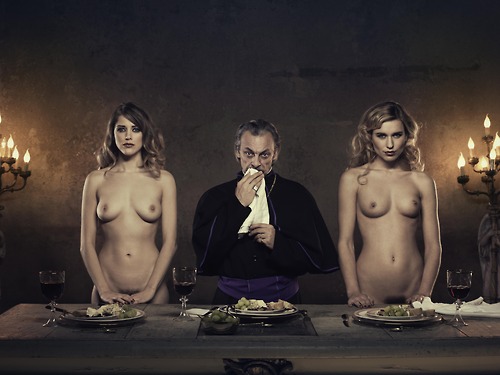
Speaking of wives, did you know that Sokrates (who himself espoused many Orphic ideas) had two of them?
[fr. 54a Wehrli = Cyril Adv. Iul. 6.186] For Porphyry has again written as follows about him: “In matters having to do with his life and with every other issue he was easily satisfied (εὔκολον) and required few material goods in his daily life. He had a very strong sex drive (τὴν τῶν ἀφροδισίων χρῆσινσφοδρότερον), but there was no injustice (ἀδικίαν) attached to it. For he had sex (χρῆσθαι) only with his wives (ταῖς γαμεταῖς) or with women who were commonly available (κοιναῖς). He came to have (σχεῖν) two women at the same time (δύογυναῖκαςἅμα): Xanthippe, who was a citizen and anyhow (πως) more commonly available (κοινοτέραν), and Myrto, the granddaughter of Aristides, son of Lysimachus. He took (λαβεῖν) Xanthippe after she got involved with him (περιπλακεῖσαν), and from her Lamprocles was born to him (ἑαυτῷ Λαμπροκλῆς ἐγένετο). But Myrto [he took] in marriage (γάμῳ), and from her [were born] Sophroniscus and Menexenus.
[fr. 54b Wehrli = Theodoret. Graec. aff. cur. 12.63–65] After having gone through these issues in detail, Aristoxenus shows that Socrates had also been enslaved to pleasures (ἡδυπαθείαις δεδουλωμένον). He says the following: “He had a very strong sex drive … [nearly identical to the above quote.] the son of Lysimachus. He took Xanthippe after she had sexual intercourse with him (προσπλακεῖσαν), and from her Lamprocles was born (ὁ Λαμπροκλῆς ἐγένετο). But Myrto [he took] having married her (γαμηθεῖσαν), and from her [were born] Sophroniscus and Menexenus. These women engaged in battle (ξυνάπτουσαι μάχην) with one another, and whenever they paused, they attacked Socrates, because he never prevented them from fighting but laughed when he saw them fighting with one another and with him. It is said (φησιν) that in his relationships Socrates was sometimes quarrelsome (φιλαπεχθήμονα), harsh (λοίδορον), and outrageous (ὑβριστικόν).
For more, check out Alessandro Stavru’s Aristoxenus on Socrates.
No wonder Sokrates was so good at philosophia, as he often gave the following advice, “By all means, marry. If you get a good wife, you will be happy. If you get a bad one, you will be a philosopher.”
An Orphic conversation
Galina and I had an interesting conversation tonight about the Orphic text I posted earlier and certain parallels between the Vitki in the Northern tradition and Orpheotelestai within the Starry Bull tradition. We also discussed the history of Orphic scholarship, the major competing theories about what ancient Orphism was like and whether there were even individuals and communities of Orphikoi or if it was primarily a literary phenomenon, and the influence that Pythagoreanism and Platonism have played in our conception of it. (This, dear readers, is why I recommend marrying someone who is close to your intellectual and spiritual equal and why I would never date a normy. I’m sure there are plenty of nice, supportive and fuckable normies out there, and it’s possible to connect with a person on other and multiple levels but at some point you actually have to, you know, talk to them and my interests are pretty limited.)
And so I figured I’d remind folks what my take on these and other controversies within the field of Orphic studies happen to be.
- What is meant by Bacchic Orphism
- On Orpheotelestai and other matters
- Why Orpheotelest?
- Various posts on female Orpheotelestai
- How does one become an Orpheotelest of the Starry Bull tradition?
- On Orphism and Pythagoreanism
- What did ancient Bacchic Orphic ritual look like?
- Pray with your dead
- Chthonic Dionysos and the Saints of the True Vine
You can also find more writings on Bacchic Orphism and the Starry Bull tradition over at The Bakcheion.
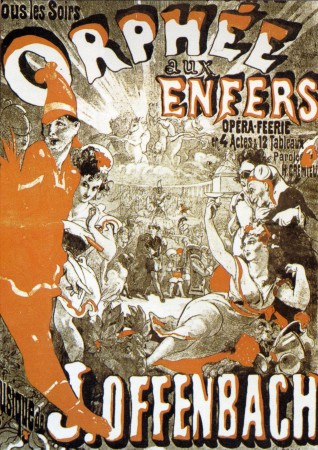
An important discovery
The majority of what we possess of Orphic literature has come down to us in fragmentary form, mostly via quotations from late Neoplatonists who were likely using a compilation made in the Hellenistic period that went by the title of the Sacred Discourses in 24 Rhapsodies or the Orphic Rhapsodies for short. (Other texts have also come to light, such as the Orphic cosmological poem discussed in the Derveni papyrus, the ritual script known as the Gurob papyri, the eschatological texts and passwords written on gold lamellae which were buried with the dead, as well as the collection of Orphic Hymns that were likely composed by a community in 2nd century Asia Minor.)
A year or so ago there was a great deal of excitement as an Orphic text surfaced as part of a palimpsest found in a monastery in Sinai. The text was written in a book that had been scraped clean and reused to record assorted Vita or Lives of the Saints. Using infrared and other technologies scholars were able to read the material beneath the writings of the monks, and while a notice of this discovery circulated with a brief overview of the contents there was no translation available.
Until now!
While examining some articles by Giulia Rossetto of the Austrian Academy of Sciences I came across her initial translation of the Orphic hexameters from the Library of Saint Catherine’s monastery, which may be part of the Orphic Rhapsodies or a completely independent work. I am providing both the original Greek and her translation here. (The Greek was a bitch to get right, since the PDF wouldn’t permit me to simply copy&paste, so you better enjoy this!)
I cannot begin to express how fucking cool this is.
f. 2r + frg. 7r + frg. 8v
] Ψ̅ [
] αὐτὰρ ἐπὴν’ ἄχνη .. [ ±3 ] .εν. [
. . ἱ]μερόccαν [
] εὐνήν [±2] ±4 ν [ ±14 ] κεν ἄμφωι [
] τέκνω ±19 [ ±8 ] . . . . c]
]… [
] Ἑρμείην χ . . ν ±3 μ]
] θνητοί ἄνθ[ρωποι τὰδε γὰρ π[ ±8 ] ενον [
] εζ ἀρχῆc παρή[ ±5 ] .αναπ. [ ±8 ] . τοc[
] Nυκτὸc ταμ[ ±6 ] αραοιπ[ ±5 ] θεcπεcίη Νύξ [
] Ζηνὶ κελαινεφ[έϊ ±4 ] .νιπ [ ±7 ] εccηι [
] ἔχρηc’ Ἰδαίοιcιν [ ±5 ] ±3 δ[ ±7 ] ροιc [
] ±5 αρχεγο .[ ±15 ] .cεκουθεν [
] ὧc φάτο Φερcεφονηι καὶ ἀπὸ θρόνου ὦρτο φαεινοῦ [
] cευατ’ οτιο[ ±11 κρυφίοιο μελ[ά]θρου [
] ἐκλήϊcεν Διονυcον ἐρίβρομον Εἰραφιώτην [
] ἴκελον [. .]γή . ρ μηνοc περιτελλοέμοιο [
] εἵμαcί τε cτ[±3]οντα kαι ἱμερτοῖc cτεφάνοἱcιν [
] παιδ’ εν χεροιν ±8 εων περικαλλὲc αγαλμα [
] αιν . [.] καρποφόρον Χαρίτων ἄπο κάλλοc ἔχουcα [
] και ῥ ’ επιγονα ±3 ή . .φ. αc⸌μ⸍μήδουcαφρο [
] καί μιν φωνήc[αc’ [
] ἀφρογενὲc Κυθρεια [
] οὗτοc τ. ρπ . . . . [
] τὸν δὲ φερο . . . .[
] ὧc φάτο Φερcεφονη
] ωc . δ . π . . . . [
] καί ραμ . . . . [
] ὦ Ζεῦ . . . .[
. . . . . . . . . . . .
‘And when the foam … lovely bed … both … son … Hermes … and the mortal human beings. These things indeed … from the beginning … of the [starry] Nyx … the divine Nyx … to Zeus,[son of Cronos], god of the dark clouds … proclaimed in the [Mount] Ida … [original] … So he/she spoke to Persephone and stood up from the shining throne … (he/she) hastened … of the hidden/secret house … (he/she) closed/confined Dionysus, loud-shouting, Eiraphiotes like…
οf (something) coming around … with garments … and with lovely crowns … the child in the hands … beautiful gift/statue/image … fruit-bearing … gifted with beauty by the Graces… [Aphrodite] … Αnd she/he addressed her …: foam-born Cythereia … this … So spoke Persephone … and … Zeus …’
f. 2v + frg. 7v + frg. 8r
] ὅν ποτ’ ἐκιccο[ό]ρουν υc[ ±3 ]νί δαcκίωι ἄντρωι [
] ἔτρεφον ἀμβ[ροcί]οιc δι’ επεκόcμεον ω[ ±3 ] καλοῖc [
] νήπ[ιον ±7 ]. θεν ἀτὰρ μέγαν [ ±6 ] Ὄλυμπον [
] εξι [ ±18 ] κατά πετρινον ἄντρο(ν) [
] καλ. [ ±7 ] πωννυ[ ±3 ]cεδ[. .]c ±3 ποκομοιο [
] ωcτετιcευ[ ±6 ] φοc ὄρνιc αγ[ ±9 ] ενoc λίπεc εὐνή(ν) [
] πάμπαν αἱcιοc ἀπ[ ±3 ]τοc εμο. [ ±9 ] . τεονιαc ̣[
] cῶι δὲ πόθωι χ[ ±6 ] ωcαν[ ±10 ]ν αἰθέρα θ’ ἁγνόν [
] πόντον τ’ ἠδ[ ±3 ] εροντοc[ ±5 χθονὶ χεῦμα κελαινό(ν) [
] θυὸν ἀκηχέμ[ενα ±2]. ρ.π.[ ±7 ] ἀλγινόεντοc [
] ετλην δ’ ειc Ἀΐδαο δόμουc cκοτ[ίο]υc καταβῆναι [
] Ἠελίου προλιποῦcα δόμουc ⸌φάοc⸍ λαμπράν τε Cελήνην [
] οὐράνιόν τε πόλον διὰ cὸν πόθον αμροτε κοῦρε [
] ὧc φάτο Κύπριc ἄναccα φίλον δ’ α[±2] πολλακι παιδα [
] αcπίcι ὡc ἀγάπαζε χέραc περὶ γυῖα [β]αλοῦcα[
] καὶ τρέφεν ἠδ’ ἀτίταλλεν ἐν ἀγκα[λί]δεccιν ἔχουcα [
] μίμ[ν]ε δ’ ἄρ εἰν Ἀΐδαο δόμοιc ὑπὸ κεύθεcι γαίηc [
]ρωι τριγόνωι πολυωνυμωι Ἠρικεπαίωι [
]φ[ ±9 ]εζ[ ±4 ]ηc[ ±3 ]υνικηται [
] Φεφονείηιc [
] ⸌cι⸍… λεα ⸌μη⸍τρόc [
] ροε . διὰ χῶρον [
].[ ±4 ] ον ἄνθοc [
] . . χι λάχνηι [
]c υλοιν [
] χ Διονύcωι [
. . . . . . . . . . . .
‘So, they crowned the child with ivy … in a shady cave, they fed him with divine things … they adorned him with beautiful … great Olympus … under the stony cave … wholly good omen …you left the wedding bed … for your desire … and the pure air and the sea … the dark stream… in anguish of heart … of something painful … I suffered for the descent in the dark houses of Hades, after leaving the houses/the light of Helios and the shining Selene and the celestial vault for your desire, immortal young man. So she spoke, Cypris queen … with the shields as she hugged/embraced the dear son many times flinging her arms around him … and nursed and cared for him, holding (him) in her arms; remained in the houses of Hades, under the deep earth … to the three times born, with many names, Herikepaios … of Persephone … of the mother … in the land … the flower … wool/hair … to Dionysus’
f. 6r
. . . . . . . . . . . .
[ ±5 ] νουc κρύβδην εχον ε [
] τον δε καλύψαντεc ννμφηϊον [±2]. νονα [
] κύκλωι δ’ ἀμφὶ θρόνον π. .[ ±5 ] παντεc [
] ἧχι περ οἶνοc ἔφηc τότε τιμ[ ±3 ] . . . . γοc αἴcηc [
] ἄλλοτε δη ±3 πάνα διαμπερέωc ἐτέλεccαν [
] ἄψ δ’ αποπα[.] θελοντοc c̣ων κεφλη . τεκ ±2 υ ±2 μα [
] καὶ τότε δὴ τομονει[ ±3 ] . ον πέλεκυν τολυπεύω(ν) [
] Ἄκμων παιδ[οc] δ’ ἔναντα κατεcτάθη ειλε δ.. αμεοc [
] ἄθ[ ±3 ]ου.ω ειδ[.]ν ἀνώϊcτ’ εργατε δ οὖν τ. ±3 [
] αὐτὰρ ἔπειτ’ [±2] κρατα θενοεμεcον ἦλθε δενοινου [
] πάντα φόβον προϊειc ε[.]πωc προἀ[ ±4 ] Διὸc ἕδρη[ν [
] Κύρβαc τ’ ἀντήμυνεν εγείνετο δ’ ἔργ’ ὑπεροπ [
] πρώτουc δ’ εἰcῆιξ’ ἅρπην μετὰ χερcὶ τιτ [
] φάc ταναδ ἄλλοθεν ἄλλον χεπερὶ [
] Ἠὼc δ’ οὐδ’ ώc άπέλειπε Διόc [
] κ. cεο[.]δ’ εὐπλέκτοιο . [
] γυμνοῦντεc αcφά [
] καὶ τότε δὴ πρωτε [
] ενδε [
. . . . . . . . . . . .‘…
secretly having … having covered the bridechamber … in a circle around the throne …where the wine/Dionysus you said at one time … by ordinance … at another time they finished/completed everything through and through … back from … and even then … Αkmon accomplishing/achieving … axe … stood quiet against the child, you protected … unexpected… and then … (he/she) went … (you) abandoned all fear … seat of Zeus … and the Corybant resisted … (he/she) darted in the first … in the hands the sickle … one from one place, another from another … nor Eos left … of Zeus … of the well-plaited … (they) being exposed/stripped… and even then …’
Sun Wheel
Festus Avienus, Descr. orb. terr. 761–763, GGM ii.184
hic cum plaustra poli tangit Phoebeius ignis, nocte sub illustri rota solis fomite flagrat continuo, clarumque diem nox aemula ducit
There [at Thule], when Phoebus’ fire touches Ursa Major, under shining night the Sun’s wheel burns with continuous flames, and the night, eager to equal it, leads the bright day.
Rabbit holes
My research habits are rather peculiar, I admit. Take the other night’s session which began with Varga Timea’s Telesphorus: A healing child god in Roman Dacia, which led to the Genii Cucullati and then to Galatia and a general overview of the history of Anatolia. Then I read Outfoxing the Wolf-walker: Lycambes as performative rival to Archilochus by Tom Hawkins, Renaud Gagné’s A Wolf at the Table: Sympotic Perjury in Archilochus, and Ralph Häussler’s Wolf Deities & Wolf Myths. And finally I capped the evening’s studies off with The Thraco-Dacian Origin of the Paparuda/Dodola Rain-Making Ritual by Mihai Dragnea. All while listening to my playlist “Simple Strangers” (it’s a long playlist.)
Beneath their influence devotees of Bacchus and Venus are born into the kindly light
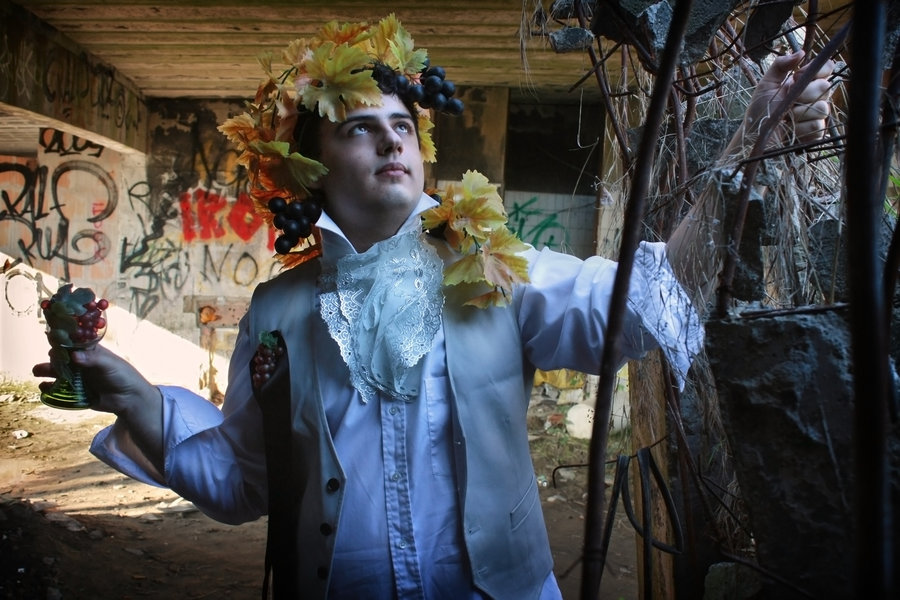
“The Pleiades, sisters who vie with each other’s radiance. Beneath their influence devotees of Bacchus (god of wine and ecstasy) and Venus (goddess of love) are born into the kindly light, and people whose insouciance runs free at feasts and banquets and who strive to provoke sweet mirth with biting wit. They will always take pains over personal adornment and an elegant appearance they will set their locks in waves of curls or confine their tresses with bands, building them into a thick topknot, and they will transform the appearance of the head by adding hair to it; they will smooth their hairy limbs with the porous pumice, loathing their manhood and craving for sleekness of arm. They adopt feminine dress, footwear donned not for wear but for show, and an affected effeminate gait. They are ashamed of their sex; in their hearts dwells a senseless passion for display, and they boast of their malady, which they call a virtue. To give their love is never enough, they will also want their love to be seen.” (Manilius, Astronomica Book 5, p.310-313)
A young lady’s prayer
Via Jane Austen’s World.
A young lady’s prayer for a husband, from The New Lady’s Magazine, October 1791:
“From a prophane (profane) libertine, from one affectedly pious, from a profuse almoner, from an uncharitable wretch, from a wavering religioso and injudicious zealot—deliver me.
“From one of starched gravity, or ridiculous levity, from an ambitious statesman, from a restless projector, from one that loves any thing besides me, but what is very just and honourable—deliver me!
“From an extasy’d poet, a modern wit, a base coward, and a rash fool—deliver me!
“From a Venus darling, from a Bacchus proselyte, . . . from all other masculine affectations, not yet recounted—deliver me!
Bitch, please. You should be so lucky.
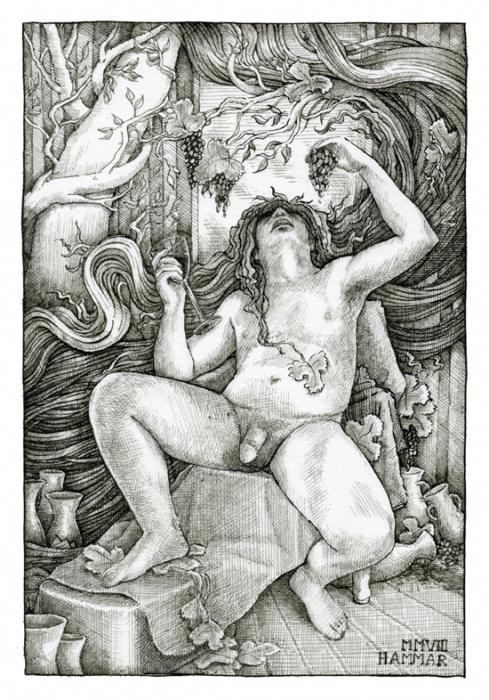
We are fabulous.
Don’t miss out!

Since we usually do our weekly house divination on Sunday or Monday I’m extending the test run of the mysteries through the weekend. If you’d like a reading shoot me an email at sannion@gmail.com and I’ll tell you how to PayPal me $13.25 to reserve your slot. Come on, you know you want to! All the cool kids are doing it.
Success
The initial test run with The Mysteries was smooth and clear – now I just need to hear back from the clients to see how accurate the results I got were, and I’ll be adding the system to my repertoire. I may even start offering monthly readings with them.
Last Day of August
Feeling this song today by 3rd Secret, an alt-rock supergroup consisting of members from Soundgarden, Nirvana, and Pearl Jam. I mean, they’re no Temple of the Dog, but it’s still a pretty catchy tune. You can listen to the entire album here.
Inspiring words
A reminder from Dver: there’s always more to give.
A rare opportunity to perform human sacrifice

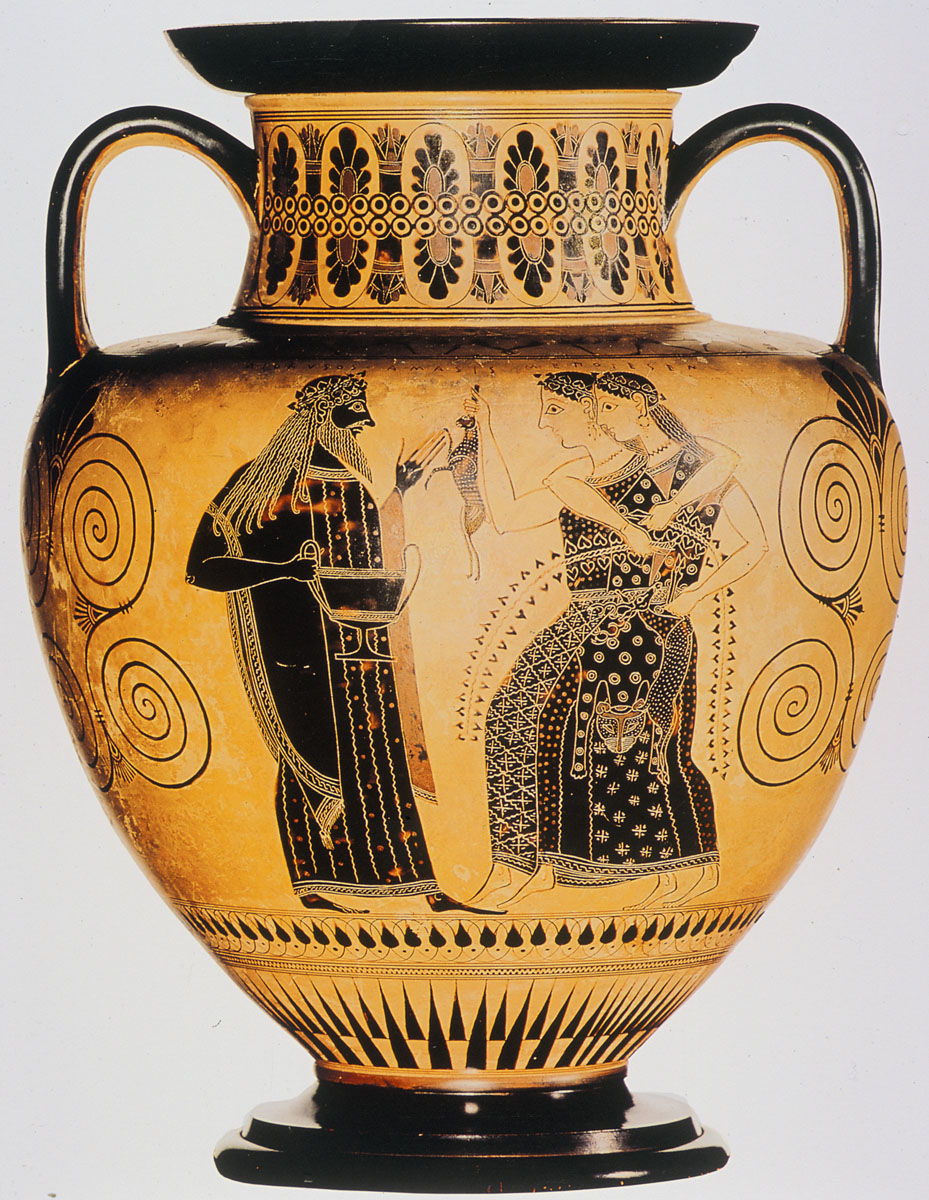
During the Persian War the great Athenian hero Themistokles made a special offering to his God Dionysos:
Themistokles was sacrificing alongside the admiral’s trireme and three prisoners of war were brought to him, of visage most beautiful to behold, conspicuously adorned with raiment and with gold. They were said to be the sons of Sandauké, the king’s sister, and Artaÿktos. When Euphrantides the seer caught sight of them, since at one and the same moment a great and glaring flame shot up from the sacrificial victims and a sneeze gave forth its good omen on the right, he clasped Themistokles by the hand and bade him consecrate the youths, and sacrifice them all to Dionysos Omestes (Carnivorous), with prayers of supplication; for on this wise would the Hellenes have a saving victory. Themistokles was terrified, feeling that the word of the seer was monstrous and shocking; but the multitude, who, as is wont to be the case in great struggles and severe crises, looked for safety rather from unreasonable than from reasonable measures, invoked the God with one voice, dragged the prisoners to the altar, and compelled the fulfilment of the sacrifice, as the seer commanded. At any rate, this is what Phanias the Lesbian says, and he was a philosopher, and well acquainted with historical literature. (Plutarch, Life of Themistokles 13.2-3)
It’s been a while since pious polytheists could emulate him in this. However a reader brought to my attention an unique opportunity that’s presented itself thanks to the genocidal conflict Putin and his cronies are waging in the Ukraine – signmyrocket.com. This is a site run by Ukrainians who are willing to write whatever message you want on munitions that’ll be launched at the marauding Russian forces – such as, “I consecrate these deaths to Dionysos and his Retinue” for instance. You can choose from a range of weapons, including everything from bullets and grenades on up to Howitzers and more. (And if you just want to support the Ukrainian forces who are nobly defending their homeland there are a bunch of non-lethal options too – but either way the money raised will be going to help wounded veterans.)
According to my reader you need to carefully follow instructions or this could get flagged. First make your selection on the site and click “way to pay” and “fire.” Then, and this is very important, take down your donation number and email support@signmyrocket.com inquiring how to pay via PayPal, and you’ll get a response in a day or so providing instructions. Follow them to the letter. Send your PayPal donation to the address provided marked as “friends and family” and when it’s ready you’ll get a picture and possibly a video of your sacrifice in action.
Not only will this act help feed our hungry Gods (and the deaths can be consecrated to divinities other than Dionysos should you be so inclined) but you’ll be helping the Ukrainians take out some of the baby-raping and grandma-murdering Russian swine, which benefits everybody.
Reminder about The Mysteries
Just a friendly reminder that I’ll be doing the initial test run with The Mysteries tomorrow (September 1st) so if you’d like to reserve your slot you’d better act fast.

Sometimes it is unclear where the myth ends and the allegory begins
Sometimes it is unclear where the myth ends and the allegory begins, and this is because to the Neoplatonists there is no distinction: it is not that Zeus represents the Demiurge, but that Zeus is the Demiurge. In this way, the Neoplatonic worldview is quite different from that of modern scholars who tend to separate myth from interpretation, ritual from philosophy; but the fact that the ancients do not separate these is the very key to understanding the Neoplatonic universe. (Dwayne Meisner, Zeus the Head Zeus the Middle- Studies in the Orphic Theogonies)

Remember!
In a comment left on my previous post, Galina remarked:
I also think it’s great that you’re talking about female orpheotelestai. I suspect people forget that was a thing.
Sadly, I encounter that all the time. But thankfully women are highly regarded within the Starry Bull tradition – and not just because we’re Bacchic Orphics. You find this same attitude in Egypt and Magna Graecia, two cultures that have strongly influenced us, especially in the shaping of our values.
but he cheerfully allowed an old woman to put a charm round his neck

I just came across an interesting anecdote by Diogenes Laertius:
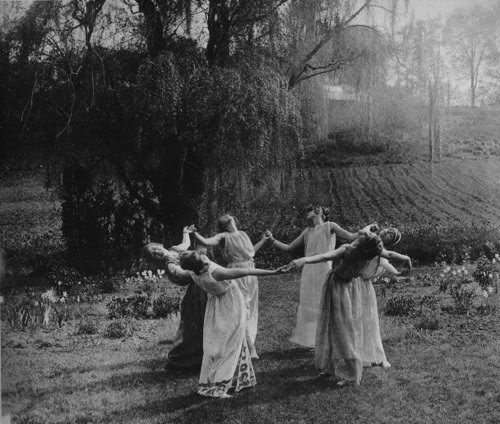
We hear that Bion, to whom the Scythian land of Borysthenes gave birth, denied that the Gods really exist. Had he persisted in holding this opinion, it would have been right to say, “He thinks as he pleases: wrongly, to be sure, but still he does think so.” But in fact, when he fell ill of a lingering disease and feared death, he who denied the existence of the Gods, and would not even look at a temple, who often mocked at mortals for sacrificing to deities, not only over hearth and high altars and table, with sweet savour and fat and incense did he gladden the nostrils of the Gods; nor was he content to say “I have sinned, forgive the past,” but he cheerfully allowed an old woman to put a charm round his neck, and in full faith bound his arms with leather and placed the rhamnus and the laurel-branch over the door, being ready to submit to anything sooner than die. Fool for wishing that the divine favour might be purchased at a certain price, as if the Gods existed just when Bion chose to recognize them! It was then with vain wisdom that, when the driveller was all ashes, he stretched out his hand and said “Hail, Pluto, hail!” (Lives of the Eminent Philosophers 4.55-57)
That anonymous old woman sure sounds an awful lot like an Orpheotelest, though I don’t recall seeing her mentioned in discussions of Orphism. It wouldn’t be surprising, however, since a lot of women were Orpheotelestai or otherwise participated in Orphic rites and beliefs.
Rhamnus, by the way, is buckthorn which was chewed and smeared on the lintel to banish the keres or wandering dead during Anthesteria.
Image by Jim Lyngvild.
 The House of Vines