Star Flower

This post was already getting a little long (plus I wanted to begin it with fuck and end it with fuckers, so I had to stop where I did to preserve the ring composition) but it’s not just the Greeks, Mysians and Skythians who had a strong relationship with hemp. 

Indeed the word itself comes from Old English hænep, from Proto-Germanic *hanapiz (also the source of Old Saxon hanap, Old Norse hampr, Old High German hanaf, German Hanf, etc.) which likely derives from the same Skythian loan that the Greek κάνναβις comes from. According to Wikipedia, “the etymology of this word follows Grimm’s Law by which Proto-Indo-European initial *k- becomes *h- in Germanic. The shift of *k→h indicates it entered into the Germanic parent language at a time depth no later than the separation of Common Germanic from Proto-Indo-European,” about 500 BCE or roughly contemporaneous with the ethnographic studies carried out by Herodotos.

But it was around long before then. According to Jane Renfrew’s Paleoethnobotany: The Prehistoric Food Plants of the Near East and Europe cultivated hemp seeds (Cannabis sativa) were found at the stratum of the “hand ceramics culture” in a dig at Eisenberg near Thuringia dating back nearly 7,500 years ago, representing some of the earliest evidence of agriculture in the region.

While hemp remained a staple crop in Germanic, Scandinavian, Baltic and Slavic lands through Christianization and beyond it was primarily used for making ropes, sails, textiles and linen-like clothing. The plant was so versatile and important to the country’s economy that King Christian V even included the duty of growing hemp in his Danish Law of 1683, which states:

Every farmer who holds a full farm, and does not sow a bushel of hemp seed should by his lord be charged and punished as an obstinate and reluctant servant, unless he proves that he has no suitable soil therefore.

It was also cultivated for its plentiful medicinal properties. Sula Benet notes in Early Diffusion and Folk Uses of Hemp:

In Russia and Eastern Europe hemp was widely used in folk medicine, and references can also be found to its use in Western Europe. In Germany for example, sprigs of hemp were placed over the stomach and ankles to prevent convulsions and difficult childbirth, and in Switzerland hemp was also used to treat convulsions. In Poland, Russia and Lithuania, hemp was used to alleviate toothache by inhaling the vapor from hemp seeds thrown on hot stones (Biegeleisen 1929). Szyman of Lowic (16th century) gives the following prescription: “For worms in the teeth, boil hemp seeds in a new pot and add heated stones. When this vapor is inhaled the worms will fall out.” This method is varied somewhat in Ukranian folk medicine, the fumes of cooked hemp porridge are believed to intoxicate the worms and cause them to fall out. In Czechoslovakia and Moravia, as in Poland, hemp was considered an effective treatment for fevers. In Poland, a mixture of hemp flowers, wax and olive oil was used to dress wounds. Oil from crushed hemp seeds is used as a treatment for jaundice and rheumatism in Russia. In Serbia, hemp is considered an aphrodisiac (Tschirch 1911). Hemp is also thought to increase a man’s strength. In the Ukraine there is a legend of a dragon who lived in Kiev, oppressing the people and demanding tribute. The dragon was killed and the city liberated by a man wearing a hemp shirt.

According to Jan Bojer Vindheim it has been utilized against snakebite, “heatedness of the heart” and for eye problems up to the present. (The History of Hemp in Norway)

Even with Christianization its inherent sacredness has not been forgotten, as Vindheim goes on to relate:

In the Norwegian valley of Gausdal, people in the nineteenth century would lift their hats in greeting as they approached a field of hemp. The plant was known to house a vette, a nature spirit best treated with respect. In Norwegian folklore hemp cloth symbolized the beginning and end, and it was the first as well as the last in which people were swathed in in this life. These traditions may be relics from a time when hemp had a religious function in the pre-Christian religion.

Which we see, for instance, in its possession by the Oseberg shaman (or queen or shaman-queen) as M. Michael Brady writes in Viking ship cannabis conundrum:

In 2007, some cannabis seeds were found in a small leather purse among the grave goods of two women buried for more than 11 centuries on a Viking ship. The ship was discovered in 1903 in a mound at the Oseberg Farm near Tønsberg on the west bank of the Oslofjord. The find raised new questions in the research on Viking uses of psychoactive agents as well as on the significance of the burial of the women.

[…]

The find of the cannabis seeds deepened the mystery of their burial. Two explanations of the new mystery suggested themselves, practical and ritual. The practical explanation was that the Vikings needed cordage for their ships. The best cordage was made from hemp. In 2012, archaeologists found that hemp had been grown from as early as 650 to 800 at Stosteli, an Iron Age farmstead in Vest-Agder County. This implied that the cannabis seeds found on the Oseberg burial ship were intended to enable the women to cultivate it upon their arrival in the next world.

But none of the ropes or textiles found on board the Oseberg ship were made from hemp. Likewise, the two women had clothing made from flax, nettle, silk, and wool, but not from hemp. This suggests that the cannabis seeds were intended for ritual use.

One or both of the women may have been a Völva (“priestess” or “seeress”), a high position in Viking society, as implied by the ship being moored to a large stone. Such ritual mooring may well have been reassuring to a Völva, who on her voyage after death wished to be tethered to this world.

Völvas are presumed to have employed psychoactive substances, as in burning cannabis seeds to induce a trance. Moreover, a metal rattle of the sort that a Völva could have used in rituals was found on the ship, fixed to a post topped by a carved animal head and covered with sinuous knotwork. 

The divinity most often associated with hemp among the Norse is the Goddess Freyja (and I don’t just mean under her guise of Kírkē, mistress of magical potions and brews.) According to The Sacred Plants of Our Ancestors by Christian Rätsch:

The workings of the love goddess Freya were recognized in hemp. Sowing and harvest were conducted in her honor with an erotic ritual, a Hochzeit—a “high time.” In the feminine flowers lay the eroticizing and love-generating power of Freya (Neményi 1988). Those who became intoxicated from them experienced the sensual joy and aphrodisiac ecstasies of the love goddess. From archaeological digs it has been discovered that the Germanic and Celtic tribes were already placing female hemp flowers (marijuana) in the graves of their dead 2,500 years ago (Kessler 1985).

Hemp never lost its connection with the cult of the dead, as Sula Benet relates:

Even today in Poland and Lithuania, and in former times also in Russia, on Christmas Eve when it is believed that the dead visit their families, a soup made of hemp seeds, called semieniatka, is served for the dead souls to savor. In Latvia and the Ukraine, a dish made of hemp was prepared for Three Kings Day.

This should hardly be surprising since Freyja is considerably more than just a Marilyn Monroesque “love Goddess,” as reflected in her heiti Eidandi Valfalls “Possessor of the Slain” (Skaldskaparmal) and Valfreya “Mistress of the Chosen” (Njals saga) and the fact that an army of the dead dwell with her in Folkvangr:

And Freyja is the most excellent of the Ásynjur, she has that homestead in heaven which is called Fólkvangar, and wherever she rides to battle she has half of the slain, but the other half belongs to Óðinn, as is said here:

Fólkvangr is called where Freyja decides the seat choices in the hall. Every day she chooses half the slain but half belongs to Óðinn.

Her hall Sessrúmnir is large and beautiful. (Grimnismal 14)

Even her hall Sessrúmnir is suggestive of the burial mound and funerary ships:

One very widespread phenomenon in the archaeological record of the Northern Germanic peoples is the ship motif. There are numerous ship images on rune stones, ornamental stones and coins, but most intriguing is the connection of boats with burials. Not only are there hundreds of burials with real boats deposited in graves, but also many stone ships: burial sites with lines of stones erected in the shape of a boat. Naturally enough, scholars have sought to throw light on the ship burial custom by referring to Icelandic literary records of Norse paganism. It is tempting to think of the buried boats as vehicles for the voyage of dead warriors to the afterlife in Valhǫll with Óðinn. However, the mythological record does not contain any tales of the dead travelling to Valhǫll by boat. Nor is Óðinn strongly associated with boats or the sea. Another, perhaps more promising, idea is to connect the ship motif with the Vanir gods, who certainly do have associations with seafaring. […] Perhaps Sessrúmnir was conceived of as both a ship and an afterlife location in Fólkvangr. ‘A ship in a field’ is a somewhat unexpected idea, but it is strongly reminiscent of the stone ships in Scandinavian burial sites. ‘A ship in the field’ in the mythical realm may have been conceived as a reflection of actual burial customs and vice versa. It is possible that the symbolic ship was thought of as providing some sort of beneficial property to the land, such as the good seasons and peace brought on by Freyr’s mound burial in Yinglinga Saga. (Joseph S Hopkins,
The Ship in the Field)

Many Vanic-style fertility rites were associated with the cultivation of hemp, as reported by Sula Benet:

Since the plant was associated with religious ritual and the power of healing, magical practices were connected with its cultivation. In Europe, peasants generally believed that planting hemp should take place on the days of saints who were known to be tall in order to encourage the plant’s growth. In Germany, long steps are taken while sowing the seed which is thrown high into the air. In Baden the planting is done during the “high” hours, between 11:00 a.m. and noon. Cakes baked to stimulate hemp growth are known as ‘hanfeier.’

Following the planting, magical means are applied to make the hemp grow tall and straight. The custom of dancing or jumping to promote the growth of the plant is known throughout Europe. In Poland, married women dance “the hemp dance” on Shrove Tuesday, leaping high into the air. The hemp dance (‘for hemp’s sake’) is also danced at weddings by the young bride with the ‘raiko,’ the master of ceremonies (Kolberg 1899). In the wedding rituals of the Southern Slavs, hemp is a symbol of wealth and a talisman for happiness. When the bride enters her new home after the wedding ceremony, she strokes the four walls of her new home with a bunch of hemp. She is herself sprinkled with hemp seeds to bring good luck. In Estonia, the young bride visits her neighbors in the company of older women asking for gifts of hemp. She is thus “showered” with hemp.

Women play a leading role in the festivities. In Poland, initiation ceremonies are held during the harvest. Young brides are admitted into the circle of older married women on payment of a token fee. Since the Catholic Church never deemed it necessary to interfere with these festivals, it must have regarded them as harmless and perhaps even socially benevolent. In Eastern Europe hemp is evidently not considered addictive and no case of solitary use among the peasants has been reported: it is always used in a context of group participation. In many countries, hemp gathering is an occasion for socializing. The Swiss call it ‘stelg’ (Hager 1919). Young men come to the gathering wearing carnival masks and offer gifts to the girls.

Hemp gathering rituals also reveal the sacred character of the plant. In certain areas of Poland, at midnight, a chalk ring is drawn around the plant which is then sprinkled with holy water. The person collecting the plant hopes that part of the flower will fall into his boots and bring him good fortune. The flower of a hemp plant gathered on St. John’s Eve in the Ukraine is thought to counteract witchcraft and protect farm animals from the evil eye.

You can easily see why this most important of plants was associated with Freyja and that it has uses far beyond just getting high. It is the key that opens up the Green Way, and the ship we use to travel to other worlds, especially that of the dead. This ship is full of Nature’s bounty and blessings, like the Black Ship of Dionysos at Anthesteria. 

Timaeus of Tauromenium relates that there was a certain house at Akragas called the Trireme, on this account:— At a festival of Dionysos once a group of young men were drinking and became so wild when overheated by the liquor that they imagined they were sailing in a trireme, and that they were in a bad storm on the ocean. Finally they completely lost their senses, and tossed all the furniture and bedding out of the house as though upon the waters, convinced that the pilot directed them to lighten the ship because of the raging storm. Well, a great crowd gathered and began to carry off the jetsam, but even then the youngsters did not cease from their mad actions. The next day the military authorities appeared at the house and made a complaint against the young men when they were still half-seas over. To the questions of the magistrates they answered that they had been much put to it by a storm and had been compelled to throw into the sea the superfluous cargo. When the authorities expressed surprise at their insanity, one of the young men, though he appeared to be the eldest of the company, said to them: ‘Ye Tritons, I was so frightened that I threw myself into the lowest possible place in the hold and lay there.’ The magistrates, therefore, pardoned their delirium, but sentenced them never to drink too much and let them go. (Athenaios, Deipnosophistai 2.37)
Honoring the smoke

Fuck, I just realized I overlooked something pretty significant in the passage I posted back at the start of the month:

Asterios conceived a bastard passion for the strange country, being hard of heart. He was not again to see his native land and the cave of the Idaian mount shimmering with helmets; he preferred a life of exile, and instead of Dikte he became a Knossian settler in Skythia. He left greyheaded Minos and his wife; the civilized one joined the barbaric tribes of guest-murdering Kolchians, called them Asterians, they whose nature provided them with outlandish customs (NonnosDionysiaka 13.238-252)

What stood out for me then was the Minotaur deciding to immigrate from Crete to somewhere between the modern Ukraine and Georgia. (Let’s split the difference and say that he came to live among the Sanni.) Once I got over the pure WTF factor of the quote I took it as confirmation that I’m on the right track with all this Starry Bear stuff. 

And then it struck me. 

Ονομα Αστεριος. 

Do you know who said that?

No, not a Bacchic Orphic initiate from Thurii – though good guess!

Some Orphic shaman in Skythia, stinking of reefer.

Let’s jump back a bit, specifically to a temple of Hera in the northeastern Peloponnese:

Fifteen stades distant from Mycenae is the Heraion. Beside the road flows the brook called Water of Freedom. The priestesses use it in purifications and for such sacrifices as are secret […] On its banks grows a plant, which is called asterion. They offer the plant itself to Hera, and from its leaves weave her garlands. (Pausanias, Description of Greece 2.17.1-2)

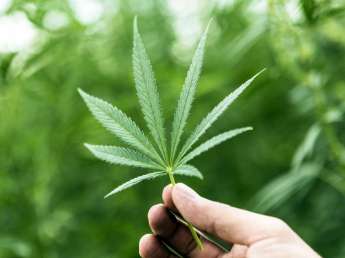
The reason this plant is called “Starry” is because of the distinctive shape of its leaves. Perhaps you’ve even seen it before:

320984_1100

The asterion plant in the elder Pliny’s Naturalis Historia, as in many of his contemporaries is called cannabis or hemp. 

κάνναβις is a plant of considerable use in this life. It is good for twisting very strong ropes. It bears leaves with a bad scent, similar to the ash; long hollow stalks, and a round seed. Eaten in quantities these quench conception. The herb (juiced while green) is good for earaches. It is also called cannabiumschoenostrophon, or asterion; the Romans call it cannabis. (Pedanius Dioscorides, De Materia Medica)

Most Greco-Roman authors focus on its medicinal properties, without mentioning recreational or religious usage. A notable exception to this comes in Herodotos’ account of Skythian customs in the Histories:

When a Skythian dies his nearest kin lay him upon a waggon and take him round to all his friends in succession: each receives them in turn and entertains them with a banquet, whereat the dead man is served with a portion of all that is set before the others; this is done for forty days, at the end of which time the burial takes place. After the burial, those engaged in it have to purify themselves.

In order to cleanse their bodies, they act as follows: they make a booth by fixing in the ground three sticks inclined towards one another, and stretching around them woollen felts, which they arrange so as to fit as close as possible: inside the booth a dish is placed upon the ground, into which they put a number of red-hot stones, and then add some hemp-seed.

Hemp grows plentifully in Skythia: it is very like flax, only that it is a much coarser and taller plant. Some grows wild about the country, some is produced by cultivation. The Thracians make garments of it which closely resemble linen; so much so, indeed, that if a person has never seen hemp he is sure to think they are linen, and if he has, unless he is very experienced in such matters, he will not know of which material they are.

The Skythians, as I said, take some of this hemp-seed, and, creeping under the felt coverings, throw it upon the red-hot stones; immediately it smokes, and gives out such a vapour as no Grecian vapour-bath can exceed; the Skyths, delighted, shout for joy, and this vapour serves them instead of a water-bath. (4.72-75)

Nor were the Skythians alone in enjoying the psychoactive properties of the asterion plant, according to Poseidonios:

Poseidonios goes on to say of the Mysians that in accordance with their religion they abstain from eating any living thing, and therefore from their flocks as well; and that they use as food honey and milk and cheese, living a peaceable life, and for this reason are called both Theosebes (“God-fearing”) and Kapnobatai (“walkers-in-smoke”) and there are some of the Thracians who live apart from womankind; these are called Ktistai, and because of the honour in which they are held, have been dedicated to the Gods and live with freedom from every fear. (Strabo, Geography 5.3.3)

Scholars such as Dan Attrell believe that Poseidonios is describing a group of religious specialists who employed entheogens to communicate with their Gods, Spirits and Ancestors:

As the undisputed masters of healing herbs (according to the Greeks), the Thracians were no strangers to the shamanic techniques of ecstasy well known among other cultures of the steppe. Working from the texts of Posidonius, Strabo reported that the Mysians, a Thracian group from north-western Anatolia, possessed members of their society called both θεοσεβεις (“those who fear god”) and καπνοβαται (“those who walk in smoke”) who practiced strict vegetarianism and consumed nothing but honey and dairy products. This reference to the “walkers in smoke” may allude to the ecstasy achieved by mass cannabis consumption as reported by Herodotus among the Scythians. […] One Orphic bone inscription from Olbia dated to the 5th century BC reads “for Dion(ysos) and Psyche,” revealing the importance of a transcendent soul in connection with the Greek god of intoxication in Thracian territory. Another of these bone inscriptions containing the words “Βιος Θανατος Βιος” and marked with little “Z” pictograms (which might represent little orphic serpents) reveals the widespread and consistent nature of Dionysian symbolism reaching as far north as modern Ukraine. In the shamanic mystery initiations as practiced by the Orphic cults, near-death experiences and the use of dangerous doses of hallucinogenic plants went hand in hand. Whereas the Divine Bridegroom Sabazios (Dionysus) was primarily the god who presided over ecstasy and entheogenic intoxication, the Thracians held him in equally high regard as a dying-and-rising saviour god and a master over the souls of the deceased. Long before the introduction of alcohol, shaman exploited the ecstatic and oracular properties of hallucinogenic mushrooms (Amanita muscaria and various types of coprophilic Psilocybin-containing mushrooms); opium (Papaver somniferum); “jimsonweed,” “horsemad,” or “thornapple” (Datura stramonium); mandrake root (Mandragora officinarum); cannabis; deadly nightshade (Atropa belladonna); and henbane (Hyoscyamus niger). The experience of death and the ecstatic evacuation of the soul from the body appears commonly in the Thracian funeral iconography on which is depicted the Tree of Life. To be in a state of ekstasis – that is, to stand outside the body – was to experience death itself. (Dead Kings and Saviour Gods – Euhemerizing Shamanism in Thracian Religion)

Their diet certainly fits in with certain accounts of what was called the bios Orphikos, for instance in Plato:

Again, the practice of men sacrificing one another still exists among many nations; while, on the other hand, we hear of other human beings who did not even venture to taste the flesh of a cow and had no animal sacrifices, but only cakes and fruits dipped in honey, and similar pure offerings, but no flesh of animals; from these they abstained under the idea that they ought not to eat them, and might not stain the altars of the Gods with blood. For in those days men are said to have lived a sort of Orphic life, having the use of all lifeless things, but abstaining from all living things. (Plato, Laws 6.782)

While I have argued in the past that Orphism does not require vegetarianism (on the contrary, certain ceremonies preclude it) you will note I mentioned there may have been specific states and types of work where it was temporarily necessary. In my own practice when I ingest heavy psychedelics I generally avoid any animal products, sometimes for a couple days leading up to the session. Not only does this help me feel lighter, cleaner and more open to the Spirits of the Green Way but the heightened somatic awareness they produce can make it rather unpleasant to be carrying around a bunch of half-digested carcasses in my gut. Also, depending on the entheogen, nothing aids in transitioning back like a big old juicy cheeseburger and they taste even better when you’ve been denying your natural carnivorous instincts. So yeah, I can totally see why that might be a thing.

Entheogen, by the way, means “God-producing,” as in:

Doing the bacchus: he boasts of knowing the foolishness of many books. For having been caught makes it become a terrible practice; ‘honoring the smoke’: this adds he is possessed by the deity. (Scholiast on Euripides’ Hippolytos 954.1)

Which experience, I believe, was beautifully expressed by Aelius Aristides:

For there was a feeling as if taking hold of the God and of clearly perceiving that he himself had come, of being midway between sleeping and waking, of wanting to look, of struggling against his departure too soon; of having applied one’s ears and hearing some things as in a dream, some waking; hair stood straight, tears flowed in joy; the burden of understanding seemed light. What man is able to put these things into words? Yet if he is one of those who have undergone initiation, he knows and is familiar with them. (Orations 48.32)

As well as Plato:

There was a time when with the rest of the happy band we saw the beatific vision and were initiated into a mystery which may be truly called most blessed, celebrated by us in our state of innocence, before we had any experience of evils to come, when we were admitted to the sight of apparitions innocent and simple and calm and happy, which we saw shining in pure light, pure ourselves. (Phaedrus 250)

Back when I was working with Starry Bull folks we were in the process of developing a Green Way strain of the tradition, under the aegis of Orpheus and Medeia. I’m not sure how far they’ve gotten with it since we stopped talking, but that quote about Asterios relocating to Skythia and Kolchis has me thinking I should develop a Starry Bear version; after all Hera and Dionysos aren’t the only Gods to whom the plant is sacred. (And why it’s these two specifically I’m going to let you piece together for yourself from the Theoi.com entry on Pasithea. Waits for cries of “Oh no! I can’t unsee it!” and heads exploding. Don’t blame me; I already warned you fuckers.) 

Καλα Χύτροι!

Bid your blessed dead a fond farewell, remembering that we hold them always in our hearts! Appease those who drowned in the great flood! Make the porridge of all grains, all seeds and honey for Chthonic Hermes and the souls he guides! Smear pitch on your door and chew buckthorn! And don’t forget to say the words, “Thuraze Kêres, ouket’ Anthestêria!”

Some say by water, others by fire

I almost forgot: as an addendum to this post – there is a variant tradition that instead of Parnassos Deukalion and his wife sought refuge on Mount Aetna in Sicily:

When the cataclysm which we call the flood or deluge occurred, all the human race perished except Deucalion and Pyrrha, who fled to Mount Etna, which is said to be the highest mountain in Sicily. When they could not live on account of loneliness, they begged Jove either to give men, or to afflict them with a similar disaster. Then Jove bade them cast stones behind them; those Deucalion threw he ordered to become men, and those Pyrrha threw, to be women. Because of this they are called laos, ‘people,’ for stone in Greek is called las. (Hyginus, Fabulae 153)

There’s always an epilogue in Italy, at least when Dionysos is involved. It’s even been said that the place is dearer to him than his own Nysa:

This is Vesuvius, green yesterday with viny shades; here had the noble grape loaded the dripping vats; these ridges Bacchus loved more than the hills of Nysa; on this mount of late the Satyrs set afoot their dances; this was the haunt of Venus, more pleasant to her than Lacedaemon; this spot was made glorious by the fame of Hercules. All lies drowned in fire and melancholy ash; even the High Gods could have wished this had not been permitted them. (Martial, Epigrams IV.44)

You know what else Dionysos loves?

His brother.

With the posts here, here and here I don’t want to imply that Dionysos stole Hebe the immortal wife of Herakles away from him. He just borrowed her.

Not only are the two sons of Zeus really close friends who share a great deal – including the fabled lion-skin – but there’s a whole lot more to the story than you’re likely to find in Bullfinch or D’Aulaires.

For instance, did you know that in Etruscan myth it is Herakles (or rather Hercle) not Theseus who braves the Labyrinth to win the hand of Ariadne (otherwise known as Esia) facing down the terrible Minotaur (whom they call Θevrumineś) to do so? (Their version of the story of Ikarios is also radically different from that of the Athenians.)

So basically what that means is that Dionysos had history with Hebe before she was given in marriage by Zeus to Herakles (contrary to the wishes of Hera) just like Ariadne had history with Herakles before she was claimed on Naxos by Dionysos, and none were willing to let societal norms or even the machinations of other Gods get in the way of that, let alone ruin their friendship.

And that is a lovely note to end things on. (Especially since the rest of the story is deeply unsettling and not something I share in public.)

Two ships passing in the night

Anthesteria has so many densely interwoven layers that different things stand out for me each year. One of them this time around was the Black Ship of Dionysos, which is mounted on a wagon and paraded through the city on Pithoigia to open the festival:

For in the month Anthesterion a trireme raised into the air is escorted into the agora which the priest of Dionysos steers like a helmsman.  (Philostratos, Lives of the Sophists 1.25.1)

In the Black Ship are contained all the blessings Dionysos dispenses to the lands and people that graciously receive him:

Hermippus in a play called Stevedores launches into a mock-Homeric hymn to Dionysus in which the god is praised as a merchant-shipper (PCG F 63): ‘Tell me now you Muses who dwell in Olympus how many good things Dionysus brings here to men in his black ship since the time he began to carry merchandise over the wine-faced sea. From Cyrene, silphium stalk and ox hide. From the Hellespont, mackerel and every sort of salted fish. From Thessaly, barley and sides of beef and the mange for the Spartans from Sitalkes, and from Perdikkas a great many ships-full of lies. The Syracusans provide pigs and cheese …’ After a lacuna the list goes on to include products that originate from cities throughout the Eastern Mediterranean, from Carthage to Phoenicia. Most modern readers fail to see the humour that such lists of food are supposed to generate. There is none really. It is mainly about sustaining the buoyancy of the audience with effervescent reminders of the festival’s blessings. […] Four Attic vases, produced at the end of the sixth century show Dionysus and satyrs riding wagons, fitted out like ships. Later antiquity’s larger and more international festival economies seem to have required the magnificence of actual wheeled ships. By contrast the images on the Attic skyphoi are very much ‘wagons’ in the shape of ships—and unlikely to be called anything other than ‘wagons’ in ancient texts. Even the Panathenaic ship was referred to as a ‘wagon’ (in Latin currus) as late as the first century AD. In the case of the Tarquinian amphora, the vehicle is mythicised as an actual ship, but incorporates features of the ritual wagon including the piper and the mysterious wicker-like object at the keel. […] Some object that Dionysus Eleuthereus did not come to Athens by ship but overland. We have to respond that the ship is a symbol, not historical reconstruction. In part it suits the Athenian Dionysus because, as we saw, he brings for his festival food and wealth from overseas. But there is something deeper. The utopic vision inspired by the Athenian carnival is one of things spontaneously appearing and spontaneously moving under the influence of Dionysus. In the first messenger speech of Euripides’ Bacchae the presence of Dionysus is revealed by the sudden appearance of springs of water, wine, milk and honey (705-11), and by the effortless coordination, energy and equilibrium of the bacchants’ movements (esp. 693, 755-8). The spontaneous springs of water, wine, milk and honey recall the αὐτόματος βίος of the Cronian Golden Age when the earth freely produced an abundance of food and drink for all men at no cost or effort. This was of course also an ideal embodied by the Dionysian festival where food and wine really were abundant and free. But effortless coordination and equilibrium are also an expression of the processional god. Dionysus sets people and things in motion, particularly in a graceful and rhythmic motion: the power of music to animate the body (even at times against one’s will) is perhaps the supreme expression of this particular aspect of the god. (Eric Csapo, The Dionysian Parade and the Poetics of Plenitude)

However, on Chytroi which closed the festival, a different ship was on people’s minds, the one that Deukalion and his wife used to escape the great deluge:

Zeus by pouring heavy rain from heaven flooded the greater part of Greece, so that all men were destroyed, except a few who fled to the high mountains in the neighborhood. It was then that the mountains in Thessalia parted, and that all the world outside the Isthmos and Peloponnese was overwhelmed. But Deukalion, floating in the chest over the sea for nine days and as many nights, drifted to Parnassos, and there, when the rain ceased, he landed and sacrificed to Zeus Phyxios (God of Escape). And Zeus sent Hermes to him and allowed him to choose what he would, and he chose to get men. And at the bidding of Zeus he took up stones and threw them over his head, and the stones which Deukalion threw became men, and the stones which Pyrrha threw became women. Hence people were called metaphorically people (laos) from laas, ‘a stone.’ (Apollodoros, Bibliotheca 1.7.2)

Note the role that Hermes plays in this myth, which is why he was honored alongside those who drowned in the flood:

Those who had survived the great deluge of Deukalion boiled pots of every kind of seed, and from this the festival gets its name. It is their custom to sacrifice to Hermes Khthonios. No one tastes the pot. The survivors did this in propitiation to Hermes on behalf of those who had died. (Theopompos, in the Scholia to Aristophanes’ Acharnians 1076)

However, those familiar with Delphic lore and the origin of the Thyiades would have extra reason to honor Deukalion and Hermes:

They say that the oldest city was founded here by Parnassos, a son of Kleodora, a Nymph. Like the other heroes, as they are called, he had two fathers; one they say was the God Poseidon, the human father being Kleopompos. After this Parnassos were named, they say, both the mountain and also the Parnassian glen. Augury from flying birds was, it is said, a discovery of Parnassos. Now this city, so the story goes on, was flooded by the rains that fell in the time of Deukalion. Such of the inhabitants as were able to escape the storm were led by the howls of wolves to safety on the top of Parnassos, being led on their way by these beasts, and on this account they called the city that they founded Lykoreia (Mountainwolf-city).

Another and different legend is current that Apollon had a son Lykoros by a Nymph, Korykia, and that after Lykoros was named the city Lykoreia, and after the Nymph the Korykian cave. It is also said that Kelaino was daughter to Hyamos, son of Lykoros, and that Delphos, from whom comes the present name of the city, was a son of Kelaino, daughter of Hyamos, by Apollon. Others maintain that Kastalios, an aboriginal, had a daughter Thyia, who was the first to be priestess of Dionysos and celebrate orgies in honor of the God. It is said that later on men called after her Thyiades all women who rave in honor of Dionysos. At any rate they hold that Delphos was a son of Apollon and Thyia. Others say that his mother was Melaina, daughter of Kephisos. (Pausanias, 10.6.1-4)

Cool, right? And something I’ve explored elsewhere in my writings on the Thyiades. But it doesn’t stop there.

Do you know why Zeus sought to destroy mankind with the storm of all storms? It was the Wolf King’s fault:

Lykaon, reigning over the Arcadians, begat by many wives fifty sons … and these exceeded all men in pride and impiety. Zeus, desirous of putting their impiety to the proof, came to them in the likeness of a day-laborer. They offered him hospitality and having slaughtered a male child of the natives, they mixed his bowels with the sacrifices, and set them before him, at the instigation of the elder brother Maenalus. But Zeus in disgust upset the table at the place which is still called Trapezus, and blasted Lykaon and his sons by thunderbolts, all but Nyktimos, the youngest; for Earth was quick enough to lay hold of the right hand of Zeus and so appease his wrath. But when Nyktimos succeeded to the kingdom, there occurred the flood in the age of Deukalion; some said that it was occasioned by the impiety of Lykaon’s sons. (Apollodoros 3.8.1-2)

Happen to know the name of that male child of the natives they butchered and tried to serve to Zeus? 

Of course you do. The child he killed was Arkas, the Starry Bear:

He is said to be the son of Jove and Callisto, whom Lycaon served at a banquet, cut up with other meat, when Jupiter came to him as a guest. For Lycaon wanted to know whether the one who had asked for his hospitality was a God or not. For this deed he was punished by no slight punishment, for Jupiter, quickly overturning the table, burned the house with a thunderbolt, and turned Lycaon himself into a wolf. But the scattered limbs of the boy he put together, and gave Arcas to a certain Aetolian to care for. (Hyginus, Astronomica 2.4)

And Deukalion, too, was placed among the stars:

The constellation Aquarius or Water Bearer. Many have said he is Ganymede. Hegesianax, however, says he is Deucalion, because during his reign such quantities of water poured from the sky that the great flood resulted. (ibid 2.29)

Ganymede, as in the male double of Hebe. 

Also, did you know that some folks claim that the Wagon constellation (which is also a bear) is the same one which bears the Black Ship of Dionysos as it makes the procession through cities and the countryside.

Which brings it all full circle, like a wheel. 

Breaking the law for the Gods

Despite the influx of hipsters from Brooklyn and Westchester our little town is decidedly lacking in swings. There are some in a couple schools (though not as many as you might imagine) and a gated kiddy park, and that’s about it – which is very different from other places I’ve lived, unfortunately.

The housemate and I snuck into the kiddy park (while Galina and the cat remained behind to hold down the fort) so we could hang the paper dolls the three of us drew, colored and cut out earlier in the evening for Erigone and the Athenian maidens. Then we swung for a while until we saw a car pull up next to ours and the cops started searching it with a flashlight. As we approached, I loudly greeted the police and waved at them in a friendly manner to show I wasn’t carrying. They cheerfully reminded us the park was closed after dark and sent us on our way.

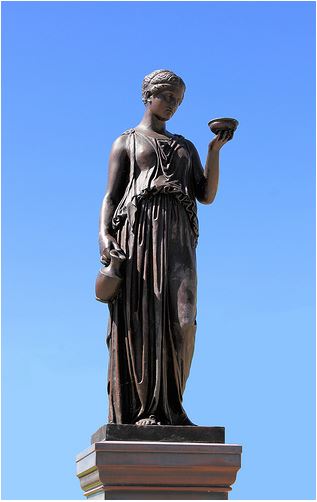
Heading home we paused by the statue of Hebe in the center of town to pay our respects, thereby bringing our Choës observance to a close. Almost as soon as we arrived there was a sudden torrential downpour reminding me of Deukalion’s flood, which seems like an auspicious start to Chytroi. This, by the by, is part of why I made the Hebe posts earlier, as she is the closest thing we have to a polis-Goddess. If you’d like to learn more about our Hebe (not depicted below) click here

hebe_thorvaldsen-bertel

they should appease Erigone if they wanted to be free from the affliction

satyr_silhouette

Hyginus, Astronomica 2.2
In the meantime in the district of the Athenians many girls without cause committed suicide by hanging, because Erigone, in dying, had prayed that Athenian girls should meet the same kind of death she was to suffer if the Athenians did not investigate the death of Icarius and avenge it. And so when these things happened as described, Apollo gave oracular response to them when they consulted him, saying that they should appease Erigone if they wanted to be free from the affliction. So since she hanged herself, they instituted a practice of swinging themselves on ropes with bars of wood attached, so that the one hanging could be moved by the wind. They instituted this as a solemn ceremony, and they perform it both privately and publicly, and call it alétis, aptly terming her mendicant who, unknown and lonely, sought for her father with the God. The Greeks call such people Alétides.

even now

tumblr_m9zy3o9X8S1ruq5t7o1_500

Aristotle, Constitution of the Athenians 3.5
Not all the magistrates lived together. The King kept what is now called the Boukoleion near the Prytaneion. The evidence is that even now the mating and marriage of the wife of the King with Dionysos takes place there.

Ganymeda

Santiago Carbonell art Pausanias, Description of Greece 2.13.3
On the Phliasian citadel is a grove of cypress trees and a sanctuary which from ancient times has been held to be peculiarly holy. The earliest Phliasians named the goddess to whom the sanctuary belongs Ganymeda; but later authorities call her Hebe, whom Homer mentions in the duel between Menelaos and Alexandros, saying that she was the cup-bearer of the gods; and again he says, in the descent of Odysseus to Haides, that she was the wife of Herakles. Olen, in his hymn to Hera, says that Hera was reared by the Horai, and that her children were Ares and Hebe. Of the honours that the Phliasians pay to this goddess the greatest is the pardoning of suppliants. All those who seek sanctuary here receive full forgiveness, and prisoners, when set free, dedicate their fetters on the trees in the grove. The Phliasians also celebrate a yearly festival which they call Kissotomoi (Ivy-cutters). There is no image, either kept in secret of openly displayed, and the reason for this is set forth in a sacred legend of theirs though on the left as you go out is a temple of Hera with an image of Parian marble.

οἰνοχόη

woman-in-fishnets-spanking-498x332
Nonnos, Dionysiaka 35.333
After Dionysos was reconciled with Hera in heaven, she wished to give him Hebe’s hand in marriage, had not Zeus our Lord on High ordained that in days to come twelvelabour Herakles was fated to be her husband.

Dionysos dressed as Herakles dressed as Dionysos

IMG_2013

Jacquelyn Collins Clinton,  A Late Antique Shrine of Liber Pater at Cosa pages 25-27
All of the above marble sculptures were reused in the late antique shrine. The statuettes probably served originally as private statuary of a decorative nature placed in house or garden, from the ruins of which the worshippers of Bacchus removed them to their shrine. […] These works do not fit into the Bacchic religious context as readily as the reused marble sculptures representing Dionysus directly, since they all were probably found purely by chance. One can only speculate on the reasons for reusing them at all. […] The small bust of Hercules is represented with grape leaves stick into the fillet around his head. He has thus a Bacchic aspect which must have had an immediate and relevant appeal. […] The Lysippean type after which the Cosa head is patterned is related to that of the Herakles Epitrapezios where Herakles is shown seated and holding out a cup of wine in an attitude of heroic repose after having attained immortality. This image of Herakles’ repose goes back to the sixth century B.C. in Greek vase painting where he is shown resting under a tree; by the end of the century, the repose came to be expressed in terms of a banquet, often celebrated with Dionysus. […] The Roman Hercules, of course, loved his wine and he is shown in works of art also engaged in a drinking contest with Dionysus. The theme of the drunken Hercules, furthermore, accounts for his inclusion in the Bacchic thiasos from Hellenistic times on. It becomes very popular in Roman times where Hercules bipax appears in representations of the Bacchic thiasos on sarcophagi. The imagery in these representations is, of course, funerary, illustrating the Bacchic concept of the afterlife as a continuing joyful revel or banquet. […] Moreover, the close connection between Hercules and Bacchus goes beyond these mythological ties, for the two were worshipped together in a common cult at least as early as the sixth century B.C. throughout Macedonia and Thrace, including the island of Thasos, and their names or images are linked in several monuments found in this region during Roman times. They are linked in various other monuments from other parts of the Roman world as well, and they were patron gods of Leptis Magna, the birthplace of Septimius Severus, who erected a temple for them in Rome and had their images included on his coinage. […] Thus, the connections between Hercules and Bacchus are so many and varied, with a long history continuing through late Roman times, that to discover an image of Hercules in a Bacchic shrine is not surprising.

Καλα Χοές!

Give the children their first taste of wine! Feast with the mad and polluted King! Swing for the Hanged Maidens! Revel throughout your city as the wife of the Sacred King mates with Dionysos in the Ox-shed! The second day is upon us and what we do will make the flowers extra pretty when Spring is in its fullness and ensure that there’s good wine to drink for next year’s Anthesteria.

Speaking of fire

One of the most important documents we have within Bacchic Orphism are a series of bone tablets inscribed with enigmatic phrases and symbols.

SEG 28.659:
Life. Death. Life. Truth. Zagreus. Dionysos. Orphikoi.

SEG 28.660:
Peace. War. Truth. Lie. Dionysos

SEG 28.661:
Dionysos. Truth. Body. Soul.

These were likely produced by an Olbian Orpheotelest and mantis who worked out of the temple of Hermes and Aphrodite by the name of Pharnabazos, known primarily because of a magical duel he had with Aristotles, a rival diviner of Hermes (and formerly of Athene) whose territory was probably near the temple of Demeter. Uniquely the defixiones both men employed against their opponent have come to light

Well, there’s another text that was made by thiasitai Boreikoi (or members of the Society of Apollo Boreas) which I mentioned here. Rather than being written on bone it’s a circular inscription engraved on the outer and inner edges of a black lacquer vase stand.

Scholars have proposed two different readings of the text, SEG 58:772:

Bios Bios, Apollon Apollon, Helios Helios, Kosmos Kosmos, Phos Phos.

Or

Apollon Helios, Helios Kosmos, Kosmos Phos, Phos Bios, Bios Apollon.

For those not familiar the terms mean:

Apollon = “God of wolves, prophecy, fire, disease and healing”
Bios = “Life”
Helios = “Sun”
Kosmos = “Universe” or “Order”
Phos = “Light”

Both readings have deep significance. The first seems to be describing a progressive sequence of concepts or experiences, while in the second they weave in and out of each other as in a dance. I like the second better for reflection, and the first for chanting. I’m undecided whether the Greek or English is more effective.

So far I’ve just been using it as a cleansing mantra, but I suspect it may end up becoming as potent a tool as the Oration of Aristides – if I can unlock its true meaning, that is.

Oh, and one of the symbols found on a couple of the bone tablets is a Z-like shape. Various suggestions for what the symbol signifies have been put forth: snake, lightning bolt, a representation of the flow of energy or a meandering journey through the Labyrinth. I tend to accept all of these and also associate it with a pruning-knife or wolfsangel

your cry, louder than roar of earthquake, shall rouse up living and dead together

Ángelos Sikelianós, Greek Supper for the Dead

I spoke,
and whether or not they had well understood
all I had sought, they sipped of the wine,
and I, the last of all,
drank to the last drop also, like the priest
who drains the holy chalice in the Inner Sanctum;
and then together as one we softly turned our steps
– the candles one by one had guttered out –
toward the wide-open windows, beyond which lay
the black enstarred vast ocean of night
that on its pulse upheld us in our silence.

And if no one within that darkness spoke,
from deep within us the same thought and vow
rose upward toward the vast gloom and the stars:
“Hearken, divine protector, O Dionysos-Hades,
restrain our hearts now with the brusque black wine
of your deep pain, guard them and strengthen them
and keep them still untouched until that hour
when suddenly your cry, louder than roar
of earthquake, shall rouse up living and dead
together with us at once to the divine onslaught!”

tumblr_lw0iw4nAd31qd35tno1_500 (1)

as Bacchanals dance in their worship

Tacitus, Annals 11.31.2
Messalina meanwhile, more wildly profligate than ever, was celebrating in mid-autumn a representation of the vintage in her new home. The presses were being trodden; the vats were overflowing; women girt with skins were dancing, as Bacchanals dance in their worship or their frenzy. Messalina with flowing hair shook the thyrsus, and Silius at her side, crowned with ivy and wearing the buskin, moved his head to some lascivious chorus.

tumblr_muklxc4eoh1rmubjpo1_500

let loose from death and darkness to keep holiday

Alexis, fragment 222 from The Tarentines
Whether anybody will say that my judgement is good or bad I cannot tell you; but this, at least, I have made up my mind about on careful study: that all the doings of men are out-and-out crazy, and that we who for the time being are alive are only getting an outing, as though let loose from death and darkness to keep holiday, to amuse ourselves and to enjoy this light which we can see. And the man who laughs and drinks the most, and holds fast to Aphrodite, during the time he is set free, and to such gifts as Fortune offers, after he has had a most pleasant holiday can depart for home a well-satisfied man.

tumblr_mogvoc1mSw1sq3i54o1_500

Anthesteria 2020 Soundtrack

I know I’ve got a list of songs already in the Anthesteria material at the Bakcheion, but moved by the energies of the day I put together this special soundtrack for Anthesteria 2020 that I hope will help get you in the mood. Enjoy!

tumblr_m79s7mBgLx1qdbiz0o1_500