The election is now over and the votes have all been tallied. Since none of our candidates broke the minimum threshold (Mithridates Eupator came the closest) that means the play will be going to Herakles!
Expect much geekery to follow
Exciting news!
I got my hands on a PDF of G. M. Hirst’s “The Cults of Olbia,” originally published in The Journal of Hellenic Studies in 1903. Pretty much everyone working on the polis cites this monumental study, and now I get to read it for myself.
Expect much geekery to follow.
Oh, by the way – G. M. Hirst was Gertrude Mary Hirst, a lady-scholar back when it was pretty much just her and Jane Ellen Harrison. She taught at Barnard College from 1901 until retiring in 1943, and died in Croton, New York in 1962. She was “a demanding teacher and a well-known eccentric but was loved and respected” by her students, whom she would often invite back to her quarters in the college dormitory for tea and conversation. She was also notorious for flouting the law by “riding her bicycle down the centre of Broadway.” You can learn more about her at the Database of Classical Scholars.
I may have to visit her grave at some point, cause she sounds like a pretty interesting person.
the one you share cattle-wealth with
By the way, the history of Berezan Island is pretty interesting:
Berezan was home to one of the earliest Greek colonies (possibly known as Borysthenes, after the Greek name of the Dnieper) in the northern Black Sea region. The island was first settled in the mid-7th century B.C. and was largely abandoned by the end of the 5th century B.C., when Olbia became the dominant colony in the region. In the 5th century BC, Herodotus visited it to gather information about the northern course of the eponymous river. The colony thrived on wheat trade with the Scythian hinterland.
In the Middle Ages, the island was of high military importance because it commanded the mouth of the Dnieper. During the period of Kievan Rus’ there was an important station on the trade route from the Varangians to the Greeks. It was there that Varangians first came into contact with the Greeks.
The only Runic inscription in Southern Ukraine, the Berezan’ Runestone, was found on the island in 1905, now on exhibit in the Odessa Historical Museum. The inscription seems to have been part of a gravestone over the grave of a Varangian merchant from Gotland. The text reads: “Grani made this vault in memory of Karl, his partner.”
The article on the Berezan Runestone has a great deal more to say about Grani and his félag Karl.
Bearer of luck of the mother
I just found something really cool.
A bone tablet was discovered on Berezan Island where the Black Sea and the Dneiper meet, a short distance from Olbia. It contains a cult hymn to Apollon with some unusual epithets, a sequence of mystical numbers, and most importantly – something that appears to be actual musical notation!
Translation of the text:
1 EBANBOYÄIÄ A A A
2 A A A A À A A A A
3 Bearer of victory of Boreas (the North wind)
4 Seven – She-wolf without strength,
5 Seventy – Mighty, powerful lion,
6 Seven hundred – Most loved Bowbearer,
7 Mighty gift – a Healer,
8 Seven thousand – Wise dolphin.
9 Blessed peace!
10 I bless the City!
11 There I bear remembrance to Leto.
12 Seven
13 To Apollo,
14 The Didymaian,
15 The Milesian.
16 Bearer of luck of the mother (or the motherland),
17 Bearer of victory of Boreas (the North wind).
18 Didym(a)
Here’s an account of a presentation that Anna Boshnakova gave on it, and here’s a more in depth paper she wrote.
And if you’re interested in Apollon’s presence in the region, check out Patrick Bisaillon’s The cult of Apollo in the Milesian colonies along the coast of the Black Sea: an inventory of archaeological data.
New Official Dionysia Poll Post
Democracy is a messy, quixotic process.
New candidates have entered the contest and the previous votes (all two of them) have been rendered void, as it was determined there was electoral interference by Skythian bots.
So which of these figures, dear readers, do you want me to write a play about for the 2020 e.v. Dionysia?
- Roger II
- Orfeo
- Themistokles
- Skyles
- Mithridates Eupator
- Grigori Rasputin
- Aleksandr Dugin
They must receive a minimum of five votes to win. If no one reaches that threshold we will default to Herakles.
Once the festival is over I will publish a special commemorative edition of the play, and a lucky voter, chosen at random, will be gifted a copy.
The poll will remain open until 12:01 AM Eastern time, Monday the 17th.
Roger & Me
I’m reading various analyses and reviews of Król Roger, and I came across these bits from Göran Forsling’s Opera Or Not, It Is Drama – Szymanowski’s King Roger in Stockholm:
An early reviewer of this opera, Henryk Opieński, wrote: ‘The libretto of King Roger is a dramatic poem in which there is no romance, no love duet, no killing, no duel, in a word, none of those factors which are allegedly essential for an operatic ‘plot’. The content, distributed over three acts, is the victory of the Dionysian idea of life over a king who is imprisoned by the chains of Byzantine religious rigour, his wife, his entourage and, lastly, the whole of his people’. Moreover, the general impression of the work is more that of an oratorio, or maybe a mystery play, than a genuine opera. Musically it is also a patchwork of Greek-Orthodox church music (the choruses in the opening scene), Oriental influences (Roxana’s aria) and Szymanowski’s late modernism, where he has left behind his original models: Chopin, later supplanted by Wagner, Reger and Richard Strauss, after 1914 impulses from his travels to Italy and North Africa, even later French impressionism, Stravinsky and Polish folklore. Altogether he created his very own tonal world as a conglomerate of all this – and his own ideas. It is indeed easy to agree with Polish baritone Mariusz Kwiecień, one of today’s foremost exponents of the title role, who said in an interview before the premiere of King Roger at Covent Garden: ‘to have composed this music one must have done drugs or at least been a little mad.’
And Caroline Crampton’s Król Roger’s music is beautiful – but overwhelmed by constant symbolism:
As soon as the lights come up on the enormous sculpture of a face, you know what you are supposed to think about the Royal Opera House’s take on Karol Szymanowski’s opera Król Roger. This early-20th-century piece by the often-neglected Polish composer is all about inner conflict, and the mesmerising light show that plays across the gigantic features during the overture gives you a visual representation of the competing demands of ego and super-ego.
It’s a subtle and impressive display: the features appear to shift and flicker, a glorious accompaniment to the music. Even before the monarch begins to sing, we have been drawn into his struggle between sensual temptation and religious conformity. What with the glittering harmonic brilliance of Szymanowski’s music underscoring this imposing vision, it is several moments before you notice the man kneeling before the great face. He is dwarfed by it – when he stands, his head barely reaches above its lips – and yet this is Król Roger, ruler of a kingdom and the human embodiment of power.
Who is he, this king who bows before the implacable, unknown face?
I can dig it.
Anyway, here’s a pretty decent production if you want to experience the opera for yourself:
Nothing beats seeing it live though.
Hmm. How half-heathenish was he?
According to Snorri Sturluson in the Heimskringla Roger II (who in the Fagrskinna is called “Jarl Rogeirr”) was visited by the Norwegian King Sigurd Jorsalfare, who famously established the Varangian Guard at Constantinople (or Miklagard.)
This makes me wonder how well they got on.
You see, Sigurd (who was given a splinter of the True Cross for fighting in defense of the Crusader Kingdom of Jerusalem) led his own crusade (known as Kalmare ledung) against Småland in Sweden after the inhabitants renounced their Christian faith and began worshiping their ancestral Gods once more. (After being beaten back into submission, the Swedes would go on to lead crusades against polytheists in Estonia, Finland and Russia.)
Meanwhile Pope Honorius called for a crusade to depose Roger for his “half-heathenish ways” and the tolerance he showed towards the diverse faiths of his subjects, be they Catholic, Orthodox, Jew, Moslem or other. Outlasting the bastard, Roger backed his successor Anacletus II against a rival papal claimant and was rewarded with an expansion of territory and official coronation on Christmas Day in Palermo.
Then again Sigurd’s pal Emperor Alexios I Komnenos bestowed on Roger the title of protonobilissimos, so maybe they did get along despite their differing beliefs. Sigurd spent a lot of time at the Byzantine court, so if there was bad blood between him and Roger it likely would have come up.
I bet there were some awkward conversations though.
I will tear out my clear heart and offer it to the Sun
Here is the trailer for the Royal Opera’s 2015 production of Król Roger by Polish-Ukrainian composer Karol Szymanowski and his cousin librettist Jarosław Iwaszkiewicz, which looks pretty fucking cool.
Król Roger tells the story of that time Roger II, the Norman King of Sicily and Africa, encountered Dionysos in the form of a humble shepherd and had his life turned upside down in the process. Or as karolszymanowski.pl puts it:
The plot takes place during one night, from the sunset in the First Act to the dawn in the Third. It begins with muted sounds of a gong, followed by the superb sound of a cappella choirs (which in places consist of ten voices!) of priests, nuns, courtiers, knights and clerics, lightly stylised to recall old Orthodox church and plainchant vocal forms. The crowd demands that the King should punish the young Shepherd, who has come from the mountains and incites the people. Brought in by the guards, the Shepherd sings a seductive song (“My god is as beautiful as I…”), written in a high register tenor voice. Roger allows him to leave, but requires him to return for a “judgment.” The mood of evening expectancy, which opens the Second Act, is painted by Szymanowski with an enchanting tissue of restless sounds. The Queen sings the breathtakingly beautiful, Kołysanka Roksany [Roxana’s Lullaby] (“Sleep, King Roger’s blood-steeped dreams”); with this song, she hopes to turn her husband’s anger into gentleness towards the strange young man. The song, with its Eastern melismas, is a show piece for lyrical sopranos. The Shepherd arrives with musicians. His followers arrive and dance in ecstasy; Roxana, moved, joins them. The King orders the Shepherd to be put in chains, but the Shepherd breaks his bonds with a mysterious power and leaves, free, with a retinue and the queen; this time it is he who calls Roger “for judgment.” In the Third Act the King, as a pilgrim, arrives with his faithful Edrisi at a ritual to honour the Shepherd-Dionysus. Roxana’s voice responds to the King’s calls, but he understands that he has lost her. Being lured by the Shepherd to sing and dance around the sacred fire, although excited, he cannot accept the new god’s world as his own. With first light everything disappears. Roger intones the Hymn do Słońca [Anthem of the Sun], in which the hero’s dramatic baritone emerges, like hot brilliance, from the shimmering sound of the orchestra.
In this work, Szymanowski presents the conflict between reason and instinct which takes place in the human soul. Undoubtedly this is not a rewarding subject for an opera, but it does find some justification in the philosophy of Friedrich Nietzsche, which had a strong influence on the spirituality of Szymanowski’s generation. In his essay The Birth of Tragedy out of the Spirit of Music Nietzsche proposed the famous distinction between the Apollonian and Dionysian elements in art. For him, Apollo is the god of illusion and intellectual distance from the world (reason), while Dionysus leads to the experience of the highest, sensual truth of existence (instinct). In the opera King Roger reason is personified by the priests, the adviser Edrisi and the whole court with queen Roxana, while instinct is the Shepherd, who preaches another faith. To the King’s despair, Roxana follows the voice of instinct and joins the Shepherd’s retinue. On the other hand, Roger, after hesitating (which takes three acts…), in the finale turns to the Sun – Apollo’s symbolic attribute: “from the depth of loneliness, from the abyss of my power, I will tear out my clear heart and offer it to the Sun.”
The genesis of the play lies in Szymanowski’s own transformative encounters during his travels through Southern Italy and the Middle East in the years leading up to WWI (though the score would not see completion until 1924.) That story, and the Dionysian themes which run through Król Roger are brilliantly discussed in Willem Bruls’ “A Synthesis of the Sensual and the Divine”: Karol Szymanowski and his King Roger:
The culture that had influenced the composer most strongly when he was in Sicily was that of the Byzantine world of the French-Norman King Roger II, son of the Norman count Roger de Hauteville, who had attacked Sicily in 1060 and seized it from the Arabs. His government took on many of the dominant Greek, Roman, and particularly Arabic traditions, and it guided the island to one of its cultural high points. His son Roger II, who lived from 1095 to 1154, continued these traditions. His court in Palermo was the splendid center of his empire. The three populations of the island – Greeks, Arabs, and Latin Sicilians – lived in comparative harmony. Roger’s grandson, Frederick II, would later try unsuccessfully to export this idea of a cultural melting pot to northern Europe.
In Palermo, Szymanowski visited the famous Palatine Chapel that Roger had built in gratitude for his coronation. This church is one of the marvels of Byzantine-Arabic architecture. Colorful mosaic biblical scenes against golden backgrounds cover the walls and cupolas, while the wooden ceiling is decorated with Arabic carvings. The building made a lasting impression on the 29-year-old Szymanowski, and this experience would form the core of his personal and artistic development from then on. What is striking here is less that a composer would be stimulated by architecture and the fine arts, than that these arts are in their essence the very expression of the world from which he had hoped to liberate himself, namely, the Christian world. What Szymanowski saw in Palermo reflected the proverbial rigidity of Byzantine art, of Oriental rites, and the dogma of absolute truth. The mosaics were created largely by Greek artists during the epoch of the second golden age of Byzantine art.
The ceiling of the chapel, produced by Arabic craftsmen, adds to the splendor of the building. The sweeping forms of the Moorish stalactites and carved coffers, recalling the ascendancy of Granada and Cordoba, form a counterweight to the strict Byzantine figures. The blending of Christian and Arabic cultures points to the older culture from which both developed, that of classical antiquity.
After his stay in Sicily in 1914, Szymanowski crossed the Mediterranean on his way to North Africa. Together with his friend Stefan Spiess, he visited Algiers, Constantine, Biskra, and Tunis. On April 11, he wrote from Biskra: “This place is truly divine…” The warmth and beauty that Szymanowski sought in the south meant something else to him, however. One of the reasons that he fled the north so regularly was his homosexuality. In Sicily and in North Africa he probably felt something of the relative freedom toward this form of eroticism.
And walked on down the hall
Alternately, I could do a play based on Sir Orfeo where our hero must journey through the Underworld (transformed into a Celtic Otherworld) and confront the Fairy King who has abducted his beloved wife Dame Heurodis.
To get a sense of what that would be like, check out the following:
- Piotr Spyra, The Terror of the Threshold: Liminality and the Fairies of Sir Orfeo
- Blythe Hsing-wen Tsai, Appropriating the Classical Underworld: The Otherworld and its Spectacle in Sir Orfeo
- Jordi Sanchez-Marti, Insular Sources and Analogues of the Otherworld in the Middle English Sir Orfeo
- Jane Beal, Orphic Powers in J.R.R. Tolkien’s Legend of Beren and Lúthien
- Amy Louise Morgan, Fairies, Monsters and the Queer Otherworld: Otherness in Sir Orfeo
He took a face from the ancient gallery
Looks like Grigori Rasputin is winning the Dionysia poll with a whopping 2 votes!
Rasputin would indeed make a good subject for a play. I’d portray him as a surrogate sacred king slash pharmakos in addition to being a mendicant holy man, and have him warn that if an aristocrat sheds his blood it’ll bring great calamity upon the land (i.e. the Communist revolution.) There’ll also be a chorus of dancing and flagellating Khlysty ecstatics like the eponymous Asian Mainades of Euripides’ Bakchai.
Of course I wouldn’t rule Aleksandr Dugin out just yet, considering he’s besties with Putin and you know how much Vladimir likes tampering with elections – almost as much as the DNC.
Although Dugin is often presented as a far-right or fascist intellectual literally hell-bent on destroying the West:
Finally, Heiser comments on Dugin’s worship of Chaos, and the adoption of the occult symbol of the eight-pointed “Star of Chaos” as the emblem (and, when inscribed in gold on a black background, the flag) of the Eurasianist movement.
“For Dugin, logos is replaced by chaos, and the very symbol of chaos magic is the symbol of Eurasia: ‘Logos has expired and we all will be buried under its ruins unless we make an appeal to chaos and its metaphysical principles, and use them as a basis for something new.’ Dugin dressed his discussion of logos in the language of Heidegger, but his terminology cannot be read outside of a 2,000-year-old Western, biblical tradition which associates the Logos with the Christ, and Dugin’s invocation of chaos against logos leads to certain inevitable conclusions regarding his doctrines.”
In short, Dugin’s Eurasianism is a satanic cult.
The truth, however, is something altogether very different as you can hear for yourself in this interview he gave.
Indeed, Joseph Gelfer posed the intriguing question:
Could it be that Dugin has been an undercover queer theorist all along and is playing a long game, positioning himself as an intellectual heavyweight on the far right in order to subvert it from within? If you think that is far-fetched, consider the following, as chronicled in Masha Gessen’s recent book, The Future is History: How Totalitarianism Reclaimed Russia. Dugin’s first wife was Evgeniya Debryanskaya, who he taught English by reading the suspiciously queer The Picture of Dorian Gray. They eventually broke up, after which Evgeniya Debryanskaya went on to become a prominent feminist and LGBT activist in Russia. This part is not in Gessen’s book: shortly before they parted ways, the young couple made a pact: “Sasha, darling. I will fight openly for the rights of women and gay people. Your task is far more difficult. You must pretend to be an ultra-nationalist until the time is right. Then we will reveal to them the joy of androgyny and sex as practised by the angels.” Stranger things have happened.
It sounds pretty out there, but back in the 1980s Aleksandr Dugin was involved with a number of groups which comprised a mystical underground resistance movement fighting Soviet totalitarianism. As Charles Clover writes in Black Wind, White Snow: The Rise of Russia’s New Nationalism:
In 1980, in preparation for the Olympic Games in Moscow, police cleared the riff-raff from the streets, and it was strongly suggested that the group should move out of the capital. They found new beatnik digs at a dacha in the suburb of Klyazma. It was owned by Sergey Zhigalkin, a wiry and energetic man who made a name for himself translating Heidegger and publishing Golovin’s poetry.
While writing this book I met Zhigalkin. He offered to help recreate a typical (albeit much tamer) evening get-together of the mystical underground, taking me to the Klyazma dacha, which he still owns. We sat around a bonfire and drank cognac all night long, while he explained to me the magnetic, dark charisma of Golovin, who emerges from the tales of his followers much like the leader of a cult. ‘In Golovin’s presence the limits of the natural world fell away, the earth became a bigger place, a limitless place. It was like being flung out of a centrifuge. We used alcohol to start the energy, but Golovin could manipulate this energy. He could destroy your perception of the world.’
One evening, a young man appeared at the Klyazma dacha, brought by an acquaintance. He looked no more than 18. His head was shaved, but he had an aristocratic bearing and a quick wit. He was immediately charismatic and came carrying a guitar. Strumming away around a bonfire in the evening sunset, he belted out a song: ‘Fuck the Damned Sovdep.’ Even by the extreme tastes of the mystical underground this was borderline stuff.
[…]
‘We all just fell down and worshiped him,’ said Dudinsky. ‘What a great song! He was like the messiah.’ He was Alexander Dugin, and he was the newest recruit to the Moscow mystical underground. A brilliant if uninformed teenager, he soon learned to idolize his guru, Golovin. Few people from those years have forgotten their first encounter with Dugin, who had a gift for making an entrance. […] Serebrov recalls meeting Dugin at Moscow’s Kievskaya metro-station:
A look of rapture came over Alexander’s face. He pulled a bottle of port wine out of his bag and threw it on the platform. “Sieg Heil! I make this sacrifice to the god Dionysus!” The bottle shattered into a million pieces, spreading a wave of port across the platform.
Tell me Aleksandr Dugin wouldn’t make a fascinating protagonist, especially if Gelfer is correct.
Though, personally, I’d prefer to do a play about Mithridates Eupator, King of Pontus, scourge of Rome and Neos Dionysos, with a keen interest in pharmakeia.
Or Skyles the Bacchic martyr-king, whose story is told in Herodotos’ Histories 4.78-80:
Such-like, then, was the fortune that befell Anacharsis, all for his foreign usages and his companionship with Greeks; and a great many years afterwards, Scyles, son of Ariapithes, suffered a like fate. Scyles was one of the sons born to Ariapithes, king of Scythia; but his mother was of Istria, and not native-born; and she taught him to speak and read Greek. As time passed, Ariapithes was treacherously slain by Spargapithes, king of the Agathyrsi, and Scyles inherited the kingship and his father’s wife, whose name was Opoea, a Scythian woman, and she bore to Scyles a son, Oricus. So Scyles was king of Scythia; but he was in no wise content with the Scythian manner of life, and was much more inclined to Greek ways, from the bringing up which he had received; so this is what he did: having led the Scythian army to the city of the Borysthenites (who say that they are Milesians) — having, I say, come thither, he would ever leave his army in the suburb of the city, but he himself, entering within the walls and shutting the gates would doff his Scythian apparel and don a Greek dress; and in it he went among the townsmen unattended by spearmen or any others (the people guarding the gates, lest any Scythian should see him wearing this apparel), and in every way followed the Greek manner of life, and worshipped the gods according to Greek usage. Then having so spent a month or more, he put on Scythian dress and left the city. This he did often; and he built him a house in Borysthenes, and married and brought thither a wife of the people of the country.
But when the time came that evil should befall him, this was the cause of it: he conceived a desire to be initiated into the rites of the Bacchic Dionysus; and when he was about to begin the sacred mysteries, he saw a wondrous vision. He had in the city of the Borysthenites a spacious house, great and costly (that same house whereof I have just made mention), all surrounded by sphinxes and griffins wrought in white stone; this house was smitten by a thunderbolt and wholly destroyed by fire. But none the less for this did Scyles perform the rite to the end. Now the Scythians make this Bacchic revelling a reproach against the Greeks, saying that it is not reasonable to set up a god who leads men on to madness. So when Scyles had been initiated into the Bacchic rite, some one of the Borysthenites scoffed at the Scythians: “Why,” said he, “you Scythians mock us for revelling and being possessed by the god; but now this deity has taken possession of your own king, so that he is revelling and is maddened by the god. If you will not believe me, follow me now and I will show him to you.” The chief men among the Scythians followed him, and the Borysthenite brought them up secretly and set them on a tower; whence presently, when Scyles passed by with his company of worshippers, they saw him among the revellers; whereat being greatly moved, they left the city and told the whole army what they had seen.
After this Scyles rode away to his own place; but the Scythians rebelled against him, setting up for their king his brother Octamasades, son of the daughter of Teres. Scyles, learning how they dealt with him and the reason of their so doing, fled into Thrace; and when Octamasades heard this he led his army thither. But when he was beside the Ister, the Thracians barred his way; and when the armies were like to join battle Sitalces sent this message to Octamasades: “Wherefore should we essay each other’s strength? You are my sister’s son, and you have with you my brother; do you give him back to me, and I give up your Scyles to you; and let neither of us endanger our armies.” Such was the offer sent to him by Sitalces; for Sitalces’ brother had fled from him and was with Octamasades. The Scythian agreed to this, and received his brother Scyles, giving up his own uncle to Sitalces. Sitalces then took his brother and carried him away, but Octamasades beheaded Scyles on the spot. So closely do the Scythians guard their usages, and such penalties do they lay on those who add foreign customs to their own.
But I’ll leave the decision up to you guys. The poll will remain open through Presidents’ Day weekend.
Or perhaps I’ll dispense with the democratic process altogether and write an interconnected trilogy, complete with accompanying Satyr Play. But that’s probably too ambitious considering the Dionysia is only a couple weeks away.
Alright, democracy it is!
Oopsies
Okay, this is getting ridiculous.
I was googling something in anticipation of having the post where I praise immigrant and queer heroes used as proof that I’m a crypto-Nazi because the meander is a Nazi symbol, just like the triskelion, wolfsangel, sonnenrad, labrys and other symbols of the Starry traditions.
Specifically I googled:
ursa major nazi
And sure enough, I was directed to a Wikipedia article that says:
According to the Russian archaeologist Gennady Zdanovich, who studied some of the oldest examples of the symbol in Sintashta culture, the swastika symbolizes the universe, representing the spinning constellations of the celestial north pole centred in α Ursae Minoris, specifically the Little and Big Dipper (or Chariots), or Ursa Minor and Ursa Major. Likewise, according to René Guénon the swastika is drawn by visualising the Big Dipper/Great Bear in the four phases of revolution around the pole star.
Oopsies.
More on the Black Ship
So I’m reading Valeriya Kozlovskaya’s The Harbour of Olbia (which, aside from being tremendously informative has some really great maps and illustrations) and wondering if she’s going to mention the ship on the the bone plaque, when she does:
Another schematic representation of a ship is drawn on a bone plaque. The ship, probably a commercial vessel, has a rounded outline and a sail. The inscription ∆ιον next to the prow of the ship, interpreted as Διόν(υσος), prompted scholars to connect the plaque with the cult of Dionysus, which was very prominent in Olbia from the 5th century BC onwards.
Minor correction: ∆ιον isn’t inscribed next to the prow of the ship, as you can see in figure 4a – the delta actually forms part of the prow. (Or at least overlaps it.)
I don’t believe that’s accidental; rather, I take it to be a representation of the Black Ship paraded through the city during Anthesteria, with the blessings and energy of the God graphically radiating out from it via the Dionysiac tag. I’ll have to go back and see if any scholars have hit on this interpretation. If I’m correct that would mean the festival was celebrated at Olbia pretty early in its history. This would make sense considering that Anthesterion appears on the civic calendar and a couple of inscriptions, but I have no idea when it was formally adopted.
Wanna know something else pretty neat?
Ancient Olbia occupied a triangularly-shaped territory on a plateau and topographically consisted of three parts: the Upper City on top of the plateau, the Lower City down at the water, and the Terrace Area on the slopes of the plateau. Today the extant territory of the settlement measures about 30 ha, but it is estimated that over time the waters of the Bug liman have destroyed about 20 to 25 ha. In antiquity the populated area of the city must have continued for at least 200 m east beyond the modern cliff, and the ancient shoreline probably lay 300 to 500 m away from the cliff.
Actually, two things.
First, the city was shaped like a delta, the first letter in Dionysos’ name.
And secondly, that probably answers a question many a scholar has posed, namely: if evidence of Dionysian cultus is so prevalent in Olbia why has nearly a century of excavations not turned up any trace of a Bakcheion or other temple for him?
Well, in many poleis his sanctuaries were located on the outskirts, especially near marshes, lakes or grottoes (natural or man-made) hence the epiklesis Λιμναιος. As such it probably would not have survived the shifting of the shoreline.
All this, and I’m just a couple pages in. I can’t wait to see what else Kozlovskaya uncovers, and the insights that inspires!
whose light is darkness

PGM IV.1716-1870
Sword of Dardanos: Rite which is called “sword,” which has no equal because of its power, for it immediately bends and attracts the soul of whomever you wish. As you say the spell, also say: “I am bending to my will the soul of him NN.”
Take a magnetic stone which is breathing and engrave Aphrodite sitting astride Psyche and with her left hand holding on her hair bound in curls. And above her head: “ACHMAGE RARPEPSEI”; and below Aphrodite and Psyche engrave Eros standing on the vault of heaven, holding a blazing torch and burning Psyche. And below Eros these names: “ACHAPA ADONAIE BASMA CHARAKO IAKOB IAO E PHARPHAREI.” On the other side of the stone engrave Psyche and Eros embracing one another and beneath Eros’s feet these letters: “SSSSSSSS,” and beneath Psyche’s feet: “EEEEEEEE.” Use the stone, when it has been engraved and consecrated, like this: put it under your tongue and turn it to what you wish and say this spell:
“I call upon you, author of all creation who spread your own wings over the whole world, you, the unapproachable and unmeasurable who breathe into every soul life-giving reasoning, who fitted all things together by your power, firstborn, founder of the universe, golden-winged, whose light is darkness, who shroud reasonable thoughts and breathe forth dark frenzy, clandestine one who secretly inhabit every soul. You engender an unseen fire as you carry off every living thing without growing weary of torturing it, rather having with pleasure delighted in pain from the time when the world came into being. You also come and bring pain, who are sometimes reasonable, sometimes irrational, because of whom men dare beyond what is fitting and take refuge in your light which is darkness. Most headstrong, lawless, implacable, inexorable, invisible, bodiless, generator of frenzy, archer, torch-carrier, master of all living sensation and of everything clandestine, dispenser of forgetfulness, creator of silence, through whom the light and to whom the light travels, infantile when you have been engendered within the heart, wisest when you have succeeded; I call upon you, unmoved by prayer, by your great name: AZARACHTHARAZA LATHA IATHAL Y Y Y LATHAI ATHA LLALAPH IOIOIO AI AI AI OUERIEU OIAI LEGETA RAMAI AMA RATAGEL, first-shining, night-shining, night rejoicing, night-engendering, witness, EREKISITHPHE ARARACHARARA EPHTHISIKERE IABEZEBYTH IT, you in the depth, BERIAMBO BERIAMBEBO, you in the sea, MERMERGO U, clandestine and wisest, ACHAPA ADONAIE MASMA CHARAKO IAKOB IAO CHAROUER AROUER LAILAM SEMESILAM SOUMARTA MARBA KARBA MENABOTH EIIA. Turn the ‘soul’ of her NN to me NN, so that she may love me, so that she may feel passion for me, so that she may give me what is in her power. Let her say to me what is in her soul because I have called upon your great name.”
And on a golden leaf inscribe this sword: “One THOURIEL MICHAEL GABRIEL OURIEL MISAEL IRRAEL ISTRAEL: May it be a propitious day for this name and for me who know it and am wearing it. I summon the immortal and infallible strength of God. Grant me the submission of every soul for which I have called upon you.” Give the leaf to a partridge to gulp down and kill it. Then pick it up and wear it around your neck after inserting into the strip the herb called “boy love.”
The burnt offering which endows Eros and the whole procedure with soul is this: manna, 4 drams; storax, 4 drams; opium, 4 drams; myrrh, [f drams;] frankincense, saffron bdella, one-half dram each. Mix in rich dried fig and blend everything in equal parts with fragrant wine, and use it for the performance. In the performance first make a burnt offering and use it in this way.
she has assembled unlawful thiasoi

Phryne was accused of asebia because she held a komos in the Lykeion. This is what Euthias, who prosecuted her, said: I have now proven that Phryne is impious because she has participated in scandalous revelry, because she has introduced a new God, and because she has assembled unlawful thiasoi of both men and women.
— Works of the Attic Orators 2.320
Isodaites. Mentioned by Hypereides in his oration for Phryne. Some foreign daimon, in whose honor women of the lower classes, and particularly the ones that did not excel in virtue, used to hold teletai.
— Harpokration, Lexicon s.v. Isodaites
Now Phryne came from Thespiae. When she was brought to trial by Euthias on a capital charge she was acquitted; this so enraged Euthias that he never again pleaded another case at law, according to Hermippus. When Hypereides, who was defending Phryne, was making no progress in his plea and it became apparent that the judges meant to condemn her, he had her brought forward so that everyone could see her. Then her tore off her clothes, even her undergarments so that her body was laid completely bare. He then broke into such piteous lamentation at the sight of her that he caused the judges to feel superstitious fear of this handmaid and ministrant of Aphrodite. Indulging their feeling of compassion they refrained from putting her to death, and after she had been acquitted a decree was passed that no person speaking in a defendant’s behalf should indulge in lamentation, nor should the accused man or woman on trial be bared for all to see. As a matter of fact, Phryne was more beautiful in the unseen parts. Hence one could not easily catch a glimpse of her naked; for she always wore a tunic which wrapped her body closely, and she did not resort to the public baths. At the great assembly of the Eleusinia and at the festival of Poseidon, in full sight of the whole Greek world, she removed ony her cloak and let down her long hair before stepping into the water; she was the model for Apelles when he painted his Aphrodite Rising from the Sea. So, too, the sculptor Praxiteles, being in love with her, modelled his Cnidian Aphrodite from her, and on the pedestal of his Eros below the stage of the theatre he wrote an epigram: “Praxiteles hath portrayed to perfection the Passion (Eros) which he bore, drawing his model from the depths of his own heart and dedicating Me to Phryne as the price of Me. The spell of love which I cast comes no longer from my arrow, but from gazing upon Me.” He also gave her a choice of his statues, to see whether she wished to take his Eros, or his Satyr, which stood in the Street of the Tripods. She chose the Eros and set it up as a votive offering in Thespiae. Of Phryne herself the neighbors made and set up a golden statue at Delphi, on a pillar of Pentelic marble; Praxiteles executed the work … Now Phryne was very rich, and used to promise that she would build a wall about Thebes if the Thebans would write an inscription upon it, that “Whereas Alexander demolished it, Phryne the courtesan restored it”; so records Callistratus in his book On Courtesans. Aristogeiton, in the speech Against Phryne, says that her real name was Mnesarete.
— Athenaios, Deipnosophistai Book 13
As for his passage and distribution into waves and water, and earth, and stars, and nascent plants and animals, they hint at the actual change undergone as a rending and dismemberment. In addition to Dionysos he is called Zagreus or Nyktelios or Isodaites. Deaths too and vanishings do they construct, passages out of life and new births, all riddles and tales to match the changes mentioned. So they sing to Dionysos dithyrambic strains, charged with sufferings and a change wherein are wanderings and dismemberment.
— Plutarch, On the E at Delphi 9
Isodaites means “he who divides the sacrifice equally.”
Ch-ch-changes
Around the year 95 e.v. Dio Chrysostom visited Olbia, where he delivered a speech to the city elites in the forecourt of the temple of Zeus on Platonic politics and Zoroastrian mythology.
Due to constant incursions from their Thrakian, Skythian and Goth neighbors the fortunes of the city had waned considerably since the days of Pharnobazos the Orpheotelest. Though they spoke barbarous Greek, grew out their hair and beards and – shock! gasp! – wore baggy trousers instead of chitons (in the fucking Ukraine, mind you; they were just trying to avoid having their balls freeze off, not Skythize!) they still cherished Homeric values, worshiped Achilles and many of them had the Iliad memorized.
You can read an account of the speech he gave after returning home here.
And for some context I recommend Alexandr Podossinov’s Barbarians and Greeks in the Northern Pontus in the Roman Period: Dio Chrysostom’s Account of Olbia, and Archaeology.
Looking ahead to the Dionysia
The next festival on our calendar is the Dionysia, which spans the 10th through the 17th of the month Thyrsos (or March 4-10 by the common reckoning.)
Although it’s still a ways off I spent much of last night doing research on theatrical culture in the Black Sea region, starting with Edith Hall’s masterful study.
One of the things that stood out for me is that historical subjects seem to have been nearly as popular as mythological; which further got me thinking that it might be fun to write a play for the festival.
But I’m uncertain if I should do one on Themistokles, Skyles, Mithridates Eupator, Grigori Rasputin, or Aleksandr Dugin.
What do you guys think?
Cast your vote in the comments section below.
Lady Lazarus
On the anniversary of her death, here is Sylvia Plath reading “Lady Lazarus.”
whose stream so often curves back on itself
I may have solved the conundrum mentioned here, regarding the obscure Olbian month-name Kúanepsion. If you recall I hypothesized that it could have been derived from the Nymph Kyanê, who was one of Kore’s flower-gathering attendants in Sicily. I dismissed the idea because she seemed to be a figure of limited, local significance so they were unlikely to have even heard of her all the way over in the Ukraine, let alone honored her in their civic calendar.
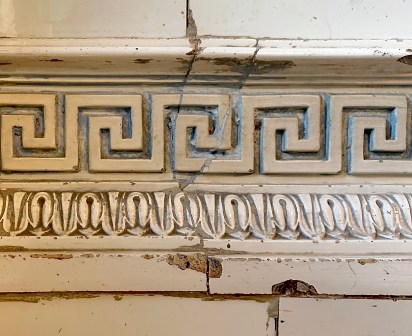
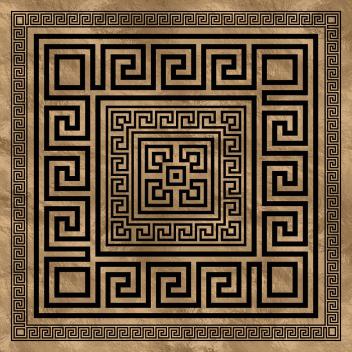
But then this morning I was reading Ovid’s Metamorphoses looking for something completely unrelated when I discovered that Kyanê was the daughter of the river-God Maiandros who was hugely important in the region, and is the origin of the “Greek key” symbol (and labyrinth double) meander, which I’ve written about here. Furthermore, Kyanê was married to Miletos the eponymous hero who founded the famous polis in Asia Minor, of which Olbia was an apoikia or colony. (His parentage varies depending on the source, but candidates include both King Minos and Asterion.) The story of Kyanê’s incestuous children Byblis and Caunus is told in Book IX:439-516, beginning with this significant bit:
When he was in his prime, Minos had made great nations tremble at his very name: now he was weak, and feared Miletus, who was proud of his strength and parentage, the son of Phoebus Apollo and the Nymph Deione. Though Minos believed Miletus might plot an insurrection, he still did not dare to deny him his home. On your own initiative, Miletus, you left, cutting the waters of the Aegean in your swift ship, and built a city on the soil of Asia, that still carries its founder’s name. There you knew Cyane, the daughter of Maeander, whose stream so often curves back on itself, when she was following her father’s winding shores. Twin children were born to her, of outstanding beauty of body, Byblis and her brother Caunus.
So, yeah. I think it entirely possible that’s where Kúanepsion comes from.
Interestingly, after the publication of the Metamorphoses Ovid was exiled to Tomis on the Black Sea where he wrote several books complaining about the marijuana-smoking Skythians and their strange customs.
Oh, and the other month name I couldn’t figure out, Kalamaion?
Well, as it turns out, Maiandros had a son by the name of Kalamos (meaning “reed”) whose boyfriend Karpos became the personification of the vine after he drowned, as told in Nonnos’ Dionysiaka 11.370-481. At first he does not realize that the “rosy-armed youth” has died, and so Kalamos wanders in search of him like an Aletide. Eventually he arrives at the truth and:
To honour the dead he cut with sorrowful steel a dark lock of his hair, long cherished and kept, and holding out this mourning tress to Maiandros his father, he said these last words: “Accept this hair, and then my body; for I cannot see the light of another dawn without Karpos. Karpos and Kalamos had one life, and both one watery death together in the same stream. Build on the river bank, ye Naiads, one empty barrow for both, and on the tombstone let this verse be engraved in letters of mourning: I am the grave of Karpos and Kalamos, a pair of lovers, whom the pitiless water slew in days of yore. Cut off just one small tress of your hair for Kalamos too, your own dying brother so unhappy in love, and for Karpos cut all the hair of your heads.” With these words, he threw himself into the river and sank, as he swallowed the sonslaying water of an unwilling father. Then Kalamos gave his form to the reeds which took his name and like substance; and Karpos grew up as the fruit of the earth.
Eros tells their tragic story to Dionysos after the death of his own beloved Ampelos who was gored by a bull, in an effort to assuage his grief – which only stirs up a greater frenzy in the God.
Later in Dionysiaka 12.98-102 the river Hydaspes begs Dionysos not to destroy the kalamoi which grow along his banks, for the reeds will support the vine which he loves and his fruit will proudly hang from their struts.
You can read the story for yourself here.
I am pretty sure that’s where Kalamaion comes from, and that it would make a great aition for a festival. Perhaps including a reading of Walt Whitman’s “Calamus” poems from Leaves of Grass, to make the Antinoan undercurrent explicit.

 The House of Vines