Although it’s been a while since I asked for Starry Bear writing prompts, I haven’t forgotten. Over the last couple days I got around 8 or 9 pages down on Hermes’ role in the pantheon, with a particular focus on his presence in Germanic and Russian lands and how that shapes our conception of him within the tradition. Unfortunately while doing some research for this I made a discovery that’s going to necessitate completely changing how this paper is written. We’re talking from the title on down to the concluding paragraph. Which, on the one hand is pretty fucking cool. And on the other is irksome, as I’m rather lazy. Funny thing – this isn’t the first time that’s happened since I started working on it. Laying it all out like this is both forcing me to refine my understanding of certain things and bringing up layers I’d never glimpsed before. Which, of course, is helping me grow closer to Hermes. Talk about a hermaion.
Author: thehouseofvines
Orestes Mainomenos
As you go from Megalopolis to Messene, after advancing about seven stades, there stands on the left of the highway a sanctuary of Goddesses. They call the Goddesses themselves, as well as the district around the sanctuary, Maniae (Madnesses). In my view this is a surname of the Eumenides; in fact they say that it was here that madness overtook Orestes as punishment for shedding his mother’s blood. Not far from the sanctuary is a mound of earth, of no great size, surmounted by a finger made of stone; the name, indeed, of the mound is the Tomb of the Finger. Here, it is said, Orestes on losing his wits bit off one finger of one of his hands. Adjoining this place is another, called Ake (Remedies) because in it Orestes was cured of his malady. Here too there is a sanctuary for the Eumenides. The story is that, when these Goddesses were about to put Orestes out of his mind, they appeared to him black; but when he had bitten off his finger they seemed to him again to be white and he recovered his senses at the sight. So he offered a sin-offering to the black Goddesses to avert their wrath, while to the white deities he sacrificed a thank-offering. It is customary to sacrifice to the Graces also along with the Eumenides. Near to the place called Ake is another sanctuary called . . . because here Orestes cut off his hair on coming to his senses. (Pausanias, Description of Greece 8.34.1-3)
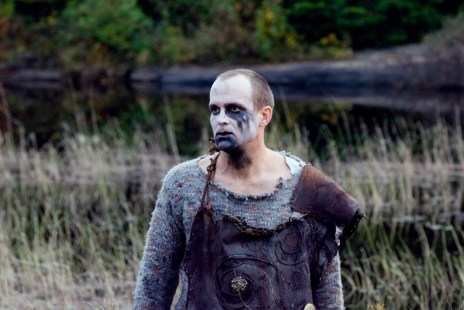
When Orestes had departed in haste from the Taurians with his sister, it so happened that he contracted some disease. And when he made inquiry about the disease they say that the oracle responded that his trouble would not abate until he built a temple to Artemis in a spot such as the one among the Taurians, and there cut off his hair and named the city after it. So then Orestes, going about the country there, came to Pontus, and saw a mountain which rose steep and towering, while below along the extremities of the mountain flowed the river Iris. Orestes, therefore, supposing at that time that this was the place indicated to him by the oracle, built there a great city and the temple of Artemis, and, shearing off his hair, named after it the city which even up to the present time has been called Comana. The story goes on that after Orestes had done these things, the disease continued to be as violent as before, if not even more so. Then the man perceived that he was not satisfying the oracle by doing these things, and he again went about looking everywhere and found a certain spot in Cappadocia very closely resembling the one among the Taurians. I myself have often seen this place and admired it exceedingly, and have imagined that I was in the land of the Taurians. For this mountain resembles the other remarkably, since the Taurus is here also and the river Sarus is similar to the Euphrates there. So Orestes built in that place an imposing city and two temples, the one to Artemis and the other to his sister Iphigenia, which the Christians have made sanctuaries for themselves, without changing their structure at all. This is called even now Golden Comana, being named from the hair of Orestes, which they say he cut off there and thus escaped from his affliction. (Prokopios, History of the Wars 1.17.18-25)
The Stranger King
Something else I’m thinking about: the assumption that the cultural institutions of the ancients were ageless and unchanging.
They weren’t.
For instance, when did the Athenians stop celebrating Anthesteria?
If memory serves, Plutarch is one of the last authors to speak of carrying out the rites; subsequently references to it tend to be in the past tense.
His observances are also very different from the evidence we have for the Classical Athenian form of the festival, which differs again from what was done in Southern Italy, and likely Ephesos and Magnesia too.
Interesting fact: Themistokles (of 300: Rise of an Empire fame) is credited with transplanting Anthesteria to the latter polis, where he was banished after successfully defending his mother-city from Persian incursion.
I bet Orestes’ Supper held some interesting resonances for him, especially considering the tragic hero’s ties to the Black Sea region.
Of light in the darkness

Oh, there’s more! Starry stuff, that is.
Did you catch the month-name we use for the Bakcheion calendar? (Hint: it’s here.)
That’s right – Στέφανος, the month of Flower Crowns.
As in the one Ariadne wore when she and Dionysos first celebrated Anthesteria:
As the author of the Cretica says, at the time when Liber came to Minos with the hope of lying with Ariadne he gave her this crown as a present. Delighted with it, she did not refuse the terms. It is said, too, to have been made of gold and Indian gems, and by its aid Theseus is thought to have come from the gloom of the Labyrinth to the day, for the gold and gems made a glow of light in the darkness. (Hyginus, Astronomica 2.5)
Hail Dionysos Nyktelios!
Are you wandering in darkness?
Are you drowning in your shame?
Are you weary, or sick and tired
of living in the blackness of this age?
Come with me
and meet the one
who makes the night like day.
And bow before him,
and adore this king
who bears our shame.
Come with me
and meet the one
who makes the night like day.
And bow before him,
and adore this king
who bears our shame.
Come with me
and meet the one
who makes the night like day.
And bow before him,
and adore this king
who bears our shame.
Everything will change
Everything will change
Everything will change
Everything will change
a white day for slaves
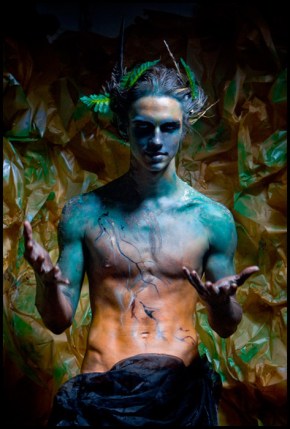
One of the reasons that Óðr has been on my mind of late is because we have entered the White Season according to the Bakcheion calendar, during which Dionysos:
acts out the role of the Magician come from a strange and distant land, bringing wonders and radical transformation in his wake. He knows the songs and ceremonies to awaken and release, and he is followed by a triumphant procession of Nymphs and Satyrs whose ecstatic revelry chases off barrenness, stagnation and malignant or at least mischievous Spirits from the land and his people.
This is the Season in which Anthesteria falls (at this point it’s only a couple weeks away! 11-13 Stephanos or 4-6 February by the common reckoning) and the overlapping feast for Erigone, the Hanged Maiden:
Nor did the morn of the Broaching of the Jars pass unheeded, nor that whereon the Pitchers of Orestes bring a white day for slaves. And when he kept the yearly festival of Ikarios’ child, thy day, Erigone, lady most sorrowful of Attic women, he invited to a banquet his familiars, and among them a stranger who was newly visiting Egypt, whither he had come on some private business. (Kallimachos, Aitia 1.1)
And the reason that made me think of Óðr is found in Hyginus’ Astronomica:
§ 2.2.1 LESSER BEAR: Aglaosthenes, who wrote the Naxica, says that she is Cynosura, one of the nurses of Jove from the number of the Idaean nymphs. He says, too, that in the city called Histoe, founded by Nicostratus and his friends, both the harbour and the greater part of the land are called Cynosura from her name. She, too, was among the Curetes who were attendants of Jove. Some say that the nymphs Helice and Cynosura were nurses of Jove, and so for gratitude were placed in the sky, both being called Bears. We call them Septentriones.
§ 2.2.2 But many have said that the Great Bear is like a wagon, and the Greeks do call it amaza. This reason has been handed down: Those who, at the beginning, observed the stars and supposed the number of stars into the several constellations, called this group not “Bear” but “Wain,” because two of the seven stars which seemed of equal size and closest together were considered oxen, and the other five were like the figure of a wagon. And so the sign which is nearest to this they wished to be called Bootes. We shall speak of him later on. Aratus, indeed, says that neither Bootes nor the Wain has these names for the reason above, but because the Bear seems, wagon-like, to wheel around the pole which is called North, and Bootes, is said to drive her. In this he seems to be considerably in error, for later, in connection with the seven stars, as Parmeniscus says, twenty-five were grouped by certain astronomers to complete the form of the Bear, not seven. And so the one that followed the wagon and was formerly called Bootes, was now called Arctophylax [Bear Watchter], and she, at the same time that Homer lived, was called Bear. About the Septentriones Homer says that she was called both Bear and Wain; nowhere does he mention that Bootes was called Arctophylax.
§ 2.4.1 BEAR-WATCHER: He is said to be Arcas, the son of Jove and Callisto, whom Lycaon served at a banquet, cut up with other meat, when Jupiter came to him as a guest. For Lycaon wanted to know whether the one who had asked for his hospitality was a god or not. For this deed he was punished by no slight punishment, for Jupiter, quickly overturning the table, burned the house with a thunderbolt, and turned Lycaon himself into a wolf. But the scattered limbs of the boy he put together, and gave him to a certain Aitolian to care for. When, grown to manhood, he was hunting in the woods, he saw his mother changed to bear form, and did not recognize her. Intent on killing her, he chased her into the temple of Jove Lycaeus, where the penalty for entering is death, according to Arcadian law. And so, since both would have to die, Jupiter, out of pity, snatched them up and put them among the stars, as I have said before. As a result, Arcas is seen following the Bear, and since he guards Arctos, he is called Arctophylax.
§ 2.4.2 Some have said that he is Icarus, father of Erigone, to whom, on account of his justice and piety, Father Liber gave wine, the vine, and the grape, so that he could show men how to plant the vine, what would grow from it, and how to use what was produced. When he had planted the vine, and by careful tending with a pruning-knife had made it flourish, a goat is said to have broken into the vineyard, and nibbled the tenderest leaves he saw there. Icarus, angered by this, took him and killed him and from his skin made a sack, and blowing it up, bound it tight, and cast it among his friends, directing them to dance around it. And so Eratosthenes says: Around the goat of Icarus they first danced.
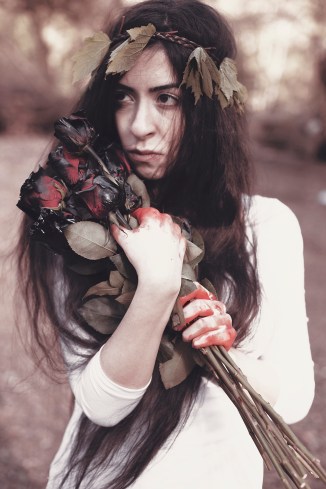
§ 2.4.3 Others say that Icarus, when he had received the wine from Father Liber, straightway put full wineskins on a wagon. For this he was called Bootes. When he showed it to the shepherds on going round through the Attic country, some of them, greedy and attracted by the new kind of drink, became stupefied, and sprawling here and there, as if half-dead, kept uttering unseemly things. The others, thinking poison had been given the shepherds by Icarus, so that he could drive their flocks into his own territory, killed him, and threw him into a well, or, as others say, buried him near a certain tree. However, when those who had fallen asleep, woke up, saying that they had never rested better, and kept asking for Icarus in order to reward him, his murderers, stirred by conscience, at once took to flight and came to the island of the Ceans. Received there as guests, they established homes for themselves.
§ 2.4.4 But when Erigone, the daughter of Icarus, moved by longing for her father, saw he did not return and was on the point of going out to hunt for him, the dog of Icarus, Maera by name, returned to her, howling as if lamenting the death of its master. It gave her no slight suspicion of murder, for the timid girl would naturally suspect her father had been killed since he had been gone so many months and days. But the dog, taking hold of her dress with its teeth, led her to the body. As soon as the girl saw it, abandoning hope, and overcome with loneliness and poverty, with many tearful lamentations she brought death on herself by hanging from the very tree beneath which her father was buried. And the dog made atonement for her death by its own life. Some say that it cast itself into the well, Anigrus by name. For this reason they repeat the story that no one afterward drank from that well. Jupiter, pitying their misfortune, represented their forms among the stars. And so many have called Icarus, Bootes, and Erigone, the Virgin, about whom we shall speak later. The dog, however, from its own name and likeness, they have called Canicula. It is called Procyon by the Greeks, because it rises before the greater Dog. Others say these were pictured among the stars by Father Liber.
§ 2.4.5 In the meantime in the district of the Athenians many girls without cause committed suicide by hanging, because Erigone, in dying, had prayed that Athenian girls should meet the same kind of death she was to suffer if the Athenians did not investigate the death of Icarus and avenge it. And so when these things happened as described, Apollo gave oracular response to them when they consulted him, saying that they should appease Erigone if they wanted to be free from the affliction. So since she hanged herself, they instituted a practice of swinging themselves on ropes with bars of wood attached, so that the one hanging could be moved by the wind. They instituted this as a solemn ceremony, and they perform it both privately and publicly, and call it aletis, aptly terming her mendicant who, unknown and lonely, sought for her father with the god. The Greeks call such people Aletides.
And to make things even more interesting, give Viking Stranger-Kings: the foreign as a source of power in Viking Age Scandinavia by Andres Minos Dobat and The Stranger King and Rock Art by Michael Rowlands a read.
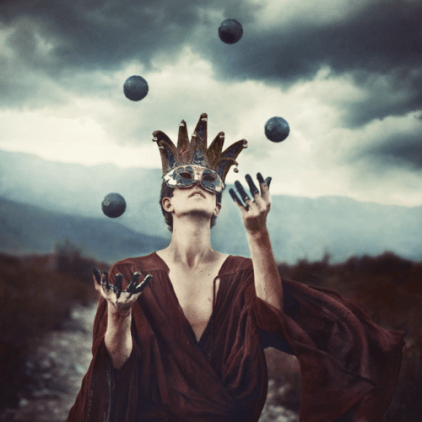
bread crumbs
Before I venture forth to cause mischief I want to leave you with this link to the works of Zaur Hasanov. Assuming you want more context for the Figs and Honey post.
Iconography can be tricky
Artistic renderings of Óðr are few and far between, likely because of the paucity of information on him in the lore. So it was kind of cool to stumble across this image from Mythology Wiki:

Except … uh … is it just me, or does that look uncomfortably like an idealized rendering of a certain failed Austrian art student? Must be why Heathens have to grow beards.
Anyway, I much prefer this for Óðr:
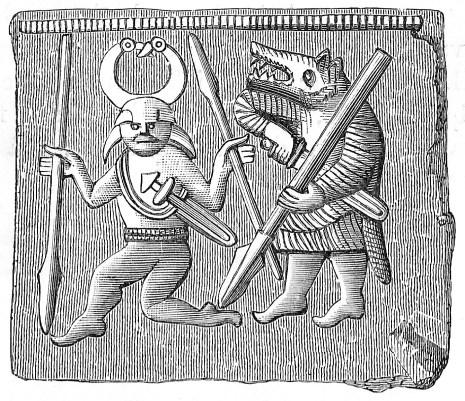
Wild Ukrainian dances for the God of Song
L. M. Hollander, The Old Norse God Óðr in The Journal of English and Germanic Philology, Vol. 49, No. 3 (Jul., 1950)
Against this theory, Falk raised the objections that the name of Óðr is not instanced in early Old Norse and that any transition Adonis>Óðr would call for etymological justification; also, that the meaning ‘raging, mad’ ill agrees with the character of Baldr. To account, then, for the name of Óðr, Falk calls attention to a passage in Martianus Capella’s (early 5th century) poem De nuptiis Philologie et Mercurii, translated into Old High German by Notker Labeo. There, in the hymn to the sun god, the sun god is celebrated under his various names; last, as Biblius Adon. This is glossed by Notker as Biblius cantans. In other words, Notker interprets Adon as αδων, present participle of Attic αιδω ‘to sing.’ This, Falk surmises, may have been the common medieval interpretation of the name of Adonis; which, then, translated into Old Norse, would be Óðr; which as a noun also signifies ‘song, poetry.’
Figs and honey
My name is not just an expression of who I am, but has served as an infallible guide through the maddening twists and turns of my spiritual life. For instance, I’ve only been doing and talking about Starry Bear stuff for a couple of years now, right? Well, I actually found one of the first breadcrumbs that would eventually lead here almost a decade ago:
For instance, Sannion the son of Megakles (SEG 43.767), who lived in the Thrakian Chersonesos during the early Hellenistic era, was a prominent citizen of his town and the burial stelai of several generations of his family have come to light. His wife was named Mendiko, which is taken as a theophoric honoring Bendis (the letters B and M tend to get swapped out in the local dialect) whose cult was closely allied with that of Dionysos and Sabazios and involved ecstatic dances, trance possession and torchlit processions at night. The fondness of Sannion’s family for Dionysos went far beyond that – he named his sons Dionysios and Apollonios, with Dionysios recurring several times down through the generations.
The most recent editors of the Sannion family stelai gave an interpretation of the name which was novel to me. They derived it from the Greek word saino which means “to fawn upon; flattery” and suggested it was a derogatory term for a sycophant. The sukophantes was a servile position in the court of Greek monarchs; he was a toady and yes-man whose job it was to praise everything the king said and provide entertainment – usually of a low and vulgar nature. In fact the word derives from sukon (“fig”) and phaino (“I show, demonstrate”), referring to “showing the fig,” a gesture made by sticking the thumb between the first two fingers which has certain obvious sexual connotations. In other words he was a court jester. This is interesting for reasons that will become apparent momentarily; I also find it interesting, of course, because of my great fondness for the Ptolemaic Dynasty. You wouldn’t be far off the mark if you called me the Ptolemies’ sycophant.
Regarding Sannion’s hometown, Linda Maria Gigante writes:
Ancient Chersonesos Taurike is located on the western Crimean Peninsula along the northern Black Sea coast (present-day Ukraine). It was founded in the later 5th century BC by Greek settlers, probably from Herakleia Pontica and Boeotian Delion. Chersonesos’ growth and prosperity were primarily due to wine-production and its political structure was democratic. Probably because of a Scythian attack in the early 3rd century BC, new fortifications were built (mid 3rd – 2nd BC), enlarging the city. To build the walls, particularly the inner wall of Tower #17 (Tower of Zeno), more than 800 painted grave stelai and other monuments were removed from a nearby necropolis and, in many cases, carefully broken, laid in layers, and placed in conformity with their original location.
Although much of my focus has been on the Ukraine and neighboring territories where Bacchic cults flourished:
The Budini are a great and populous nation; the eyes of them all are bright blue, and they are ruddy. They have a city built of wood, called Gelonus. The wall of it is three and three quarters miles in length on each side of the city; this wall is high and all of wood; and their houses are wooden, and their temples; for there are temples of Greek Gods among them, furnished in Greek style with images and altars and shrines of wood; and they honor Dionysos every two years with festivals and revelry. (Herodotos, The Histories 4.108)
The southern portion of the Black Sea also holds some significance for the tradition, being the home of Medeia and Kírkē, after all.
And also the Sanni.
Regarding this population and their territory Pliny the Elder (Natural History 6.4.1) writes:
Then come the rivers Tasonius and Melanthius, and 80 miles from Amisus the town of Pharnacea, the fortress and river Tripolis, the fortress and river Philocalia and the fortress of Liviopolis, which is not on a river, and 100 miles from Pharnacea the free town of Trebizond, shut in by a vast mountain range. Beyond Trebizond begins the Armenochalybes tribe, and 30 miles further Greater Armenia. On the coast before reaching Trebizond is the river Pyxites, and beyond Trebizond the Charioteer Sanni, and the river Absarrus with the fortress of the same name in its gorge, 140 miles from Trapezus. Behind the mountains of this district is Liberia, and on the coast the Charioteers, the Ampreutae and the Lazi, the rivers Acampseon, Isis, Mogrus and Bathys, the Colchian tribes, the town of Matium, the River of Heracles and the cape of the same name, and the Rion, the most celebrated river of the Black Sea region. The Rion rises among the Moschi and is navigable for ships of any size for 38½ miles, and a long way further for smaller vessels; it is crossed by 120 bridges. It had a considerable number of towns on its banks, the most notable being Tyndaris, Circaeus, Cygnus, and at its mouth Phasis; but the most famous was Aea, 15 miles from the sea, where two very large tributaries join the Rion from opposite directions, the Hippos and the Cyaneos. At the present day the only town on the Rion is Surium, which itself also takes its name from a river that enters the Rion at the point up to which we said that it is navigable for large vessels. It also receives other tributaries remarkable for their size and number, among them the Glaucus; at its mouth is an island with no name, 70 miles from the mouth of the Absarrus. Then there is another river, the Charicis, the Saltiae tribe called of old the Pine-seed-eaters, and another tribe, the Sanni; the river Chobus flowing from the Caucasus through the Suani territory; then Rhoan, the Cegritic district, the rivers Sigania, Thersos, Astelphus and Chrysorrhoas, the Absilae tribe, the fortress of Sebastopol 100 miles from Phasis, the Sanicae tribe, the town of Cygnus, the river and town of Penius; and then tribes of the Charioteers with a variety of names.
Note that they have a settlement called Liberia (city of Liber = Dionysos, whose festival the Liberalia celebrated the God’s discovery of bees and honey) and that one of their tribes was named the Pine-seed Eaters, pine of course being sacred to the God and good for bees. Then there is the Glaucus River, which naturally reminds one of Ariadne’s other, blue-grey brother.
But Glaucus, while he was yet a child, in chasing a mouse fell into a jar of honey and was drowned. On his disappearance Minos made a great search and consulted diviners as to how he should find him. The Curetes told him that in his herds he had a cow of three different colors, and that the man who could best describe that cow’s color would also restore his son to him alive. So when the diviners were assembled, Polyidus, son of Coeranus, compared the color of the cow to the fruit of the bramble, and being compelled to seek for the child he found him by means of a sort of divination. But Minos declaring that he must recover him alive, he was shut up with the dead body. And while he was in great perplexity, he saw a serpent going towards the corpse. He threw a stone and killed it, fearing to be killed himself if any harm befell the body. But another serpent came, and, seeing the former one dead, departed, and then returned bringing a herb, and placed it on the whole body of the other; and no sooner was the herb so placed upon it than the dead serpent came to life. Surprised at this sight, Polyidus applied the same herb to the body of Glaucus and raised him from the dead. (Apollodoros, The Library 3.3.1)
This makes me think of mad-honey (and Hybla, for some reason) which just so happens to be what the Sanni were famed for:
There is another kind of honey, found in the same district of Pontus among the people called Sanni, which from the madness it produces is called maenomenon. This poison is supposed to be extracted from the flowers of the oleanders which abound in the woods. Though these people supply the Romans with wax by way of tribute, the honey, because of its deadly nature, they do not sell. (Pliny the Elder, Natural History 21.45.1)
In fact, it was one of their most potent weapons, as Strabo describes in his Geography (12.3.18):
I have already described Colchis and the coast which lies above it. About Trapezus and Pharnacia are situated the Tibarani and Chaldaei and Sanni, in earlier times called Macrones, and Lesser Armenia; and the Appaitae, in earlier times called the Cercitae, are fairly close to these regions. Two mountains cross the country of these people, not only the Scydises, a very rugged mountain, which joins the Moschian Mountains above Colchis (its heights are occupied by the Heptacomitae), but also the Paryadres, which extends from the region of Sidene and Themiscyra to Lesser Armenia and forms the eastern side of Pontus. Now all these peoples who live in the mountains are utterly savage, but the Heptacomitae are worse than the rest. Some also live in trees or turrets; and it was on this account that the ancients called them “Mosynoeci,” the turrets being called mosyni. They live on the flesh of wild animals and on nuts; and they also attack wayfarers, leaping down upon them from their scaffolds. The Heptacomitae cut down three maniples of Pompey’s army when they were passing through the mountainous country; for they mixed bowls of the crazing honey which is yielded by the tree-twigs, and placed them in the roads, and then, when the soldiers drank the mixture and lost their senses, they attacked them and easily disposed of them.
A savage race (even by the standards of other barbarians) who live on the flesh of wild beasts and use mad-honey to intoxicate and then murder their enemies – that sure sounds like the kind of people who would venerate the Frenzied God!
This also calls to mind the method employed by Zeus to defeat and unman his father – which has always made me suspect that in the Anatolian original of this myth Dionysos also used honey:
In him there had been resistless might, and a fierceness of disposition beyond control, a lust made furious, and derived from both sexes. He violently plundered and laid waste; he scattered destruction wherever the ferocity of his disposition had led him; he regarded not Gods nor men, nor did he think anything more powerful than himself; he contemned earth, heaven, and the stars. Now, when it had been often considered in the councils of the Gods, by what means it might be possible either to weaken or to curb his audacity, Liber, the rest hanging back, takes upon himself this task. With the strongest wine he drugs a spring much resorted to by Acdestis where he had been wont to assuage the heat and burning thirst roused in him by sport and hunting. Hither runs Acdestis to drink when he felt the need; he gulps down the draught too greedily into his gaping veins. Overcome by what he is quite unaccustomed to, he is in consequence sent fast asleep. Liber is near the snare which he had set; over his foot he throws one end of a halter formed of hairs, woven together very skilfully; with the other end he lays hold of his privy members. When the fumes of the wine passed off, Acdestis starts up furiously, and his foot dragging the noose, by his own strength he robs himself of his sex; with the tearing asunder of these parts there is an immense flow of blood; both are carried off and swallowed up by the earth; from them there suddenly springs up, covered with fruit, a pomegranate tree. (Arnobius of Sicca, Against the Heathen 5.5-6)
But I digress.
Speaking of hibernation …
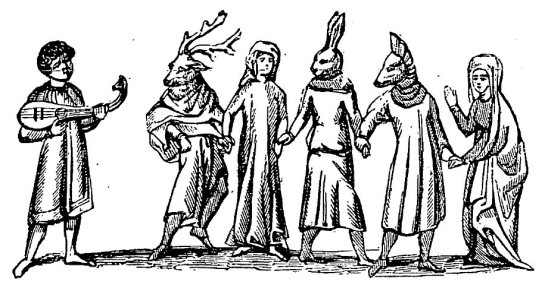
There are also two periods when Dionysos feels most Óðr-like to me – the first stretching roughly from November 11th to January 6th and the second running from April 1st to June 24th.
When it comes time for a Starry Bear calendar I’ll probably cluster his festivals accordingly.
Or, you know, Bacchize the various folk Catholic feast-days that fall within those time-spans.
Hmm.
Maybe I could alternate – one year Starry Bull, the following Starry Bear; Starry Bull, Starry Bear; Starry Bull, Starry Bear, etc.
Shifting Seasons, Shifting Faces

An attendee at our recent Lenaia celebration had an interesting question for me, “If we are calling Dionysos up from the underworld then how has he been able to interact with us these last couple months?”
According to the Bakcheion calendar Dionysos spends the Black Season, roughly from October to December, under the Earth resting in the lap of the Chthonic Queen. During this period he feasts with his deceased initiates, wearing the mask of the Fool. Much of this time is also spent in slumber, recovering from Oschophoria – the autumn harvest-fest where our Bull God is chased down and dismembered by his adversary, the Wolf Apollo. While he sleeps he dreams of his raucous and absurd adventures among the Harlequinade.
This is the hieros logos (sacred account) and nomos (custom; law) of our temple; there are folks within our own Starry Bull tradition (let alone the wider Dionysian and Hellenic polytheist communities) who believe and worship very differently. And as long as it fosters authentic connection with him there’s nothing wrong with that.
As a God Dionysos may also choose to interact with individuals and groups however he pleases*; furthermore, because of his particular form of madness Dionysos experiences time, space and reality very differently than we (and even many of his fellow Gods) do. All of the myths, legends and historical events in which he has taken part (and their various permutations) are occurring for him simultaneously.
Our calendar is an attempt to take that infinite flux and express it in an orderly and linear manner, albeit one with cyclical recurrences. Each of our festivals flow into each other, forming an overarching narrative which is further reflected in our system of seasonal associations. It is elegant and effective and even more importantly was born out of our experiences with him.
While Dionysos possesses complete autonomy and agency nevertheless certain patterns can be observed in his behavior. For some reason Dionysos tends to feel distant and diffuse after fall and into early winter; some describe him as cold, aloof, regal, chthonic, and even distracted or altogether absent at this time. Others get a weird, wild, playful, somewhat sinister Dionysos come through in ritual, dreams, visions and personal encounters with him. Over the years I’ve had both, sometimes even merging together into a complex if contradictory figure. And so we represent this with the Black Season of our year, and the festivals that fall during it.
Ever since the first of January we have been in the White Season, where Dionysos acts out the role of the Magician come from a strange and distant land, bringing wonders and radical transformation in his wake. He knows the songs and ceremonies to awaken and release, and he is followed by a triumphant procession of Nymphs and Satyrs whose ecstatic revelry chases off barrenness, stagnation and malignant or at least mischievous Spirits from the land and his people.
And we greet him in this form for the first time at Lenaia.
* It is also possible that during the Black Season we are only encountering the dream-form or eidolon of Dionysos, projected out into the world above while he remains comatose below.

Recantare
Alright, I take back all the shitty things I’ve said and thought about Missouri as they have formally reinstalled Ceres. Good on them. I still hope Representative Mike Moon and his family are afflicted with some sort of starving madness which won’t end until they don hairshirts and crawl on bloodied knees to the Capitol to propitiate the Goddess, however. I’m old school about these things.
Help an Orpheotelest out, would you?
Anyone got a spare $20,200? I’d really like this statue of Dionysos by Ukrainian artist Andrey Ozyumenko for the Bakcheion.

Io Dionysos, son of Semele, bestower of Earth’s rich bounty!
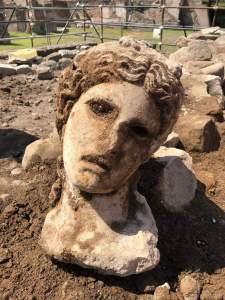
Although the Hudson Valley Bakcheion held our Lenaia celebration over the weekend, today’s the official start of the festival, so I wish y’all blessed and ecstatic communion with the Lord of the Vine and Frenzy, as he is roused from his wintry slumber in the Halls of Persephone and called forth to join us, flower-crowned, at Anthesteria.
Also Sprach Zarathustra
One of the reasons that this whole situation with Iran concerned me enough to write about it here is that I’m developing an appreciation for some of her Pre-Islamic faiths and their influence on the Indo-European family of religions. A lot of this is relevant to Starry Bear stuff – so do consider giving the links a read.
- Constantine Borissoff, Non-Iranian origin of the Eastern-Slavonic god Xŭrsŭ/Xors
- Caspar Meyer, Iranians and Greeks After 90 Years: A Religious History of Southern Russia in Ancient Times
- Jennifer Black, Parthian Rhyta at Home and Abroad: Reconsidering the Ivory Rhyta of Nisa in Light of Roman Evidence from the First Century BCE
- Stanislaw Sielicki, Indo-Iranian parallels of the Slavic water rites of the oath and guilt confirmation attested in Medieval Latin accounts and Slavic law codices
- Jonas Wellendorf, Zoroaster, Saturn and Óðinn: The loss of language and the rise of idolatry
- George Hinge, Dionysos and Herakles in Scythia ‒ The Eschatological String of Herodotos’ Book 4
- Amir Ahmadi, The magoi and daimones in Column VI of the Derveni Papyrus
- Damon Zacharias Lycourinos, Those Who Wander in the Night: Magoi Amongst the Hellenes
- Andrei V . Lebedev, Pharnabazos the diviner of Hermes, plausible author of the Orphic-Pythagorean graffiti from Olbia
- Yulia Ustinova, Aphrodite Ourania of the Bosporus: The Great Goddess of a Frontier Pantheon
- Zaur Hasanov, A Reflection of the Cimmerian and Scythian Religious Rites in Archaeology
- Leland Guthrie, Death and Sacrifice as Transformation and Fecundation in the Ecological Mythos of the Scytho-Siberian Nomads
- Manya Saadi Nejad, Rehabilitating the Pairikās: Fairies in Iranian mythology
Each of our Gods has this level of complexity (and paradox)
In the Nyktelios post (paraphrasing the arguments I set forth here) I made the following comparison:
… much as the Egyptian solar deity Rē fuses with Osiris in the Duat.
I discussed the question of whether Dionysos = Osiris in the piece Mighty Bull of the Two Lands, however it wasn’t until this article that I came to a satisfactory solution. (At least for myself.)
It takes time to put the pieces together, and in true bricolage fashion the story changes depending on how you arrange them.
 The House of Vines