It’s pretty simple, really. First they have to complete Boukoloi (literally “ox-tender”) training (which consists of the material found in Tending the Bull: A tradition of Dionysian devotion, Masks of Dionysos: Getting to Know the God Through His Heroes and Heroines, Hunting Wisdom: A Bacchic Orphic Diviner’s Manual and Spirits of Initiation: A Study of the Toys of Dionysos, as well as a bunch of one-on-one training covering stuff not contained in the books.) They must receive their Toys initiation. And they must develop a strain of the tradition, which they are then responsible for cultivating and bringing others into. I’m condensing a lot into “one-on-one training” but that’s the gist of it. The whole process generally takes two to five years, and there are initiations and empowerments that must be performed in person.
Why Orpheotelest?
Although we use the term Orpheotelest (pl. Orpheotelestai) to refer to the highest grade within the Starry Bull tradition it’s not something that our Bacchic Orphic predecessors employed.
While an ancient term meaning something like “Orphic initiator” or more broadly “expert in Orphic rites,” all the instances of it come from outsiders chronicling the activities of a class of mendicant religious specialists. Although our knowledge is mostly formed by these outsider accounts, in the rare instances when they are permitted to speak for themselves it seems that they favored terms such as hierus/hiera (priest/priestess), magos (magician) or mantis (diviner) or else they were functionaries within a thiasos (private religious association) or served at some sanctuary and held the corresponding titles.
Indeed, it can be difficult to identify those with Orphic sympathies unless they explicitly identify as Orphikoi (rare) or (more commonly) attribute their ritual or theological texts to Orpheus or Mousaios. The subject matter – mention of Orphic divinities, a concern with pollution, ancestral guilt, averting daimones and other sources of bad luck, illness and the like, spiritual liberation and eschatology – can give it away, but not always as these were also concerns of many contemporary figures and movements.
So why do we use it? Well, we needed a term that encompassed more than just “priest” or “diviner,” and wanted to keep it within the Mediterranean milieu, so “spirit-worker” and “shaman” were out – thus we settled on Orpheotelest, despite its “outsider” origin. Especially as some of the earliest users of it may even have possessed insider knowledge – Plato, for instance, is constantly quoting or paraphrasing Orpheus, employs special mystery terminology and was an initiate in several traditions that were strongly influenced by Orphism. Indeed, just as one may speak of a “Thracian Orphism” or a “Bacchic Orphism” there is also a “Platonic Orphism,” which is probably the most prolific branch within the contemporary Hellenic polytheist movement, both in its native Greek and broader Anglophone varieties.
On Orpheotelestai and other matters
This was originally a response to a post that appeared on Patheos, Wild Hunt or some similar site claiming that Paganism in both its ancient and modern forms lacked hierarchy, a set of sacred texts, was focused on life here rather than some posthumous existence, and so forth. None of which applies to my tradition, which is one of many (many, many) reasons why I long ago stopped using the Pagan identifier. If you’d like to learn more about Orphism I recommend checking out some of the links here.
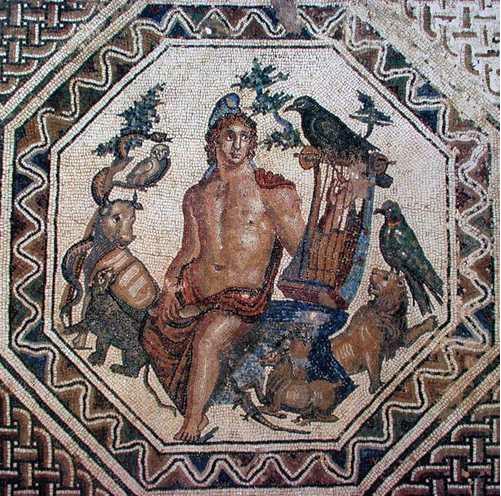
The power of Orpheotelestai came from their knowledge, experience and discernment in matters of religion and was further predicated on a natural hierarchy – if the average person could solve their own physical or psychological maladies they naturally wouldn’t have any need for such specialists. The Orpheotelest, on the other hand, was able to diagnose their client’s problems and assign the proper prayers, taboos, ritual procedures, etc. that would bring about purification and release, often by pacifying furious spirits through music, dance and feasting. The more that they could impress their clients with their mastery of arcane lore, ability to discern the will of the divinities and get results with their theatrics the higher the price they could command for their services. Failures didn’t remain in the profession long and rarely escaped with their lives.
So, in other words, my whole tradition is predicated on there being a right and a wrong way to do religion. Circumstances call for specific powers to be engaged with in a specific way in order to get specific results and if any of those details are wrong or left out there can be pretty serious consequences – and not just for the one overseeing the rites. For instance a common feature in the Bacchic and Orphic cults was a form of exorcism where the patient was put in a trance state and then exposed to music, colors and objects that would induce frenzied motion in the body resulting in cathartic ecstasy. The principle of sympathia governed these rites so that each of its elements were carefully chosen in order to bring the person into alignment with the proper power. Dissonance could cause the power in them to become agitated, angry and violent resulting in harm being done to the patient. That said, I fully support a person’s right to be wrong, particularly in this age of massive overpopulation.
One of the things that distinguished Orphikoi from the general population of ancient Greece was that theirs was a text-based religion with a strong emphasis on memorizing and internalizing hieroi logoi or holy words. Indeed, this association was so strong that anyone inordinately fond of books was immediately suspected of having Orphic sympathies. Of course since this was a tradition of ecstatic possession and there was no universal Orphic church to exercise control over doctrinal matters a lot of different groups and individuals developed the Orphic tradition in novel ways, sometimes to the point where the only commonality between a pair of texts is that they claim some connection to the figure of Orpheus. While Orphics may not all have agreed on the contents of their master’s teachings, all felt that they were deeply important, to the point that many inscribed their texts on sheets of gold which they carried on their persons like protective amulets and had them buried with them when they went beneath the earth. These texts were meant to help the Orphic call to mind the initiations they had received, giving them foreknowledge of what awaited them in the underworld and how to overcome the adversaries and lords of judgment they would encounter there. It further reminded them of who they were, what their relationship to Dionysos was and the song to sing to release the poinê of Persephone.
Without faith in your Guide it’s very easy to get lost in the Labyrinth.
For the Bacchic Orphic the telos is everything. We look forward to an eternity of fucking and feasting and frenzy with our God and his Furious Host and everything we do here is to prepare us for that. So while there is no negation of this world and carnal existence – indeed we’re to soak up as much of it as we can in order to bring its vitality over there with us – at the same time priority is definitely given to the otherworldly in our tradition. Our pantheon pretty much consists of chthonic Gods, Nymphai, Daimones, Heroes and the ancestors so if you are afraid of death this is definitely not the religion for you.
Of course, the ancient Orphics believed that anyone who wasn’t initiated into the mysteries would spend their posthumous existence buried in shit, endlessly remembering the worst and most shameful moments of their life.
Everyone is confronted with a choice below – do you drink from the spring of Memory or Forgetfulness? The mysteries teach you to live life well, so you regret nothing, so that you’re not afraid to remember who you are. It’s those who are seeking escape that are forced to relive their lives. You’re only free when you stop running from yourself. That’s why you say to the guardians, “My name is Asterios.”
braided devotion
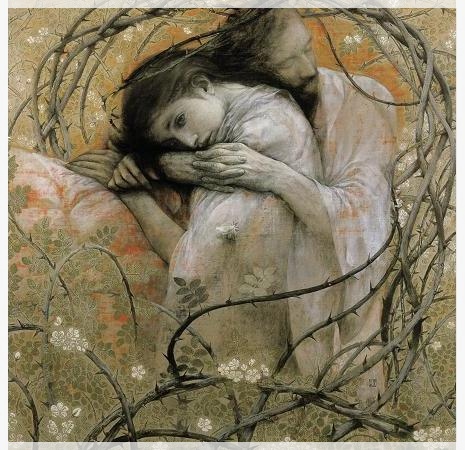
Although not included among the Foundation Day activities one could recite the full cycles of Daily Hymns for Dionysos and Freyja, alternating between them.
Gold for the Golden Lady
Or perhaps you’d prefer my Freyja playlist. Warning: it’s quite large. But this is probably my favorite song on it. Brings a tear to my eye every fucking time, man.
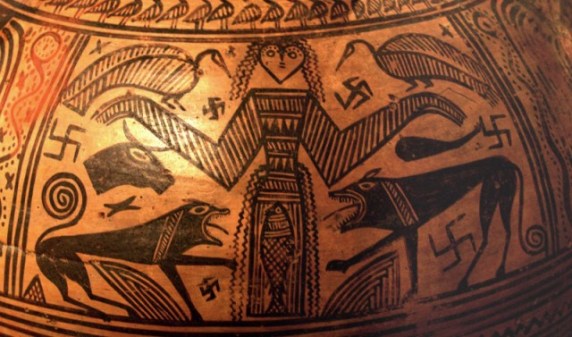
in the mood

To get you in the mood here is my Óðr and Freyja playlist.
And one Lady in particular

According to the Bakcheion ritual calendar Dionysos is MIA from Lampteria (when the Thyiades go searching for him with torches) until Lenaia (when the Lenai rouse him from his slumber beneath the earth with their songs and dances.)
Of course, part of him isn’t gone but always remains here with us (even if another part of him dwells down below with his feasting Heroes and Heroines.) The reason that he goes unrecognized during these bitingly cold winter months is because that fragment believes itself to be Óðr rather than Dionysos.
During this period he is reunited with his Norse wife Freyja and their nuptials are celebrated on December 31st into January 1st, which is also the anniversary of the creation of the Bakcheion, hence this festival is known as Foundation Day.
Our foundations lay in love, and madness, and ecstasy, and poetic inspiration – and so on this night we let the world know it through riotous displays and masked revelry.
How do you plan on celebrating?
Ladies love the Bakcheion
Earlier in the week Galina and I were at the Post Office mailing out the latest batch of Year 4 calendars when I noticed something interesting (well, interesting to me at least.) Most of the calendars were purchased by women (and we’re talking by a five to one margin!)
I suppose I shouldn’t be too surprised. The Bakcheion is a very female-friendly and affirming space. Many Goddesses are honored here along with Dionysos, and the temple recognizes nearly as many Heroines as it does Heroes. Our theological underpinning is Orphic which, despite what you might have read on Twitter or Tumblr, was far from misogynistic. Our traditions are influenced by the cultures of Magna Graecia and Ptolemaic Egypt, both of whom were known for their positive treatment of women. (The other influences – Minoan Crete, Makedonia and the Black Sea region – were as well but I haven’t written any posts on that subject, alas.) Although I am the ἱεροποιός, both of my assistants (who blog here and here) are women. In the past most of the initiates I’ve made have been women (or trans), and I’ve always ensured that there was a strong female presence on the leadership teams of groups I’ve run. The Bakcheion supports the radical propositions that women should be permitted to wear whatever they want (for which I was called a Nazi) and that they should not have their clitorises cut off (unless that’s something they want.)
So, what I’m saying is — dudes, you need to buy more calendars. Sheesh. You guys really gonna let these broads beat you? For shame. For shaaaaaaame.

The gift of choice
Back on the 10th of December I posted about the many gifts Dionysos has bestowed upon mankind, but I left out one of his most important. And so to remedy that I would like to share these ruminations.
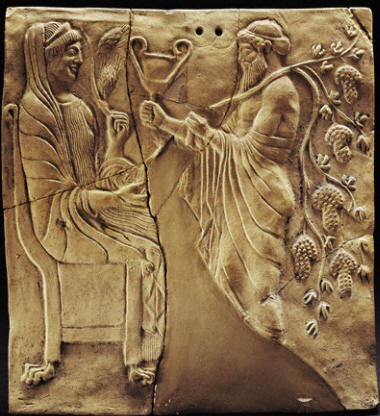
We often talk about Dionysos as the God of freedom, the one who comes to liberate us from our chains whether they are personal inhibitions, psychological addictions, societal convention or even physical bondage.
There are many ways that he works his wonders in our lives, but one of the most important is also, in some respects, the simplest: he reminds us that we’ve got a choice. Think back on the bulk of his myths: what’s he usually doing? Trying to get people to seriously think about their lives and what they want out of them, to show them that they don’t have to settle for what’s been given to them or follow certain predetermined roles because that’s what everyone expects them to do. He urges people to take responsibility for their actions, to realize that they’ve got the power to change things, to look at things in a different light.
King Midas couldn’t conceive of anything more valuable than gold until Dionysos showed him otherwise. Akoites couldn’t imagine any way out of violence and thievery until Dionysos revealed to him the power of dreams. Hephaistos and Hera were trapped in a cycle of violence and recrimination until Dionysos intervened. Ariadne thought herself worthy of death for the crimes of her past until Dionysos woke her up on Naxos. Countless women believed that they could be nothing more than wives and mothers until Dionysos got ahold of them. And he even tried to reason with his bitterest enemies. How many times does Dionysos come before Pentheus, humbling himself and pleading with him to turn aside, to let go of his wrath and delusions and choose the path of peace instead? The same course of action was taken with Lykourgos and the daughters of Minyas, though it didn’t do them any more good than it did Pentheus.
That’s because we humans are stubborn and stupid and blind and cling to our misery even as it destroys us. We do this because although misery isn’t exactly comfortable, it is familiar and unchallenging. Freedom is scary because it opens the doors of possibility into realms full of strangeness and uncertainty. Maybe something worse lies in store for us if we walk through those doors. Maybe we’ll be confronted with trials greater than we can handle. Maybe it’ll take us far from home and everything we’ve ever known. Maybe it’ll end up transforming us into people we’d hardly recognize any more – or like. Maybe we’ll see that there’s nothing to all the excuses and empty stories we’ve told ourselves to justify our stagnation and unhappiness and then we’ll actually have to start taking responsibility for our actions and the contents of our lives. Maybe … but is all of that necessarily such a bad thing? Don’t you want to be in charge of your life? Don’t you want to know that if you fail or succeed it’s because of what’s in you and not a result of what others have done to you in the past or because of all those nebulous, intangible forces stacked against you?
When it comes down to it most people don’t have any idea how truly free they are. Unless someone’s keeping you locked away in a basement somewhere there’s not a damned thing stopping you from picking up and starting your life over from scratch somewhere else. Seriously. Tomorrow you could decide to move all the way across the country to California, change your name, change your hair, get a bunch of tattoos and become an exotic dancer, leaving your job, your life up to this point, your family and everyone who’s ever known you behind for good. There’s nothing stopping you from doing that or anything else you could dream of – except yourself. I know because I’ve already done it several times in my life and for all I know I may end up doing it again.
Granted, that sort of radical transformation may not be for everyone and even my own recreations weren’t quite on that level. And I’m not saying it’d be easy, by any means. In fact, for most of us it’d be damn hard, full of unimaginable sacrifices and pain, with only a slim chance of actually succeeding. (Besides, no sensible person actually wants to live in California.) But the fact remains, it can be done. And if there’s nothing stopping a person from making a change of that magnitude then there’s nothing stopping you from making the changes in your own life that you feel are necessary. You don’t like the career you’ve got? Start over. So what if you’re fifty? Aischylos wrote his best plays when he was eighty. Sure, the economy’s tough and there may not be a whole lot of money or security in making artisan furniture or illustrating children’s books or whatever your calling happens to be, but do you really want to spend the rest of your life chained to a desk performing tedious, mind-numbing work that eats away at your soul? The sooner you get started the more time you’ll have to grow yourself a new career and even if it’s not exactly what you dreamed of certainly you can find something more in keeping with your goals and personal values. In the end, it’s your life – what are you going to do with it?
Or take another situation. There are a lot of folks who feel bound to the people in their past, even though those people are cruel, indifferent or toxic to them. There’s nothing in the world that forces you to keep talking with them if you don’t really want to. But they’re co-workers! Then talk to them as much as the conditions of your employment require and ignore and avoid them the rest of the time. But they’re friends of friends! A true friend will understand and not force you to socialize with someone whom you don’t get along with. If it’s unavoidable, then find new friends and social environments to hang out in. But they’re the only friends I’ve got and I don’t want to be alone! What’s so scary about being alone? We’re born that way, we leave the world that way, each night when we sleep we enter the world of dreams alone. If you aren’t comfortable with your own company, can’t find ways to entertain yourself and meaningfully fill your time on your own, then you aren’t going to be happy anyway, even if you’re constantly surrounded by a crowd. But they’re family! So what? We all share blood if you go far enough back, and otherwise “family” is just a concept. It’s an important one, to be sure, but if they’re actively harming you in some way you’re not obligated to remain in touch with them. Your own health and happiness have to come first. And you can always create a new family of people you like, people who nourish you, support your interests, and enrich your life. They may not have your DNA but they’re family in every way that matters.
And even more importantly we must take full responsibility for our actions. How often have you seen a person caught in a vicious cycle of escalating violence and blame? Person A did something shitty to Person B so B retaliates by doing something even worse and so on and so forth until they’ve dragged everyone else into it and no one is entirely sure why they’re fighting any longer, just that their side is in the right and it won’t be stopping any time soon. It’s easy to laugh at this sort of madness – and weep when we see it played out on the geopolitical stage every night on the news – but the truth is many of us are ensnared in this sort of thing without even realizing it. It’s imperative that we do, however, and that we take personal responsibility in this and all such situations. Hate and violence are choices. So are love and peace. You choose to keep the old wounds fresh and create new ones – or you choose not to. Any time you find yourself thinking “I have to feel or act this way,” or “this is what I was taught, it’s all I’ve ever known” or “if I don’t do ___, someone else will do ___ to me” it should give you a profound pause. You’re not thinking at that point, you’re just following the programming in your brain, reacting instead of acting. And if you’re okay with being a robot, that’s fine. But Dionysos expects something bigger and better of us. Maybe you can’t stop the cycle. You definitely can’t control how another thinks or acts. But you do have control over yourself and the choices you make and that’s all that you’ll be held accountable for in the end. You have the choice to end your part of it here and now – or to keep it going. And no one else can take that away from you.
Related to this, of course, are the choices we make about what we do with our bodies and what we put into them. Every time that you take a swig of alcohol, every time you take another drag of that cigarette, every time you eat something you know is bad for you, every time you put off exercising, or get into bed with someone you don’t really care for … you are making a choice. Maybe you’ve got a bad past or shitty genetics that predispose you to these behaviors and cloud your judgment, but each and every time you do it you’re consciously making a decision. Your past isn’t some tangible person holding a gun to your head saying, “Do this or I’ll splatter your brains all over the wall!” The people who fucked you over before aren’t pouring the glass down your throat. It’s just you, alone with your choices and the consequences of those choices.
I could go on and on but I’m sure you get the point. Nothing ever has more power over us than we’re willing to give it. There will always be consequences for our choices, and sometimes those consequences can be greater than we’re prepared to deal with. But the flip side of the coin is that when we realize that we are making a choice and taking responsibility for our decisions, we know what we’re getting into and that it’s our choice, something we can endure if we feel it’s worth it – or not, if we don’t feel it adds up. I may not follow every dream I’ve got. Living as a mad-poet on the streets is romantic but I’m not interested in the realities of poverty, hunger, danger and disease that come with it. So instead I’ve chosen to pursue other dreams, dreams that are more realistic and attainable and won’t inevitably lead to my destruction. Dreams that are a balance between freedom and security. I also do other things I know I probably shouldn’t – but I do them because I choose to, not because I have to. I own my choices and take full responsibility for what happens as a result of them. It never comes as a surprise when the consequences catch up with me. I may not like it, but I knew going in it was at least a possible outcome. I don’t blame other people or my history for the decisions I make. I know that I’m not just sleep-walking through life, doing only what’s programmed into me. I’m living the way I’ve decided to and accepting everything that naturally follows from those choices. And if I don’t like the consequences, I change my actions or I live with them, intentionally.
And that, to me, is the heart of having a Dionysian lifestyle. The only victim he tolerates is a sacrificial one – the bloodier the better!
Happy Omicron-Day!
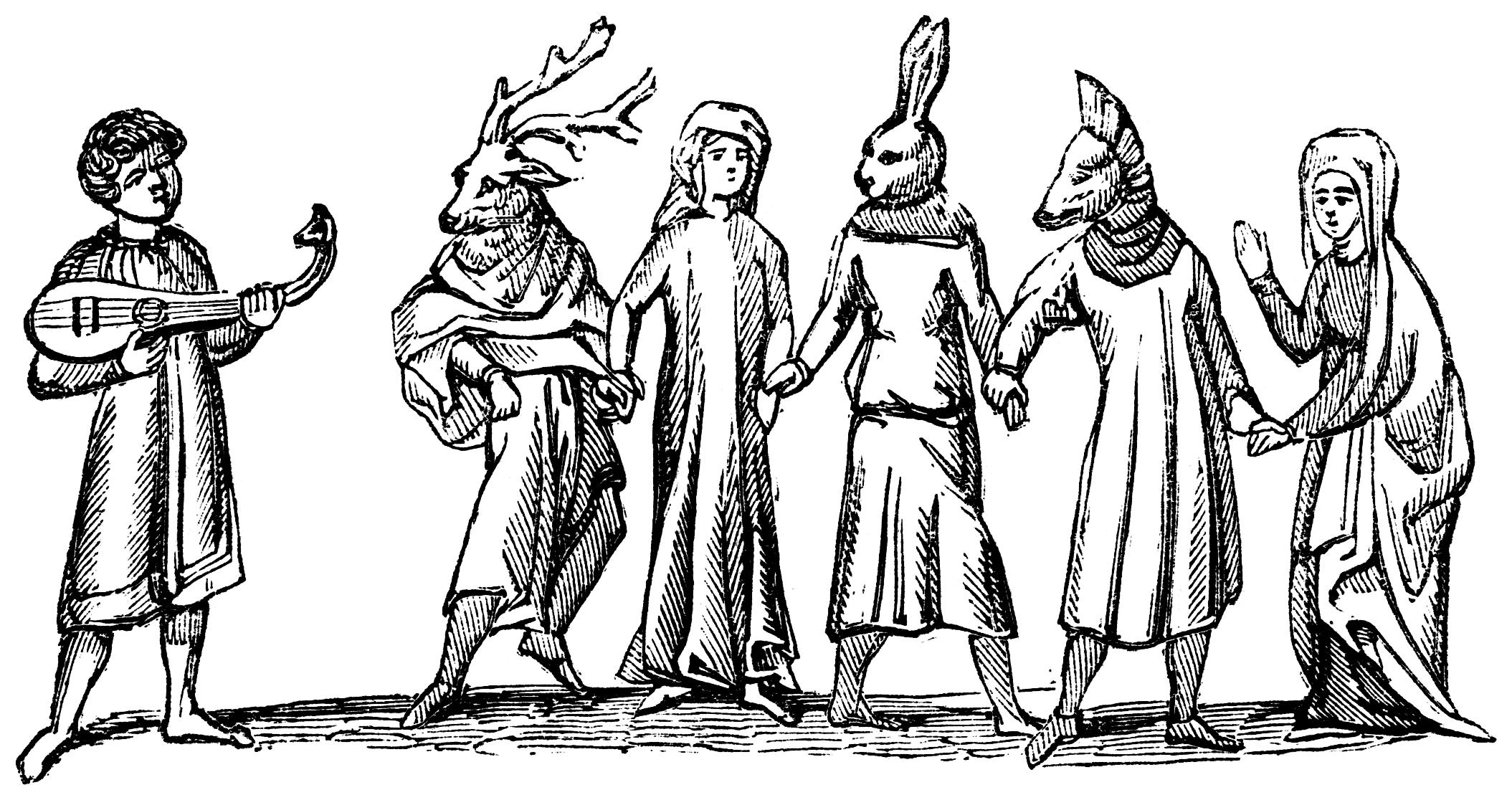
For those following along, we are 15 days into our countdown to Foundation Day, the prescribed activities for which include:
Day 15: Ο ο – omicron, όμικρον
Epithet
Οινοψ (Oinops) = Winefaced
Orphic Hymn Τριετηρικοῦ (52. to the God of the Triennial Feast)
Prescription
With things found around the home (οἷκος) make yourself into a creature of great bulk (ὃγκος), with egg-shaped bulges (όειδής) and a face made of sheep-skin (ὃες). Also make yourself a tyrant-destroying (όλεσσῐτύραννος) staff – basically a stick strung with testicles (ὅρχεα). Sing bawdy songs, and yell random things at people. Once you’re overfull of wine (οΐνος) find a secret culvert, expose your rump (ὅρρος) to the chilly winter air and let loose a city-destroying (ολεσίπολις) piss (ούρέω) while cursing those in power. (Yes, women can urinate in public too!)
The Nature of the Day
Ozos (ὅζος) offspring, offshoot, branch.
Olbos (ὅλβος) happiness, prosperity, fulfilment.
Opora (όπώρα) fruitful, ripe, summer-swollen.
Ormos (ὅρμος) harbor-giver, chain, connection.
Opheltreuo (όφελτρεύω) sweep, change, turn
My gift to you on this day: music
Here are some of my current favorite bands:
What are yours?
Happy Lambda-Day!

For those following along, we are 11 days into our countdown to Foundation Day, the prescribed activities for which include:
Day 11: Λ λ – lambda, λάμδα
Epithet
Λυαιος (Lyaios) = He who frees
Orphic Hymn Λυσίου Ληναίου (50. to Lysios-Lenaios)
Prescription
Before you leave (λείπω) in the morning make this charm of dissolution (λύη) against the impudence (λαιδρος) and evil you shall encounter during your day. Take garden herbs (λάχᾰνον) and tear them up (λᾰκίζω) with your hands, say, “Just so will it be for you, every wicked thing.” Then put them in a mortar and using a pestle (λάκτις) grind them, singing, “Io, a great Bull trampled the ravening Wolf under its hooves and gored the beast with his lethal horns. Io evohe!” Put the powder in a satchel and carry it on you for the rest of the next seven days.
The Nature of the Day
Lekithos (λέκῐθος) the yoke of an egg.
Lethargeo (ληθαργέω) drowsiness, forgetting, sinking down.
Lousis (λοῦσις) washing, bathing, cleansing.
Lumeo (λῦμέω) to grieve, distress, or cause pain.
Luo (λύω) unbind, dissolve, release.
Coming together
Last night’s reading (and I hope y’all don’t mind me sharing these little nuggets; come the new year I’ll return to long-form essays, etc.) turned up a passage relevant to the topic of soul-parts in Bacchic Orphism:
Their [στοιχεῖα i.e. “elements”] presence in the human body is likewise divine, expressed in an Orphic fragment mentioned by Lindsay. (45) The human head is equated with heaven, the eyes are the Sun and Moon, the intellect is fire, the shoulders and back are air, the stomach is earth, the legs are the sea, and the feet are Tartarus, the roots of the earth.
(45) Jack Lindsay, Origins of Astrology p. 117, quoting Kern, OF 168
This reminds me of Empedokles, whom I’ve previously discussed here and here.
Also, in another article – this time on the theurgic background of Viacheslav Ivanov’s poetry – I came across these relevant passages from Proclus’ On the Hieratic Art According to the Greeks:
But really on the earth there are to be seen suns and moons in a terrestrial manner, in the heavens (there are to be seen) all the plants, stones and animals in a celestial manner alive in a spiritual way. Having perceived these things, and bringing some heavenly things toward some (terrestrial) things and others toward others, the wise men of long ago summoned divine powers into the mortal place, having attracted them through likeness. (p. 148.19-23)
Hence, from what they saw, the authorities of the sacred art, mixing some things together and appropriately removing others, invented the service to the higher powers…They often made commingled images and incenses, mixing divided tokens into one and making by art the sort of thing that the divine contains according to its essence, insofar as it unites the plural powers, each of which division obscured, while mixture returned it to the form of its model. (150.24-26; 150.30-151.1-5)
ainigmata
I was checking to see if the Inventory of Ancient Associations had added any new material on Bacchic groups when I came across an inscription left by λιθοκόποι (stone-cutters) at the theater of Dionysos in Athens. Which, of course, made me think of this:

antonomasia
The name Σαννιον has been around since the Minoan-Mycenaean period, and it’s always significant when I uncover a namesake. Recently I came across two of them in my readings – and there’s an interesting thread linking them.
The first lived in the same region as Nonnos, author of The Dionysiaka:
To Besas, son of Hieracapollon also called Demetrius and Triphiodorus son of Isidorus son of Callimachus, ex-magistrates. The most excellent senate, as it has informed me through Plutogenes the President in office, has selected you as collectors of meat for the Middle Toparchy, for the auspiciously impending visit of our ruler the Emperor Diocletian the Senior Augustus. In order, therefore, that you may know and at once take over the collection I send this communication to you by the hand of Leon my servant. And whoever first receives this communication, let him transmit it to the other. Year 15/14/7, Thoth 21st. […] Distributors and receivers of wine for the Upper Toparchy. Aelius son of Sannion son of Nilus and Petetriphis son of Paniscus son of Protus. Same form and date. Signed. (Panopolis Papyrus 1 Col. xi Line 310)
While the other had a son who was a resident alien in Athens, though originally from Naukratis:
Clearly, Naukratis was significant enough to engender demand for proxenies, and much of this significance was probably economic: flourishing trade with Egypt is evident not only from the mention of Egyptian traders and Egyptian imports in Athenian comedies, but also from the presence of Egyptian traders among the resident foreigners, metics, in the Athenian port of Piraeus, who established a shrine of Isis here. Among the several grave markers of Naukratites who died in Athens is that of Phaidimos, who was buried just before or soon after 400 BC, as well as that of Pais (‘boy’ – a generic slave name?), whose mid-4th-century BC tomb stone in the Piraeus bears both a Greek and a demotic inscription, suggesting he was of Egyptian parentage. Other individuals from Naukratis attested on 5th–4th-century BC grave markers from Athens include Parmenon, Dionysios son of Parmenon, and Olympos son of Sannion. (Alexandra Villing, Naukratis: religion in a cross-cultural context, BMSAES 24
anosognosia
“Knowledge that lies outside the range of understanding can only be gained in a state that also lies outside this range.” (Philipp Vandenberg, The Mystery of the Oracles)
 The House of Vines