One of the most important lessons I’ve learned as a mantis or diviner is a bit of wisdom that was inscribed at the temple of Apollon at Delphi, one of the holiest and most important oracular sites in the ancient world. Thales is generally credited with first giving this sage advice, though it was also attributed to Chilon, Bias, Cleoboulos, Periander, Pittacus and a variety of other ancient wise men. (And at least one wise woman as well, the poet Phemonoe!) All of these men had a strong connection to the God Apollon, so you wouldn’t be far off the mark if you were to claim divine inspiration for the words. They are, after all, essential for anyone who seeks to live a wise, pious and successful life. I mean, of course, the famous admonition γνῶθι σεαυτόν (gnōthi seauton) which can be rendered into English as “Know Thyself.”
Historically there have been two primary ways to interpret the injunction, both of which are relevant to those seeking to take up this divine craft. (There are, as I’m sure you’re aware, many other equally valid ways to interpret the phrase, but one would need to devote a whole essay – at the least! – to exploring all of them. There’s a reason why Apollon was granted the epiklesis Loxias.) The most familiar of the two, thanks to the Socratics, is as an encouragement towards introspection and authentic self-discovery and expression. The founder of that school so aptly observed that the unexamined life was not worth living and through the process of dialectic he challenged people to critically examine their basic assumptions about who they were, how the world worked and what concepts such as love, truth, wisdom, piety, beauty, courage, etc. actually meant to them as opposed to the definition insisted upon by unthinking society or convention.
The second interpretation – which is probably more in line with the original intent of its author, even if it isn’t as well known – is that we should know ourselves in the sense of knowing our proper place in the world, observing respectable boundaries of thought and deed, avoiding overreaching pride, arrogance and impious aspiration. Similar Delphic maxims include “nothing too much,” “observe the limit,” “think mortal thoughts,” and so forth.
Both ways of reading this admonition have relevance for those who would pass on the sage counsel of the Gods to their communities, regardless of the tradition within which they work.
To begin with the mantis must have a proper understanding of exactly what it is they are doing. They must know where the information is coming from, be able to carefully distinguish the messages of the Gods from their own thoughts and emotional responses to the issue and must accurately report everything that comes through and limit what they say only to what was communicated without subtraction, embellishment or unasked for interpretation and commentary. After the message has been given, the querent may ask the mantis for their opinion or further clarification on an obscure point of the message, but in doing so the mantis should make it perfectly transparent what came from the Gods and what is their own private interpretation. They should be especially careful not to force their opinion on the querent since it is often part of the process for the person to figure out what the oracle means to them personally and one should also avoid idle conjecture or in other words, if you have no idea what an oracle means don’t guess or you’re liable to be wrong and unhelpful.
Now to offer further clarification on some of these points.
I am a trained mantis with over two decades worth of experience under my belt. That does not, however, mean that I am a therapist or possess the necessary knowledge, training or certification to diagnose mental problems or offer practical, emotional or spiritual counseling. Anyone who comes to me seeking that sort of thing gets redirected to qualified personnel – in fact I’m reluctant even to offer friendly advice because, to put it mildly, I’m shitty at handling my own problems and I’d undoubtedly be much worse at sifting through other people’s crap.
Unfortunately a lot of folks in this line of work don’t share my misgivings and I’ve seen them royally fuck people over as a result. They didn’t mean to, of course – they went about their advice-giving with the best of intentions. But when it came down to it they just didn’t know enough about the situation or the workings of the human psyche to be truly helpful. Even if their advice was excellent and exactly what the person needed to hear at that precise moment, it can be extremely difficult to remove one’s ego from the equation. A lot of people just aren’t prepared to be ignored or misunderstood, which happens the majority of the time that advice is given. You may see with perfect clarity that your friend is in a dysfunctional and abusive relationship and needs to drop that bitch and start his life fresh as far away from there as possible – but your friend may not be ready to do that just yet, even if he’d agree 100% with you. He may be worried about the economic consequences of leaving his wife, he may still be making all sorts of excuses about why it happens (she didn’t really mean it, she only does it when she’s had too much to drink, I brought it on myself by provoking her) or he may be in denial or ashamed to admit that things have actually gotten that bad and so on and so forth. The only thing you can be certain of in a situation like that is that the person won’t leave or seek the necessary help until they are good and ready to – and even then it may require several frustrating abortive attempts before it finally sticks.
It can be maddening to watch the cycle of abuse play itself out over and over again, but you can’t force a person to change against their will. Often their anger and impotence will become directed at you if you try and push them since you are a safe target for their venting or else they might perceive you as a threat to the status quo. Your actions may inadvertently heighten their sense of shame and isolation, which only serves to ensconce them deeper in the dysfunctional situation. You, yourself, may become frustrated that they aren’t listening to your wise advice or are hellbent on a path of despair and self-destruction. You may, in turn, lose all respect for them or no longer wish to associate with them lest you become culpable in their abuse by knowing about it and not being able to stop it.
This is, of course, a fairly radical situation but I’ve seen plenty of friendships destroyed over things of far less consequence as a result of indiscriminate advice-giving. I feel it best to avoid this altogether – or least not to proffer until asked for – but if you feel that you absolutely must give your opinion, make sure that you do so devoid of any expectation. Once your words have been spoken, leave it at that, granting them the freedom to act on it or not as they see fit. You should be willing to stand by your friend regardless of how they choose to put your advice into action, and if you cannot withhold judgment either keep your feelings to yourself or end the friendship without making a huge deal of it. You do not want to get embroiled in unnecessary drama and transform the person you once considered a bosom companion into a mortal enemy.
There are many ways, in fact, that we need to keep ego in check when it comes to serving as a mantis. Related to the above principle it is incumbent upon you to remove any personal investment or consideration from your oracles. Your job is to transmit a message from the Gods to the querent. Once you have successfully done that your obligation ceases. How the person accepts it and what they do with that information is entirely up to them. It should be no concern of yours whether they misinterpret the message, incompletely or incorrectly implement what was asked of them or ignore it outright. Honestly this can be one of the hardest parts of the job, especially when the oracle comes through unambiguously or you see the person still struggling or complaining about a situation months or years later, all of which could have been swiftly and satisfactorily resolved had they only done what they were told. It’s even more frustrating when the person comes back to you later on with the same question, seemingly hoping for a different answer. You come to feel annoyed, ignored, disrespected – and this can have unpleasant consequences for your friendship if you’re not careful.
The best thing that you can do is to know your place. Your place is to give the oracle not to lead the person’s life for them. That is their responsibility and they – and only they! – will suffer the consequences of their insolence, indolence and ignorance. You also need to understand that everyone responds to situations differently. Maybe it’s going to take this person longer to overcome an obstacle than it would have for you. Maybe they have important lessons to be learned which can only come about through repeated failures. Maybe the God never intended for them to do what the oracle said but rather was subtly urging them on to a different path which they could only discover through attempting something and then realizing that it wasn’t right for them. And maybe what you see so clearly in the oracle isn’t what the God wished to communicate to them, so even though they may be interpreting it “wrong” from your perspective, they are actually doing what is pleasing in the eyes of the God. Regardless, even if you are right and they aren’t it’s their oracle to do with as they please.
Another reason not to take it personally is because if you’re doing your job as a mantis properly then the message was never yours to begin with. It originates from the God and you are nothing more than a messenger passing it on to its intended recipient. And at that point the matter rests entirely between them and their God. Or to think of it in another way: you are just a vessel into which the Gods pour their blessings. A cup has no feelings and no purpose other than to be a receptacle for fluids. It has no say and indeed it hardly matters whether wine or water or milk or anything else is dumped into it. It doesn’t matter whether the person drains the cup in a single draught, takes only a tiny sip and then walks away never to taste it again or even if they dump it out or just let it sit there growing mold. The cup’s sole purpose is to hold what’s poured into it without leaking, to serve the needs of the one pouring something into it and the one that is going to drink out of it. Thus, like the cup the sole desire of the mantis ought to be for utility without any concern for how they are being used and what follows after. In keeping with this I feel that is the supreme obligation of the mantis to get themselves out of the way as much as possible. You are facilitating communication between the Gods and their people and your job is to transmit those messages as clearly and carefully as you possibly can. Always remember your place and stay mindful of its humble position in the grand scheme of things.
The people are not coming to you to hear your wisdom or gain your valuable opinion on important matters. If you want to send your own message out into the world then take up the noble craft of the writer or become an orator, a therapist, a teacher, a philosopher, some crazy drunken dude on the street corner or something else along those lines. But when you take up the calling of the mantis then you must always be conscious that you are a servant of the Gods and faithfully report exactly what they tell or show you. Nothing more and nothing less than that should ever pass your lips or fingertips when you are engaged in this sacred vocation.
Long before the aspirant mantis begins offering their services to the public they must cultivate the spiritual faculty of discernment, the ability to listen for the voice of the Gods (however that is expressed to them, and this can indeed come through in many different ways depending on the Gods and the person involved) the ability to identify who and where it’s coming from (since there are so many Gods, spirits and assorted divine beings out there) as well as being able to recognize how this differs from one’s own thoughts, feelings, personal convictions and the detritus floating about in one’s brain. This can be incredibly challenging especially when one is first starting off on the path or when the issue is one that directly involves the mantis or those close to them.
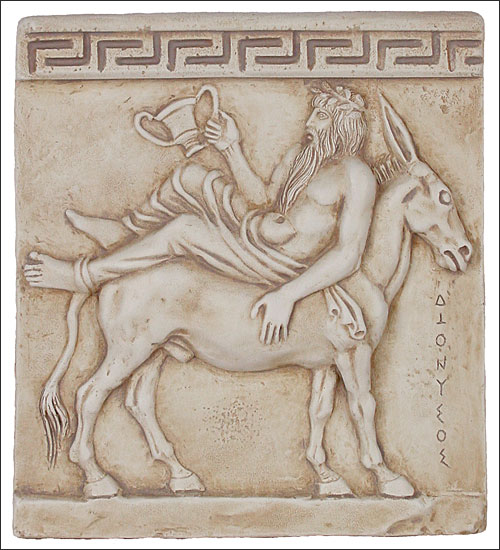
It’s even trickier when you do the sort of direct trance-possession oracles that I’ve been specializing in with Dionysos for a number of years now. After all, if you’re employing some form of external, mechanical divination such as Tarot, Runes, I Ching, augury or the like there’s a measure of control and corroboration that you can rely on. This is what the tools turned up, this is the traditional meaning and here’s how I interpret the symbolism. Even if that is just the starting point and you rely on inspiration and free association there’s still a degree of concreteness to the process that’s generally lacking when you are shown visions, hear the words of a God or some other form of intimate, often internal communication takes place. You have to be constantly on guard that the message is coming through clearly, that it isn’t getting distorted by errant thoughts and astral junk, or that you accidentally and perhaps even without being aware of it are twisting things to conform to your own biased expectations. This is not a perfect science no matter how diligent and disciplined we are or what added precautions we take. Furthermore we are faulty human beings. The Gods exist on a level far beyond us with an understanding of the world and the things in it which is radically different from and dwarfs our own. The act of transmitting this through an imperfect human vessel, translating transcendent understanding into finite human speech and thought is a process fraught with peril. It’s like representing a multi-dimensional construct using only length and width. Much, inevitably, is going to be lost in the process. But it’s your job to ensure that things run as smoothly as possible, that the wires don’t get crossed, the information corrupted and contaminated as little as possible and that you don’t interject your own take on things.
One of the most important elements of this is communicating the message as it was given, regardless of what you personally feel about the issue. Many times over the years I’ve received messages that didn’t make much sense to me or quite frankly were a complete one-eighty from what I would have told the person had they come to me seeking advice. Sometimes the message is uncomfortably direct and harsh. In those instances you’ve really got to struggle against the tendency to impose order on it, make it more sensible and directly relevant, or to sugar-coat it. You have to trust that the Gods are far wiser than you, that they are seeing a fuller picture or referencing something that will be intelligible to the person receiving it even if it’s incomprehensible to you, that if it means nothing to the person now it may in time when more of the puzzle pieces have fallen into place and that the Gods have a reason for saying what they do and in the manner that they have chosen regardless of how you feel about all of it. Even if they aren’t as polite as you would like, you have to consider that that brusqueness may be there because that is exactly what the person needs to hear in order for the message to get through their defenses. And if they take it out on you, suggest the message came from you and accuse you of being too harsh and judgmental, well, that’s the risk you’ve got to take if you want to be a messenger of the Gods. You’re not in this to win friends and accolades, and it’s not your business to adulterate the words of the Gods or soften the blow. Conversely there have been times when I was expecting a forceful reply and the oracle came across gentle and somewhat coddling to my complete surprise. Clearly that’s what the person needed to hear in that instance and the Gods recognized that bashing them over the head with it wouldn’t have done any good. The more you encounter oracles like these the more you come to realize how little a role you play in all of it and how clearly they originate from somewhere outside of yourself.
For these and many other reasons I try to go into an oracular session knowing as little about the circumstances of the question as humanly possible. I do not ask for background details or clarification unless it’s absolutely necessary, I only skim the requests when I receive them to determine if there are other matters that need to be addressed, I keep the requests in a folder and transcribe them early in the evening hours before I start my preparation, I try to avoid thinking about the question or discussing it with the person beforehand and I go through an elaborate series of preliminary ritual actions which are not only highly devotional in nature but also help to clear my mind and focus my attention on the sacred work before me so that I won’t have any room for mundane concerns or dwelling on the details of the request. And on the rare occasions when none of that works because I’m too involved or close to the situation and person I’ve straight-up told them that I couldn’t do it and they should seek assistance from a different source. I’ve only had to do this a handful of times over the years but I feel that it is a necessary step to take to preserve the integrity of my calling and ensure that I am providing the best possible oracular service that I can.
Likewise when an oracle that I receive is too jumbled and incomprehensible and all further attempts to gain clarity prove fruitless, or I just can’t get into the proper oracular state I admit as much to the person and either offer to try a different divination method or advise them to seek an answer elsewhere or accept that this is not something that they are going to gain insight on at this time. Some may find it uncomfortable to admit fallibility but I’d rather the person think me a failure than to know myself to be a fraud, manufacturing messages when none are forthcoming or twisting the details so that they appear more sensible. To distort things in that way is a violation of the sacred trust that both the Gods and my community have placed in me. This work is difficult and demanding and it requires integrity, courage, dedication, discipline and all of the other virtues upon which character is based. If I compromise even a little, give less than my absolute best – even if no one else is aware or likely to ever find out about it – it is going to undermine my confidence in myself and cause me to doubt my ability to hear what the Gods are saying and communicate that to others. So even setting aside the considerable moral obligation I have to those that approach me with their questions, it is in my own best interest if I intend to continue in this vocation to be as honest and uncompromising as possible. I’ve got to live with myself and look myself in the mirror – how could I possibly do that knowing that I had deceived and cheated someone?
As an extension of that I feel that a mantis should always be conscious of what their office means to those who seek their assistance, the importance and dignity and sacredness of it. We help bridge the gap between the mortal and divine realms. People come to us to learn about the Gods and to hear their messages. While I agree with the general principle that no one needs an intermediary between themselves and the Gods, that the Gods can hear our prayers, accept our offerings and make their will known to us in a multitude of ways – practically speaking there are often circumstances that make things much more complicated than that. Perhaps the person is full of doubt or too close to the situation to gain any kind of useful clarity. Perhaps they are in a state of impurity, do not know the proper methods of communicating with the divine or how to recognize such communication in the first place. Perhaps they are new to all of this, lack proficiency in divination, are spiritually blocked or deaf and blind to the invisible world. Maybe they’re in over their heads, facing a situation they could never have conceived of before or are just looking for an outside perspective or confirmation of things they have already intuited. There are a thousand and more reasons why a person might consult a mantis and it is our job to be there to lend our assistance where and in whatever way we can.
This is both an immense honor and an incredible responsibility because when we take up this office we become the representative of our Gods. Everything that we say and do – whether in our capacity as a mantis or outside of it – reflects back on the Gods. We must be diligent in our execution of our religious duties, must conduct ourselves with integrity, character and proper decorum and never do anything that would cast aspersions on our holy office or cause others to doubt the existence, wisdom and benevolence of the Gods. And note that morality is relative and in this context largely determined by the Gods you are working for. The qualities favored by a God like Dionysos or Hermes are very different from the standards insisted upon by Apollon or Athene, to the point where I’m strongly hesitant to have anything to do with the latter pair.
When people see someone who claims to be a mouthpiece for the Gods acting in a haughty, shameful, cruel or unnecessarily contentious fashion it is natural for them to wonder how such a person could have an intimate communion with the Gods or if it’s all just empty hokum and vain posturing. Doubt that begins in the person spreads to the Gods: how wise and moral could they possibly be if they would entrust their message to such an undeserving person?
We may feel that this is unfair since we are all fallible human beings and virtue is not an easy path as evidenced by how few truly good men there are in the world. Further, spiritual aptitude is not always dependent on or even consistent with conventional morality as evidenced by the deplorable lives led by many visionaries, religious figures and artists down through the centuries. Regardless this is still the common perception and fair or not we are held to this standard with grave consequences for those who fail to measure up. The thought that one’s careless actions might drive people away from the Gods ought to fill any mantis worthy of the title with abject horror.
And finally, I’d like to include a word on asking and receiving. Remember, always, that a God is talking to you. It’s not the same as checking your horoscope in the paper or seeing what weird shapes your coffee grounds have formed. (Though these, too, can convey the will of the Gods to those who are properly paying attention.) Ask questions that suit the dignity of the occasion, not something you can figure out on your own with a little critical thinking. Don’t do it as a lark, because you’re bored or to try and test the Gods. And above all else, show respect by taking the answer you get seriously. That means spend some time really thinking about it and how it applies to your life. Don’t jump to the most obvious conclusion, especially when the oracle has been phrased enigmatically. History is littered with those who failed to see clearly what the Gods had indicated and brought untold suffering on themselves and their communities as a result. The Gods gave us rational faculties with the intent that we’d use them. That may require you to do a bit of digging and meditation before the ultimate meaning reveals itself to you, but as with all things in life you get out of stuff what you put into it. Likewise, when an answer is clearly and unequivocally presented to you you should strongly consider doing what it says. Why ask the advice of the Gods in the first place if you’re just going to ignore what they’ve got to say? Now, obviously, choice comes into play here. You’re not a robot and you can very well disagree with what a God is telling you to do. Maybe the sort of life you want for yourself isn’t what they’ve got in mind for you, or maybe the risks and consequences just don’t add up. I tend to think the Gods are wiser than us, more aware of the things that lurk beneath the surface or the chains of reaction that simple acts can set into motion – but hey, it’s your life, so do as you please. But on the other hand, don’t keep asking the same question over and over again hoping for a different result and don’t expect your situation to change if you’re not willing to act in a manner which they indicated will have a favorable outcome. Sometimes, a lot of the time actually, you’ve got to put in the work first before things will make sense to you. This is where trust comes into play. Don’t demand understanding and desirable results before you’ve done your part. If you’ve done everything asked of you and there’s still been no change, then perhaps you’re justified in getting upset and demanding an answer. But be careful about deluding yourself. Often we may think we’ve done everything in our power when we’ve really just skimmed the surface.