Mike glanced up at the digital clock hanging over the register. Mockingly it read 8:49, only seven minutes ahead from the last time he checked. He threw his rag (filthy from cleaning the chili cheese dispenser) into the bucket of brackish grey water and swore under his breath. This night was taking forever. Normally the graveyard shift whizzed by. You had all those chores the day crew inevitably failed to take care of to keep you busy, and few distracting customers except for the drunks who went straight back to the molt liquor shelf and then were on their way. He normally enjoyed the solitude, as it gave him time to think and sometimes when he finished his duties early he was even able to sneak in a little writing on the boss’ dime.
But tonight was different. To start with he shouldn’t even have been here. He was supposed to be with his Kindred keeping vigil on the longest night of the year and listening for the Wild Hunt as it passed overhead on its ghostly way. He’d even asked for the time off two weeks in advance, explaining that he had prior religious commitments. The manager had agreed until yesterday when she asked him to cover for the Mexican kid who was out with the flu. Apparently nobody else was available and since his wasn’t a real religious holiday anyway she needed him there. Though she hadn’t actually said it the implication was that if he didn’t show he could start looking for a new job the following day. It was awfully tempting to tell her where she could shove her job, but in this economy that’d be a damnably stupid thing to do. So Mike had just sucked it up and come in, even though that meant missing out on Thorvald’s justly-famed mead. The Kindred had promised to save him some, but he knew the chances of that actually happening were pretty much nil. By this time they were probably already on their third or fourth bottle – and the night was still young.
The electronic bell sounded and Mike pushed the mop and bucket into the closet and headed up front to greet the customer.
No one was there.
“Must have been the wind,” he muttered to himself, glowering at the clock. Another three minutes down, thank the gods.
“Right breezy it is,” a voice came to him from behind the Doritos stand, harsh and phlegmy. “Cold as a witch’s tit, too.”
Fucking great, Mike thought, his lip curling up in disgust. This is just what I needed tonight.
The bum looked to be about fifty or sixty, but could have been considerably younger for all that Mike could tell. The streets had clearly not been kind to him. He was wrapped in several coats and sweaters that stank of old sweat, stale beer and things best not imagined. He had a grizzled beard halfway down his chest and stringy, unwashed white hair. He might actually have been handsome, beneath the grime and the wrinkles and the sunburn, but it was even harder to tell than his age because the rheumy mess of his blind left eye was so distracting.
“Can I help you?” Mike asked, though it came out sounding more like, “Get the hell out of my store, you revolting monstrosity.” For a moment he was embarrassed by his tone, then the vagrant started a wet, tubercular cough that rattled his frail frame and Mike considered saying just that.
“I hope so, son.” The vagrant managed, once he got control of himself again. “As you can see, I’m a bit down on my luck and could use a helpful hand.”
“This is a business, not a charity.”
“I don’t mean to impose, and I don’t need much. The use of your restroom. A bit to eat. Some spare change, maybe.”
“Sorry, no can do.” Mike said brusquely, wondering how long it’d take the cops to get here.
“Come on, son. It’s the holidays. Don’t you know the Lord helps those that help the needy at this time of year?”
“You got the wrong guy, mister. Your Lord ain’t my Lord. Now get your sorry ass out of here before I reach for the bat behind the counter and throw you out.”
“Very well. It’s your loss, son. But remember that you had a chance to do something decent here tonight and passed it up.”
“I’m okay with that.” Mike laughed as he watched the old man shuffle through the door into the chill winter night.
* * *
The clock now read 11:08. At least that was something. Only a few more hours to go, then Mike was home free. Thankfully it had been pretty uneventful in the interim. There had been a couple high school chicks trying to buy a six-pack with an ID so bad he wondered if a younger sibling had made it for them. When he refused to sell them the beer they offered to flash him their tits. He might have taken them up on the offer if it wasn’t for the omnipresent cameras. The store had gotten busted in a surprise sting on underage sales just a couple weeks before, so they were hyper-sensitive about that sort of thing now, and he doubted his manager would look kindly on his bending the rules, even for such a noble purpose. A couple minutes later a shady guy who’d been hanging out in front of the store for a while came in to, coincidentally enough, purchase his own six-pack of the same brand. Mike had smiled as he counted back the man’s change. Lucky bastard.
Other than that it had been pretty quiet. He’d managed to clean all of the equipment and restock the cooler, which meant that he was ahead of schedule. The only major thing he had left was mopping the floors, which he planned to do around 3:00. Now he just had to get through the rest of this never-ending night.
Normally he had no problem keeping vigil on Yule, unlike the rest of the Kindred who were usually starting to succumb to the warm alcohol by midnight. Frequent graveyard shifts helped, but it was also the fun and excitement of the evening. Yule was probably his favorite of all the holy tides. It always seemed so magical and otherworldly to him. A time of great power and transition as the sinister host took to the skies and strange things walked about in man-shape. He knew that for others in the Kindred that was just the stuff of myth and folklore. They said they believed in that kind of thing, but Mike could tell that they didn’t really feel it deep in their blood and soul. They went through the motions, did all the proper ritual acts, but none of them genuinely feared that the ghostly riders of the Hunt might claim them. It was mostly a time to gather round the fire with friends and family, to eat lots of food, drink lots of mead, exchange presents, stories and oaths for the new year. It might as well have been Heathen Christmas for all they were concerned.
It was different for him, however. It was real and he felt it with a depth of his being that was hard to share with the others. Unsurprising, he supposed, seeing as Mike was a dedicated Odin’s man and generally inclined towards the woo spectrum of Heathenry. That’s what annoyed him the most about having to work on Yule. This was probably the single most important festival on the calendar as far as he was concerned – certainly the most important for Odin – and here he was, stuck waiting on idiot customers and cleaning up after his brain-dead co-workers. It just wasn’t fair, damn it. Come the new year he really needed to start looking for a better job. It was something he’d vowed numerous times over the last five years, but somehow he never quite got around to it. This time it’d be different, though. His manager asking him to miss Yule was the last straw. He was still fuming over the way she’d dismissed his religious observance as irrelevant. And to drive the point home she’d given him Christmas off, acting like he ought to be grateful for the scrap she’d tossed him, it being a real holiday and all. He’d been tempted to threaten her with a religious discrimination lawsuit, but instead he just kept his mouth shut.
That had pretty much been his normal response of late, and not just at work. There, at least, he had the justification of a shitty economy. Bad as this job was, he couldn’t afford to lose it. But a dead-end job was the least of the things making him feel like an impotent failure.
Six years ago he’d come to the city with big dreams, leaving the wreckage of his old life behind. He wanted to start over, to accomplish the great things he knew were inside of him. Find the woman of his dreams, become a famous writer, make a lot of money and devote himself fully to his religious practice.
At first it really looked like he was going to do it, too. Shortly after arriving here he found a thriving Kindred, much larger and more active than anything that had existed back home. He met and fell madly in love with a pretty girl named Kimmy through the Kindred and before the year was out they were an item. He’d gotten several things published in major national magazines and started work on the Great American Pagan Novel. He found this job at a 7-Eleven to pay the bills until he started making some real money through his writing. For the first time in his life things were starting to look up for Mike.
Then his luck reverted to form. The hours at the convenience store were long and grueling. Most of the time he’d come home after work too exhausted and demoralized to do anything more than sit in front of the TV and chug beers until he passed out. Months went by without him so much as picking up a pen to write and when he did it was all shitty and uninspired. His religious practice had suffered even more than his writing. Most of the time his shrines were covered in dust and he barely remembered to pray or thank the gods on the rare occasion that something good actually happened to him. The only ritual he regularly did was with the Kindred and even then he was mostly a passive witness. It had gotten so bad that the gythia had asked him if he wanted out. He didn’t. The Kindred was the only decent thing left in his life. He just found it difficult to “get it up” spiritually because everything else in his world had become so small and meaningless. It was like there was this sucking emptiness in his soul and no matter what he did he couldn’t fill the void.
After a while problems developed in his relationship with Kimmy. They fought constantly, or worse just sat there ignoring each other. Most of the time what they fought about was him. At first she tried to help him get out of his rut and break through the depression that seemed to have a strangle-hold on him. And when that didn’t work she came to resent him. She said it was like he had given up on life, abandoned his dreams and everything that had once made him seem so special, and she was sick of it. She didn’t want him to drag her down with him. And so eventually she just left, shacking up with another member of the Kindred after a couple months.
That should have been his wake-up call, the thing that kicked him in the butt and motivated him to actually start working on improving his life. It wasn’t. If anything it made matters worse because it confirmed all of his fears and insecurities and self-loathing. It was hard to see Kimmy in the arms of Erik at Kindred events, especially because she appeared so happy and vibrant in contrast to those last few months together, but he got used to it, and so did everyone else. They tried not to show it, tried not to treat him like a whipped dog, but when it came down to it that’s exactly what he was. Life had been cruel to him. All his hopes and dreams proved fleeting, illusionary, beyond his reach. He was stuck in a rut and a rut is just a grave waiting to be filled in.
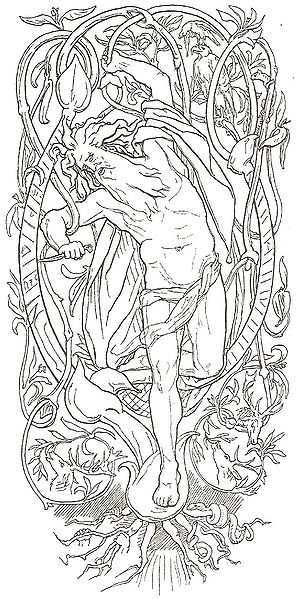
It was especially difficult to bear his status as abject failure since he prided himself on being an Odin’s man. Oathing himself to the Lord of the Gallows had been his greatest moment. But sometimes, hell, most of the time he wondered if he’d made a huge mistake. Shouldn’t an Odin’s man have done better than this? Faced life’s obstacles with courage and fortitude and triumphed against all odds? He knew that that oath came with a responsibility to do great things, things he knew deep down he was capable of, but he just couldn’t find the strength of will to succeed. He was lost and alone and he didn’t know what to do with himself anymore.
“Hey there, mate. You sleeping on the job?”
Holy shit! Where had the customer come from? Mike had been so sunk in his brooding that he must have missed it when the man came in. Mike lifted his head from the cradle of his arms on the counter and took in the stranger.
He was a strange one, indeed. Dressed in black from head to toe, with shiny combat boots, jeans, a t-shirt, a trench coat and a cowboy hat tilted to one side. The t-shirt had a fiery red 8-point chaos star in the center and he wore a unicursal hexagram hanging from a black silk cord, as well as a large black enamel raven belt-buckle around his middle. His fingernails had black paint and he was heavily tattooed with occult sigils and other strange designs, as well as sporting several very prominent piercings. His face was thin and angular with a strong beak-like nose and deep-set blue eyes. Or at least one of them was, since the whole left half of his face was concealed in shadow from the cowboy hat. He cut quite an imposing figure and from the looks of him he was probably some sort of Chaos magician. Mike recognized the star and hexagram from the couple of Pagan Pride events he had attended in the past. But whereas those guys had all been pretentious poseurs given to armchair pontification this guy seemed like the real deal. Mike couldn’t have said why, there was just something about him that gave the impression he was into some serious shit. He had an intensity and animal magnetism and there was also something a bit mad and dangerous about him. Mike’s suspicions were only confirmed when he flashed a Charlie Manson grin.
“Uh … can I help you?”
“I bloody well hope so.” The accent was thick enough that Mike had to listen closely to make out the words. He didn’t know enough about British dialects to place it, his exposure to the Queen’s English coming primarily from episodes of Doctor Who. They didn’t get many foreigners around these parts, certainly not Limey ones. “I’ve been all over looking for some place what sells some mead. I knew you yanks aren’t much for the civilized drink, judging from your piss-thin beer, but I figure one of these stores has got to carry some, right? Course, most places aren’t even open at this hour, but you was, so I figured I’d try my luck, it being the Solstice and all.”
“Sorry, man. The closest we’ve got is some Mike’s Hard Lemonade. And Guinness in a can.”
Technically, that wasn’t true. Mike had a bottle of Chaucer’s in the trunk of his car. Probably the worst store-bought mead you could get, but it’s all the grocery store had had. He’d meant to bring it as his contribution to the Yule feast since Thorvald’s homebrew wouldn’t last the night and by that point everyone would be too drunk to care how bad it tasted anyway.
“You’ve got to be kidding me. In a can? That ain’t right. What’s wrong with you bleeding yanks?”
For a moment Mike considered giving the stranger his bottle of Chaucer’s. It’d be a nice thing to do, especially since his Yule was already shot. But then resentment got the better of him. Fuck it. Fuck the whole damned world. Why should he be nice to anyone when everyone was always taking a steaming crap on him?
“You sure you don’t have any mead back there? Looks like you got everything else in that ice box of yours.”
“Nope. No mead. We’re a 7-Eleven, not an alcohol superstore.”
“Damn it all to hell. Guess my alcohol-witchery ain’t what it used to be. Could’ve sworn there was some mead around here.”
“Not a drop. Now, can I help you with anything else?”
“This pack of crisps will do.” He handed Mike a bag of Lays and some change then left.
What a seriously weird dude, Mike mused. I mean what the hell. Who comes to a 7-Eleven at this hour looking for mead?
* * *
Fucking finally! Mike thought triumphantly as his replacement finished counting out the till. This godforsaken never-ending night is finally over. Now to get my ass home for some much needed relaxation and then the sweet oblivion of sleep.
Originally he had planned to do some simple ritual to welcome Sunna back on his own, even if there was no point in trying to make it over to the Kindred. But after the night he’d had all he was up for was some quality time in front of the boob tube. Maybe he’d do something tomorrow. Probably not.
Mike rushed through the rest of his duties, clocked out and changed, then headed to the parking lot and his old beater. He was fumbling with the keys when the roar of a motorcycle pulling into the lot startled him. He bent down to pick up the keys he’d dropped and when he rose he found himself staring at a Hell’s Angel’s nightmare come to life. The biker was huge: thickly muscled and broad-shouldered with a square, bearded jaw and a wild, lion’s golden mane that spilled most of the way down his considerable back. Mirrored shades hid his eyes and his jacket was covered in ominous patches and images of violence. He was raw sex and raw power, more animal than man. His massive gloved hands could crush Mike’s throat as easily as the clerk could fold an empty beer can in his. When he dismounted from his bike he towered above Mike, who didn’t normally think of himself as a small man. When he smiled it was with a wolf’s cold, predatory grin. Mike was afraid. Very, very afraid.
“Pardon me, but you wouldn’t happen to know the way to Anaheim, would you?” The man’s voice sounded like his machine, full of thunder and the grit of the road. Mike found his politeness deeply unsettling.
“Sorry, I don’t. I’m new here.” He lied. “You might ask the clerk inside. Bye.” He quickly opened the door and slid inside, slamming it shut and locking it. He gunned the engine and sped out of the parking lot, desperate to get away from the imposing figure of the biker who watched him depart with a bemused grin.
Mike was too busy looking in the rearview mirror, making sure he wasn’t being followed, to notice the truck swerve into his lane to avoid a dog that had darted into the street. By the time he did it was too late.
A screech of breaks. A crash of metal. An explosion of glass as he was thrown through the windshield. The excruciating pain of impact as he landed twenty feet away. Bones pulverized. Flesh and muscle left behind on the rough asphalt. The copper taste of blood in his mouth.
Darkness.
Nothing.
Then a voice. Soft and distant, like the sound of a black wing parting the night sky.
“Michael Owens,” the voice said. His name.
He tried to move, but couldn’t. He tried to open his eyes, but he didn’t have any.
“Michael Owens,” the voice repeated.
“Allfather, is that you?” Mike said, though he could not hear his own voice.
“Ah. Now you recognize me.” A laugh, like cold steel biting into bone.
“Have you finally come for me, my Lord? Come to take me to your great mead-hall to await the fighting on the day of the world’s doom?”
“Why would I do any such thing, Michael Owens? You are not one of mine.”
“But I am, Odin! I oathed myself to you. I have your valknut tattooed on my skin!”
“Mere words and ink, Michael Owens. If you were truly one of mine you would have recognized me when I came to you this night. Three times I showed myself to you in feigned form and three times you failed to see the truth. Three times I asked a boon of you, and three times you turned me away empty-handed. I asked for hospitality and you had none for me. I asked for mead and you would not share yours. I asked for directions and you ran from me. Even so I might have overlooked such ungraciousness had you shown yourself to be one of mine in other ways, but where was your strength, your courage, your lust for living? Long before this day you gave yourself up for dead. Better it would have been to end your existence by your own hand than to linger on weak and defeated. And even better than that to face your hardships like a man on your feet instead of a worm on your belly. No, Michael Owens, you are not one of mine and you have no place in my great mead-hall. What happens to you now is no concern of mine. None shall come to claim you or remember your name, for you are a shame to your ancestors. Darkness and oblivion are all you shall know until the doom of the world. Then … none can say with certainty, not even I.”
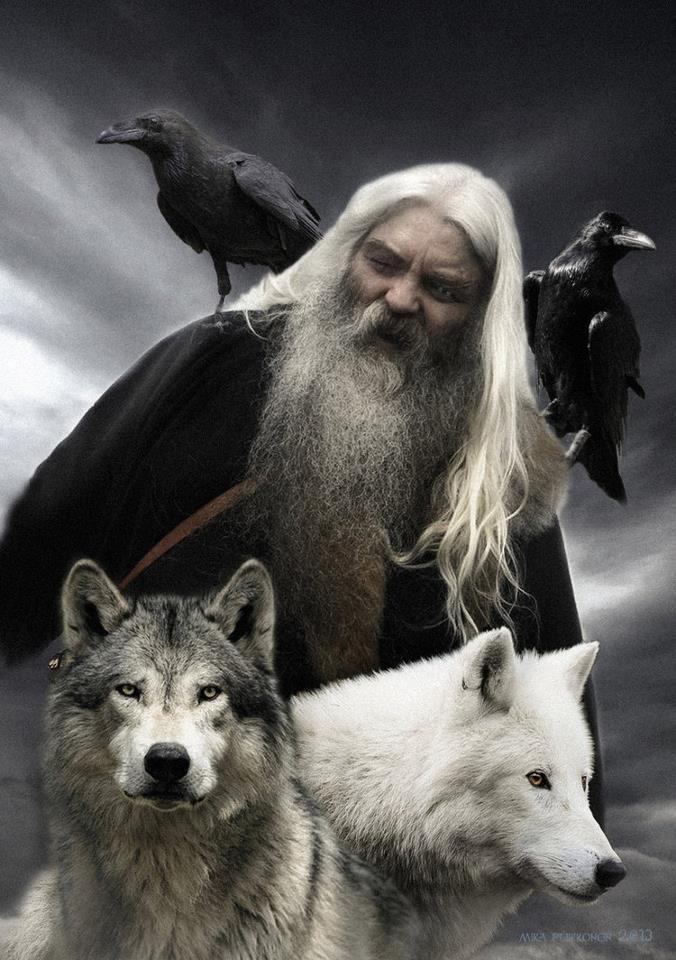
Mike heard the howl of a wolf, the flap of ravens’ wings and then the sound of hooves in the distant heavens.
Then he heard nothing.