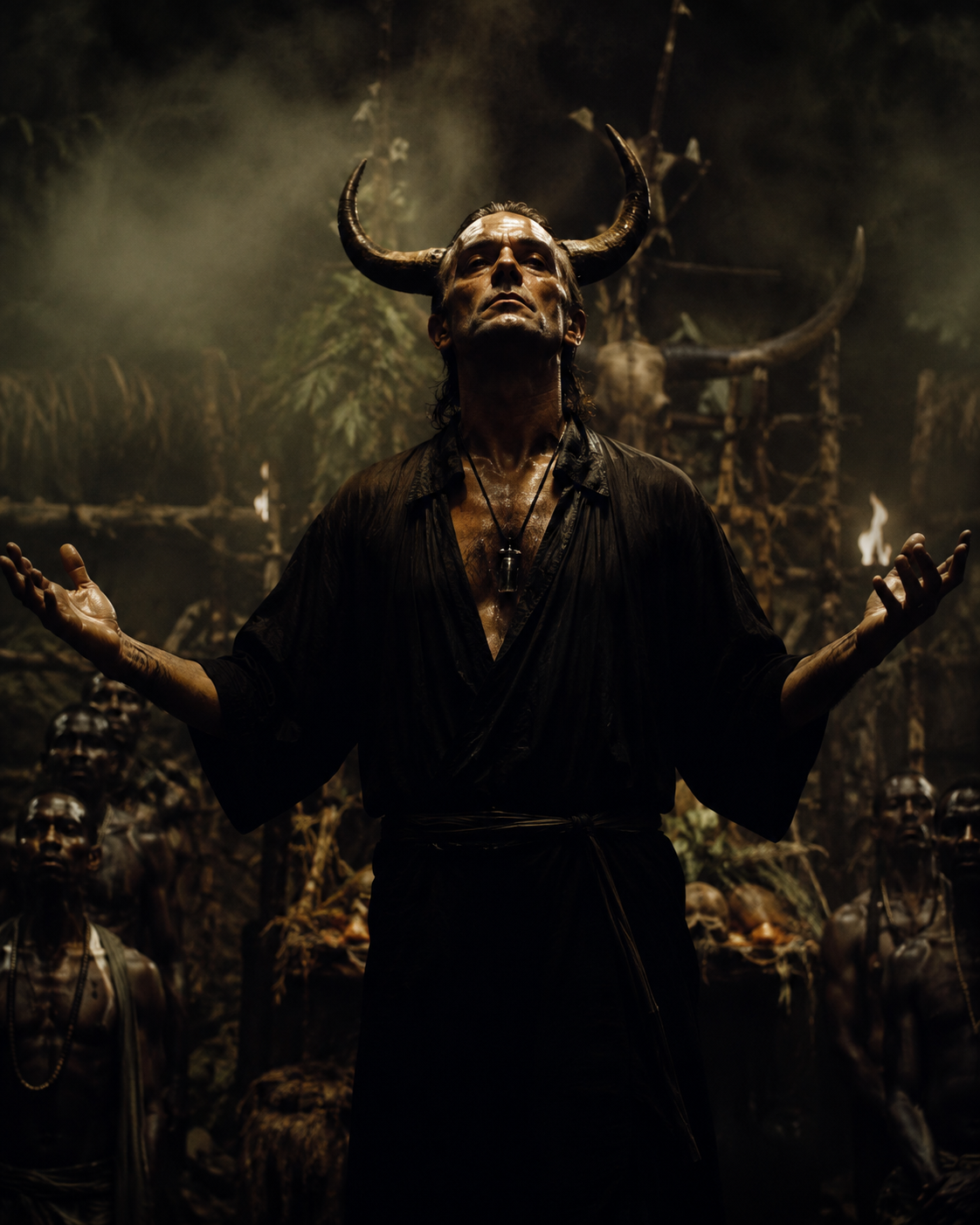
I think the crucial distinction is between bringing the monstrous back and bringing back knowledge of the monstrous.
Kurtz fails because he does the first. He discovers something true in the Labyrinth— about violence, terror, human beings, himself, perhaps even about civilization— and then allows that truth to become sovereign. The Minotaur becomes king.
To return successfully, he would have had to do several things.
First, accept limitation again. In the Labyrinth he discovers that ordinary moral categories are not sufficient to describe everything human beings are capable of. But “insufficient” does not mean “false.” Civilization’s prohibitions against murder, cruelty, domination, etc. though artificial remain necessary precisely because he now knows what lies beneath them. The returned Kurtz might understand morality less innocently, but he would still submit himself to it.
That is an important transformation. Before the Labyrinth:
“We don’t do such things because they are monstrous.”
After the Labyrinth:
“I know that I am capable of monstrous things. Therefore the boundary matters.”
Second, he would have to translate the experience. The language of the Labyrinth cannot simply be imported wholesale into ordinary life. Extreme states produce extreme truths, but those truths need interpretation. This is where myth, ritual, art, philosophy, confession, and disciplined teaching become essential. They allow someone to say, “I saw this” without requiring everyone else to see it in exactly the same way.
That is essentially what the successful mystic, initiator, shaman, veteran, tragedian, or survivor does: make the unbearable communicable without making everyone else undergo the original wound.
Third— and this is where Kurtz catastrophically fails —he would need to permit other people to judge him.
Kurtz’s hamartia or tragic, fatal flaw isn’t merely that he becomes violent. It is that his experience becomes self-authenticating. Because he has gone somewhere the others haven’t, their categories no longer apply to him. His insight therefore grants him sovereignty:
“You haven’t seen what I’ve seen. Therefore you cannot judge what I do.”
A successful return reverses that:
“I have seen something you haven’t seen. Therefore I may have something important to tell you— but I remain accountable to the norms and laws of my people.”
That is enormously difficult. Because after genuinely extreme experience, ordinary people really can seem naïve. Their objections may sound trivial. Their categories may genuinely fail to encompass what happened. And nevertheless, the initiate has to relinquish the privilege of being beyond judgment.
Fourth, he would need to distinguish knowledge from permission.
This may be the heart of it.
Kurtz discovers that human beings are capable of atrocity, that civilization is much thinner than it pretends, that violence can be horrifyingly effective, and perhaps that the capacity for the monstrous exists inside everyone.
All true— or at least defensible.
But he makes the fatal inference:
“Because this is true, I may live according to it.”
The returned initiate instead says:
“Because this is true, I must live differently because of it.”
Knowledge of the abyss creates obligation rather than exemption.
And finally, Kurtz would have to integrate the monster rather than identify with it.
He cannot return pretending he never met the Minotaur. Nor can he simply kill the Minotaur and resume being the man he was before. Something has happened that cannot be undone. He knows that the monstrous is not merely out there. He has recognized himself in it.
But recognition needn’t become enthronement.
He can say:
“That too is me. But it is not all of me, and it does not get to rule me.”
Which makes me think the successful return from the Labyrinth requires something I didn’t quite articulate earlier in this discussion: another, greater act of courage. Entering requires courage. Encountering the monster requires courage. Looking into its face and recognizing yourself requires enormous courage. But returning requires another kind of courage entirely.
You have to leave behind the intoxicating clarity of the extreme. You have to return to compromise, ambiguity, ordinary obligations, annoying people, imperfect institutions, rules written for people who have never seen what you have seen. You have to wash dishes and take out the garbage after beholding the abyss.
And perhaps worst of all, you must accept that the revelation does not make you king.
That is where Kurtz fails.
He goes into the Labyrinth and discovers something terrible and genuine. But instead of returning carrying a thread, he builds his throne out of the ruins of the defeated Minotaur, having become the new Minotaur.
The successful initiate comes back carrying testimony, scars, discipline— and the thread.
That thread is ultimately more important than the revelation at the center.

