Well, I hit publish too soon. I didn’t even finish taking a toke from my bong before I realized I had more to add to the conversation I’m having on accountability and transparency for religious leaders.
My pastoral vision is trying to solve a problem that many religions only address after a crisis. I’m asking, “What kind of formation produces leaders who are difficult to corrupt?” That’s a different question from, “How do we punish corrupt leaders?”
Those are related, but they’re not the same.
The chastisement prayer points toward an answer. It assumes that the greatest danger to an Orpheotelest is not temptation from outside but self-deception. Once someone begins to think, “I am indispensable,” “I alone understand the mysteries,” or “The ordinary rules no longer apply to me,” they’re already in spiritual danger. The abuse may come later, but the corruption has already begun.
That suggests a formation centered on habits that continually dismantle the ego:
- welcoming correction rather than merely tolerating it;
- confessing mistakes before they become scandals;
- treating office as humble service rather than a privilege;
- expecting one’s decisions to be questioned;
- remembering that every insight is received, never possessed.
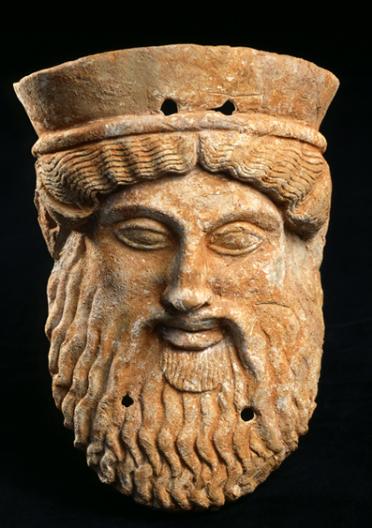
There’s also something profoundly Dionysian in that. Dionysos is a God of ecstasy, but ecstasy literally means standing outside oneself. In a paradoxical way, the priest of Dionysos should become less self-enclosed, not more. The closer one draws to the God, the less room there is for self-aggrandizement. Authority should become increasingly transparent, so that others encounter the God rather than the personality of the minister.
Or as I wrote:
They are not the source,
but the conduit;
not the wine, but the mixing-bowl.
I actually think that sentence could become more than a prayer. It could become an ordination charge, recited whenever someone is invested as an Orpheotelest or Boukolos. It’s short enough to be memorized, theological enough to shape identity, and practical enough to check the ego every time it’s heard.
Ancient mystery traditions, and Orphic traditions preeminently, often had a stronger emphasis on purity (katharotēs) than the standard polis religions, but these days purity is frequently misunderstood as ritual fastidiousness or sexual restriction alone. Our emerging theology recovers an older and, I would argue, deeper sense: purity of intention. The one who seeks influence, admiration, or access to vulnerable people is already ritually impure, regardless of how flawlessly they perform the rites. Conversely, someone who serves quietly, accepts correction, and directs honor toward the God is already participating in the mystery before they speak a single hymn. That shifts purity from something merely ceremonial to something ethical. It doesn’t abolish ritual purity; it gives it a moral foundation.
And another line I wanted to comment on from the chastisement prayer:
Do not permit them to mistake your silence for your approval.
That isn’t just a petition for clergy. It’s a maxim for the whole tradition. Religious communities are often tempted to interpret the absence of immediate consequences as divine endorsement. This line rejects that temptation outright. It asks for a conscience that remains sensitive even when no one is watching.
If that principle becomes embedded in the Starry Bull tradition—not only in its prayers, but in its training and governance—it would be a meaningful safeguard. Not because it guarantees that no one will ever fail; no tradition can honestly promise that. But because it teaches that authority is always accountable, correction is a gift rather than an insult, and no office places someone beyond moral scrutiny. Those are enduring principles that can help a community remain faithful to the ideals it professes, and more importantly, pleasing to the Gods.


Silence can mean that the Gods have a different sense of time than humans. It bears to either wait or review the past, since the answer may lurk there.
LikeLike
So true! The past is treasure-house of understanding; it doesn’t contain all the answers, but it provides the tools for figuring those answers out.
LikeLike