I will sing of the great hero Miletos,
slayer of monsters and founder of glorious cities
far from the red earth of Crete that nursed him.
He was born of golden Apollon the archer God
who sends and drives away plague, and Akakallis the dancer,
who wears daffodil crowns on her lovely head
with hair like the tamarisk tree, daughter of Minos
whose naval fleet made him undisputed ruler of the seas,
and cow-eyed Pasiphaë the Queen, and daughter of the Sun.
Zeus’ offspring visited her one night while Akakallis was sleeping
in the temple of Paiëon the Physician of the Gods, desperate to see
if she could dream up a cure to the scorpion curse
laid upon her father for his unfortunate infidelities;
but instead all that she saw was the Lord of the Tripod disrobing
and all resistance melted away. Nine months later she fled
through the woods carrying Apollon’s newborn son,
terrified of the baying hounds of Minos who pursued her,
when Akakallis spotted some rugged oak beneath which
she could stash the threshing-basket in which her precious child slept,
and then flee in the other direction to draw the murderous hounds away
from her miraculous boy. He might have died of hunger there,
or succumbed to a chill breeze had not a pair of wolves happened by
and taken him in as if he were one of their pups, even going so far
as to nurse the half human, half God with their own milk.
Though he grew up swift and strong among the wolves,
one day he was discovered by some herdsmen
who stole him away, fed him on milk of their cows
and raised Miletos according to the ways of their people.
With manhood came discontent, and a desire to see
what existed off this island he’d spent his whole life on.
Just when it was becoming unbearable Miletos was attacked
as he led his herd to a watering hole by a band of cattle-thieves,
unlucky brigands. Armed only with his walking stick
and a prayer to Apollon Alexikakos upon his lips
(though he did not yet know that it was his own father he petitioned)
Miletos charged his would-be attackers
like some wild, roaring bull causing them to scatter.
But they did not escape him, or his murderous frenzy.
Later, when he showed the pious herdsmen what remained
of the bandits’ corpses they were horrified,
and banished him from their community; self-defense was one thing,
but that level of brutality was utterly inhuman
and had no place among this peaceful, forest-dwelling people.
Miletos left his home in the shade of Mount Dikte
and made the journey to the Pythian oracle on the slopes
of Mount Parnassos, where the Korykian Nymphs hold their dances
and the Thyiades carry torches during their nocturnal revels
in winter when Bakcheios rules Delphoi and Apollon is off
visiting the mysterious people who live beyond the North Wind.
But when Miletos came to see the prophetic maiden
(for this was before the sacred law was changed,
and only venerable matrons were permitted to serve the God
in that capacity) the voice of Apollon sounded from her dove-like throat,
causing the underground chamber to shake and the Holy Ones
who normally interpreted the mantic utterances of the girl
began to shriek and run for cover. Clearly Loxias spoke,
first acknowledging Miletos as his son, and revealing
the man’s true name, for up until that point he’d simply
gone by what the herdsmen called him, Tauros,
on account of his superhuman strength.
Next far-seeing Apollon who expounds the will of Zeus
to mankind told Miletos to go beyond the bounds
of the Greek world, into the country inhabited by
fair-haired Lydians, savage Lykians, numerous tribes
of Thracian and Kimmerian and Persian horsemen, Skythians
who love gold and walk in smoke, and the descendents
of those Amazon women who were chased here from the steppes
by mad-making Dionysos, Savage and Carnivorous,
who would have annihilated them utterly had Artemis
of the crossroads, Mistress of the Ephesian Letters, not intervened.
Go! The God who shows the way proclaimed. Go to this distant country
where you can create a home for your wives and many fine children,
after overcoming numerous obstacles and hardships that would
grind down lesser men. The city you establish will become
the greatest city among the Greeks of Asia, itself going on to found
many far-famed cities and colonies of its own, all of which
will honor you foremost among their civic heroes,
and me for guiding and protecting you during your travels.
Three women will you marry, son of mine, and the last will be
the dark-eyed daughter of the river Maíandros that twists and turns
like Minos’ own labyrinth, and she will bear you a son, Kaunos,
who will lead a massive army uniting the disparate Lykian peoples
into a mighty and terrifying nation, and Byblis a daughter whose beauty
will be beyond compare, but who will shun every suitor that comes her way,
loving only her long-haired brother, who will flee your city
to escape the madness and destruction that lies in her fair arms.
The Moirai have spun this fate out for you already; would that I
could tell you different events will befall your family line
but when I am seated upon the tripod I am incapable of lying,
even to one whom I love dearly, such as yourself. So spoke Apollon,
and so the hero Miletos accepted what his father told him,
and gathered to him a troop of Cretans dissatisfied with the rule of Minos,
and they sailed off into the unknown, eager to make their fortunes
in that strange, far-off place – and Miletos never spoke of the tragic events
which Apollon foretold that day, even as he watched each one come to pass.
To Baldr
Hail brave Baldr, Prince of Ásgarðr
and Lord of the glorious hall Breidablik
which was always full of the sounds
of feasting, drinking and fighting
until you were sent on your long journey
from which you have not returned,
and now the place sits empty
and quiet as a sepulcher, O Baldr,
awaiting your return. Delight of the Ásynjur,
Ás bright as the treasure of the Dvergr,
greatly feared by the Jötnar, mighty hunter
among the Álfar, friend of Rán and Ægir
and their many daughters who ensured
you had fine conditions whenever
you went to sea in your finely-wrought
vessel Hringhorni, eager to see
what exotic wonders distant lands might hold.
O beloved of Nanna, noble son of Frigga
who hates the mistletoe, they say that once
you rode through the woods with Óðinn
the seiðmaðr, Mundilfari’s daughter Sinthgunt
whom the night-walkers cry out to,
Volla and her sister the incantation-weaver,
when your mount took a terrible strain
and threw you to the ground.
Not for your own pain, Baldr whose heart
is kind, but that of your steed
were you concerned with,
and so the group encanted a mighty healing charm,
voices entwining to magnify the power
and Phol’s foal was restored, and made better than ever.
And so it is when we humans come together
to pray in your beautiful name, O shining Baldr
of the battlefield, brother of Váli the avenger.
To Erinys
Hail to you Erinys, O beautiful
and dangerous denizen of Dis,
dispenser of justice and exacter
of divine retribution. O Erinys,
you who hate those who shed
the blood of kinfolk almost as much
as those who defile and despoil
sacred places, and especially
the sacred abodes of the Gods. O Erinys,
defender of the innocent
and protector of those who long for justice,
you who bear the torch and noose
as you walk among the tombstones
and along the lonely roads by night,
crocus-loving Goddess. O Erinys,
you who often appear to those below
as a Black woman blacker than the Midnight Sun,
with hair the color of a corpse-eating blue bottle fly,
holding a silver sword sharp like desire
and shaped like the Moon’s crescent,
and in your other elegant hand, Lady,
you hold a perfectly balanced scale
made of a man’s rib-cage and tendons,
wearing a gown of fingernails
and a blindfold soaked in blood.
But to the initiate, O Erinys,
you show yourself as a shapely woman
in a gown as radiant as the Noontime Sun,
with the head of a horse, holding out
a crown of ivy and a chalice of wine
for the soul that is parched from its long
and arduous journey through the Western lands.
And then you guide them safely the rest of the way
to the abode of the Blessed, the House of Vines
at the heart of the Labyrinth
where the eternal nuptials of the son of Kore
and the sister of the Starry Bull are celebrated.
Hail Erinys, Mistress of a host of airy phantoms,
wielder of the scorpion-whip, who took the side of Zeus
and slew a dozen of the enemy during the Gigantomachia –
you of many forms and many names and many functions,
but always dear to us who know you best, hail!
To Meili
Hail to you Meili, lovely son of charming Óðinn
and brother and dear companion of Thor the Thunderer.
Your mother is a mystery; the majority call you
gentle child of Frigga the far-seeing Goddess,
while scholars of some sense would have you be
the offspring of Jörð who loves bees
and the flowers they help propagate
in every color contained in shimmering Bifröst;
but Egill Skallagrímsson the great warrior-poet sang
that honey-haired princess Xenodike
was wooed by Glapsviðr at a banquet
her father hosted to celebrate the bond
of guest-friendship they’d sworn
after taking in the suppliant king of the Gods,
who was wont to travel to distant lands in disguise
to test the wisdom, hospitality and strength
of those he encountered –
and I am inclined to believe him,
for you, O Meili, strong of arm,
often in the grip of poetic frenzy,
smasher of cities, rider of the untameable wind-horse,
you who know secret incantations
that can only be spoken
by the light of Máni,
you who hold the horn
with which libations are poured out
on the graves of the heroically slain,
you who are familiar with the coin that must be paid
to Sigyn’s attendant, Victory;
aching exhaustion, lungs on fire
and hardly able to draw a breath,
the sharp pain of the gash,
torn muscles and broken bones,
the familiar copper taste in your mouth,
limbs like lead and so heavy you don’t know
how to move them anymore,
but still somehow you manage to do it anyway,
and keep going until you can
deal death to the one who harmed you.
Only one who has been through this and worse
has anything of value to say about you,
Meili who is kind
to his father’s wolves and ravens –
may your name often
be upon our lips,
and your stories
full of bravery, daring,
adventure and love affairs aplenty,
never be far from our minds.
Hail Jöfurr!
Hail Jöfurr, Lord of the Wild Boars!
To Pan in Egypt
I sing of Great Pan,
the Lord of Khemmis where the women weave,
and the fields of goat-rich Mendes.
Pan who is upon his mountain,
and travels with the elephant-hunters,
the shaggy-haired and cloven-hoofed one,
who chases the Nymphs through the rushes by the side of the Nile,
and sleeps in the shade of persea trees at noontide
to escape the blistering heat of Egypt’s sun.
You delight in the goat-smelling wine of barley
that is abundant in this land,
and dance gaily when the brown-skinned shepherd boys
bring out their pipes and play silly tunes to amuse their flocks.
In Alexandria there is a man-made hill for you
in the heart of the city, shaped like a great pine-cone
and covered in evergreens to remind you
of your sylvan haunts in far-off Arcadia,
the land where men eat acorns.
But long before Plato walked among the temples of Heliopolis,
and conversed with her priests about mathematics,
Pan was here and given honors
among the first rank of Egypt’s Gods,
the Eight who were before the Twelve.
For as the story goes, once Seth slew the fertile one,
the Lord of the double-horned crown,
none could find his lovely green body anywhere.
Isis and her dog-faced son looked far and wide,
visiting every district and beyond the borders of the Two Lands,
journeying even to foreign countries
which had never heard the name of Osiris before.
She wept great tears and beat her breast,
and cut off her hair at Koptos,
which ever since has borne that name,
meaning the place of bitter mourning.
All this was in vain, for the body of Egypt’s rightful King
lay sunk within the Nile waters
where he had fallen and drown,
slain by his brother’s hand.
And there he would have remained,
had Pan, that lusty fellow,
not been chasing slim-ankled girls along the shore.
He splashed into the water, laughing joyfully,
until he tripped on something in the water
and tumbled headlong beneath the waves.
The Nymphs, noticing that they were no longer pursued,
came back to find the God with horns
– for their fleeing was all pretense –
and when he rose up from the river they screamed in panic,
for Pan carried the corpse of the God upon his back.
Once recovered, they helped drag him to shore
and laid Osiris’ still form upon the sand.
They stood speechless in their horror,
overcome by their grief, none knowing what to do,
for dear Osiris was loved by all Egypt’s inhabitants,
save only his jealous-hearted brother.
Then Pan left the darlings of the rushes
to watch with tearful eyes over the body,
safeguarding it from further harm,
while he ran off to find the Queen of Heaven
and reunite her with her lost husband.
For this kindness Pan was honored in all the temples of Egypt,
and given a worthy sacrifice on the Day of Finding.
And so I, too, shall honor you Pan, O kind-hearted One
who does service to both Gods and men.
To Pan the Deliverer
Hail magnificent Pan,
half beast and half man,
drive this pestilence back
with your dancing cloven hooves,
you who sport in the hills,
and carefully watch over our flocks
except during those couple afternoon hours
when you’re napping
or rolling around in a dark, damp cave
with some bosomy Nymph
or apple-bottomed country lad.
Any who have disturbed your slumber
or crossed your path when you’re out hunting by moonlight,
know how terrifying and merciless you can be
O son of Hermes and the most excellent weaver Penelope,
you who won the glory of your name
when you marched with Bakchos beyond Bactria
and slaughtered all his foes on the battlefield,
O Hornéd Deliverer, wielder of the net and crook,
with eyes of fire and a laugh that chills,
bring deliverance to us in our time of dire need
and we shall gaily remember you always.
Dann sind wir Helden

Today is the dies mortis or anniversary of David Bowie’s death, so I figured I’d share this piece I wrote shortly after his passing. While due divination was performed to confirm that he was okay accepting hero cultus within the Starry Bull tradition and he’s shown up for a number of folks subsequently, a lot of the issues raised are still pertinent and worth considering.
It’s been an interesting couple of days, watching the world mourn the incomparable David Bowie. People die all the time – it’s what we do – but rarely are so many affected so deeply by the passing. Bowie was different though. “He was one of us.” Over and over again this sentiment has been expressed, by people from vastly different backgrounds and ideologies – and in every instance it’s true. His work, spanning decades and exploring every facet of what it is to be human and more, transcended boundaries and was infinitely relatable. Constantly reinventing himself and not just keeping up with the changing times and tastes but often anticipating and even shaping them, he influenced countless fellow artists who in turn influenced countless others. For many, his music was the soundtrack of our lives. Having been with us for so long and in so many ways, it’s hard to imagine the world without him.
And yet here we are.
To many Pagans and Polytheists this isn’t the end but rather the beginning. The man David Bowie may be no more, but the memory, the image, and something else endures beyond the grave and our traditions have ways of honoring that, of making space for him to continue to touch our lives, and more. He is now a spirit, one of the mighty dead and may, in time, become something even greater. There is talk of making him a saint, an hero, even a demigod.
I understand and deeply appreciate this sentiment. To me Bowie was so much more than just an immensely talented artist (though that would be reason enough to pay him cultus within my tradition.) There were times I could see my God and members of my God’s retinue reflected through him, and I know others have had similar experiences with their own divinities. And that’s why we need to proceed carefully.
These titles mean something, and carry with them certain obligations. Obligations on our end, and on the recipient’s. These forms of cultus are not something to rush into. Death is a process which both the deceased and those left behind must go through. Our rites exist to help us navigate that alien terrain.
Now, I’m not here to tell you how to conduct your worship. If you’re not a member of the Starry Bull tradition I could honestly care less what you believe or do in front of your shrine. But as part of the process I encourage everyone to think deeply and carefully about these matters. After all, this is a pretty unique situation we find ourselves in since, appearances aside, Bowie was not actually one of us.
If you know anything about him, you know that he was a deeply private man who worked hard to keep his family and personal affairs out of the limelight despite being an immensely popular performer from the 1960s on. Many of his close friends and professional colleagues, in fact, had no idea that he had been battling cancer for 18 months until they, along with the rest of us, learned that he had finally succumbed to his illness. That is an astounding feat in this age of the panopticon! What he shared with us was immense – but it was an artificial construction, and we should not presume a greater degree of intimacy than actually existed. You didn’t know David Bowie, however close you may have felt to him. You knew Ziggy Stardust, the Thin White Duke, Jareth the Goblin King, the Grand Old Man of Rock ‘n’ Roll, etc. etc.
David Bowie, the man, had religious beliefs and along with the boundaries he drew around his personal life these should be respected. More to the point, those beliefs could have a profound effect on his posthumous fate and status. As with the multitude of stage personae he crafted, Bowie’s religious and philosophical beliefs went through numerous metamorphoses over the decades. He explored Catholicism, Neopaganism, Occultism (of the Nazi variety and otherwise), Agnosticism, and other faiths but often came back to Buddhism, particularly Tibetan Buddhism which he studied under Lama Chime Rinpoche and the crazy-wisdom master Chögyam Trungpa.
If you are at all conversant with these traditions you understand why I bring this up, and it’s not just to recommend that we show deference toward his beliefs, laudable as that may be. Simply put, Bowie the man may no longer exist, here or in other realms, in a way that isn’t necessarily true of most dead people. The goal of Tibetan Buddhism, even more pronouncedly than in other forms of Buddhism, is complete liberation by the radical annihilation of ego-consciousness, a process hastened through elaborate ceremonies performed at the time of death. Now, it’s possible that Bowie will become a bodhisattva and choose to forgo nirvana so he can hang around and help other sentient beings attain bodhicitta-enlightenment; it’s equally possible that those ceremonies were not performed, either because as reports claim he was only surrounded by immediate family at the time of his passage or Bowie may no longer have been a practicing Buddhist, in which case he’s got the long road to walk ahead of him that we all do.
And this is not just so much theoretical speculation; if we are going to worship him we need to know, as much as we can, that there’s something there to be worshiped, what the nature of that something is, and what the appropriate form of worship is for that type of being. Which will take some time.
Whatever Bowie is becoming, it’s a process. You don’t just close your eyes and then open them on the other side a fully transfigured and elevated spirit. In ancient Greek religion, and Bacchic Orphism in particular, death was seen as a journey through another land with numerous obstacles and trials to overcome – paralleling in many respects what we find within Tibetan Buddhism. As the soul undertook this quest, the family it had left behind went through their own transitional phase, mirroring the process through the funerary and later mortuary rites they performed. These rites not only helped the family work out their grief, but assisted the soul in their underworld journey – indeed, without these rites there was a chance the soul could get trapped between the worlds and become a restless, vengeful spirit. These rites began with the washing and preparation of the body, either for burial or cremation. Offerings and libations were made, the family accompanied the body in procession to its tomb, more offerings were made – including the cutting of hair and shedding of blood – and then a period of seclusion and mourning began. During this time the family, especially those who had tended the body, were in a state of miasma or ritual impurity, which precluded them from conducting any public business or visiting shrines and temples. The loss of their loved one had created a gap through which the underworld powers could reach and claim more members of the family, by madness, disease and other calamities. It also forced them to focus on their loss and dredge up all of the pain and grief it caused. When this liminal period – ranging anywhere from days to weeks – was complete the family would perform purificatory rites and make more offerings to the deceased. For the next year or so, members of the family would be in a state of mourning, often wearing special clothing or amulets to reflect this, and performing a series of periodic rites, including feasting at the graveside and monthly libations.
Hero cultus followed a similar model – and may in fact have grown out of these domestic rites, except that the dead belonged not just to a particular family but the entire community. There was also a difference in status and power. While the dead could, in special circumstances – especially if proper rites had not been carried out – make their continued presence known through dreams, healing or sending illness, an increase or decrease of luck, fertility, wealth, etc. as well as violent physical manifestations this was a prerequisite for heroes, and very often what caused cultus to be established for them. Heroes were not, as we often think of them today, paragons of virtue to be emulated but powerful forces requiring placation and appeasement through offerings, rites, dances, athletic and artistic competitions, etc. Once they had been recognized and fully integrated into the community through these activities they would act on behalf of the populace, bringing protection and numerous other blessings to those who honored them. Often the hero’s sphere of influence extended only to the area surrounding the shrine where their mortal remains were kept and a number of ancient Greek poleis or city-states fought wars over possession of these relics. Some heroes, however, most notably Herakles, the Dioskouroi and Achilles transcended this limitation and worked wonders on behalf of numerous farflung Greek communities. Indeed these figures often straddled the blurry but resolute boundary between the Gods and the dead. Some attained full apotheosis or divinization while others received dual honors, as both a God and a hero. Later, during the Hellenistic and Roman period, many rulers received divine honors and cultus, sometimes while alive but most often posthumously. Additionally there were people who acted as mortal incarnations of the Gods. They were either born half-man and half-God, often claiming descent from a divine progenitor or else they became possessed by a deity who simply never left until their demise, at which point the person was either completely absorbed by the God, became the recipient of hero-cultus or underwent apotheosis and was regarded as a divinity in their own right. Dionysos and Aphrodite are the ones we find most often involved in this, though there were also New Hermeses, Herakleses and Zeuses.
Another option was for the individual to become a daimon, a type of spirit that inhabited the space between mortals and the Gods and included everything from ghosts to nymphs to abstract and often undifferentiated powers to foreign and unknown divinities. These beings were often more powerful than humans but less powerful than the major Greek gods themselves, and though long-lived lacked their distinguishing characteristic of immortality. Daimones could either be beneficent or malevolent, but there was always something uncanny and dangerous about them. Their shrines, when they had them, were places of oracular consultation, dream incubation and healing and they were particularly drawn to ecstatic, orgiastic rites and bloody sacrifices in which they received the entire victim as opposed to the Olympians who got the smoke of burnt bones and entrails while their worshipers consumed the meat in a communal feast.
While it’s possible that, from the Hellenic perspective, David Bowie could become any of these types of being – or even a combination of them – there is also another way this could play out. Rather than paying cultus to the man himself one could venerate one or even a variety of the personae he created and embodied over the course of his lengthy career, along the lines of a tulpa or egregore. As Harlequin and Pierrot – figures that fascinated Bowie and which he often portrayed on film and stage – show, the line between fiction and reality is not always an ironclad one, especially when empowered by belief and magic. If the last couple days have shown us anything, it is that millions of people over decades have been feeding these creations a tremendous amount of attention and emotion, which I suspect will enable them to make that perilous existential leap. This, I also suspect, will occur – if it has not already – independent of whatever fate awaits the man who came into this world as David Robert Jones in 1947.
Other religions have both similar and very different methods of engaging with their respected dead, which I won’t go into here as I have no interest in speaking on behalf of any tradition but my own. However I would encourage folks to, again, seriously consider the options available to them, what the implications of those options are, and the appropriate methods of worship that follow from that. Don’t rush into anything – not only is Bowie in the midst of his journey West and thus may not be in any condition to receive or respond to cultus, but if you’re serious about this you need to develop the proper structures and rituals, which are not only consistent with your own tradition but are pleasing and appropriate to him. Do not claim a status or title for him until you have determined that this reflects what he has become and that he is willing to receive and fulfill. After all, what good is it to claim him as a saint or an hero if he is indifferent to your prayers and offerings? Now, if he shows up in a dream or sends healing, inspiration, mantic revelations or other material blessings your way, or you get confirmation through divination or a trusted religious specialist, magician, shaman, spirit-worker or the equivalent in your tradition then by all means move forward in establishing cultus for him!
Does that mean that you should do nothing until then? Absolutely not! Make offerings, say prayers on his behalf to ease and assist him in his journey, reflect on how he has touched your life, enjoy his music and movies, share your thoughts and experiences with others who are currently grieving and do what you can to help them through it, make fearless and fabulous art and live your life in such a way that he would have been proud to call you friend had he known you. All of this is fine regardless of what comes later, and should be appropriate within any religious paradigm.
“Ich bin dann König.” – Bowie
Gods of the day

Next week I’ll be writing hymns for the Gods of the day, with a couple tweaks.
Greek:
Hekate
Ares
Hermes
Zeus
Aphrodite
The Satyrs
Apollon
Norse:
Máni
Týr
Óðinn
Thor
Frigga/Freyja
Loki
Sunna
Hymn to Thor
For Teka Lynn
To Thor
Hail Thor who fights fiercely
in defense of Ásgarðr’s walls,
master of Mjölnir with which you
stir the dark clouds until
there is a torrential downpour
and your hammer makes a calamitous boom
whenever it strikes the earth
like a fiery bolt falling from heaven.
You, Atli-Thor, even make the frightening Jötnar
and vile Trollkind quake as your thunderous step
announces that you are drawing near.
O Harðhugaðr, son of Óðinn who rides
in the storm with his Furious Host,
and Jörð who delights in crowns of flowers
and the kiss of Sunna upon her honey-gold shoulder;
from the sweet union of these two you sprang,
Vingþórr, you who preserve the World-Tree
and hallow wherever people gather
in your most holy name – Einriði, Véþormr
and Véurr or however else it pleases you
to be known, Thor whose ready laugh
is room-rattling and infectious.
Thor who is an expert archer,
and even better with a sword.
Thor who would do anything
to protect your dear daughter Þrúðr,
and though they are mighty and wrathful
as a pair of wolves in harsh winter,
you, Thor, worry too about your boys Magni
and Móði, though you’ll never admit it to them.
Hail Thor who purifies with fire,
consecrated salt, the Thurisaz Rune
and the sign of your hammer
made over the person, place or thing.
Thor, I pray, O friend of man, please hear me,
and stand at my side as I face down
the threats and obstacles that inevitably come
into a mortal life, Hlórriði.
.
To Hebe
Hail to you Hebe, O maiden daughter
of Zeus who puts on the form of eagles,
Lord of the heights of snow-capped Mount Olympos
and his beloved wife, cow-eyed Hera,
the fierce, mighty and independent Goddess
of marriage and other womanly things.
You are cupbearer at the banquets
of the Blessed Immortals, O Hebe,
ensuring a tranquil and convivial atmosphere
throughout the festivities.
You also watch over the fine youth of our fine city,
and make sure that they are healthy, fit and happy
as they wind their way towards adulthood like the vines
that bring you so much pleasure,
free of the pain, pride and perversion
so prevalent in other cities
that do not know your sacred rites.
Though once you loved and were promised to another,
you make Herakles who rose from the pyre God of Ordeals
unspeakably happy by maintaining a well-ordered domicile,
and fulfilling his boundless appetites,
though you were not sure at first that this union
ordained against the wishes of your mother
by your loud-thundering father
would work – but it did.
Surprise of surprises, that brawny, hairy man
knew well how to treat his women,
so that each felt herself to be a Lady
whose worth was beyond calculation.
He helped out with the chores,
he brought home lots of meat from the hunt,
and thanks to Omphale he was an expert
at weaving and spinning, and really kinky in bed,
which Deïaneira was never down with.
So hail to you Hebe who wears the ivy crown
and carries the thyrsos in the nocturnal revels of Lyaios,
and may you continue to find joy and fulfillment
as the lawful mate of Herakles the lion-hearted,
brother and eternal friend of Bakcheios
who roughly took Dίa before setting off
to conquer India, a numerous and doughty nation
much-loved by Hera the Queen.
Somehow they made up during the war,
which made your heart jubilant
for nothing is more hateful to you, Hebe, than quarrels –
especially quarrels among family members,
who should love one another as those two now do
with understanding, forgiveness, mutual goals and charity.
(Or at least a Charity, who loves the milk of the poppy,
red-capped mushrooms and smoke of the star-flower.)
Informal readers poll, yo!
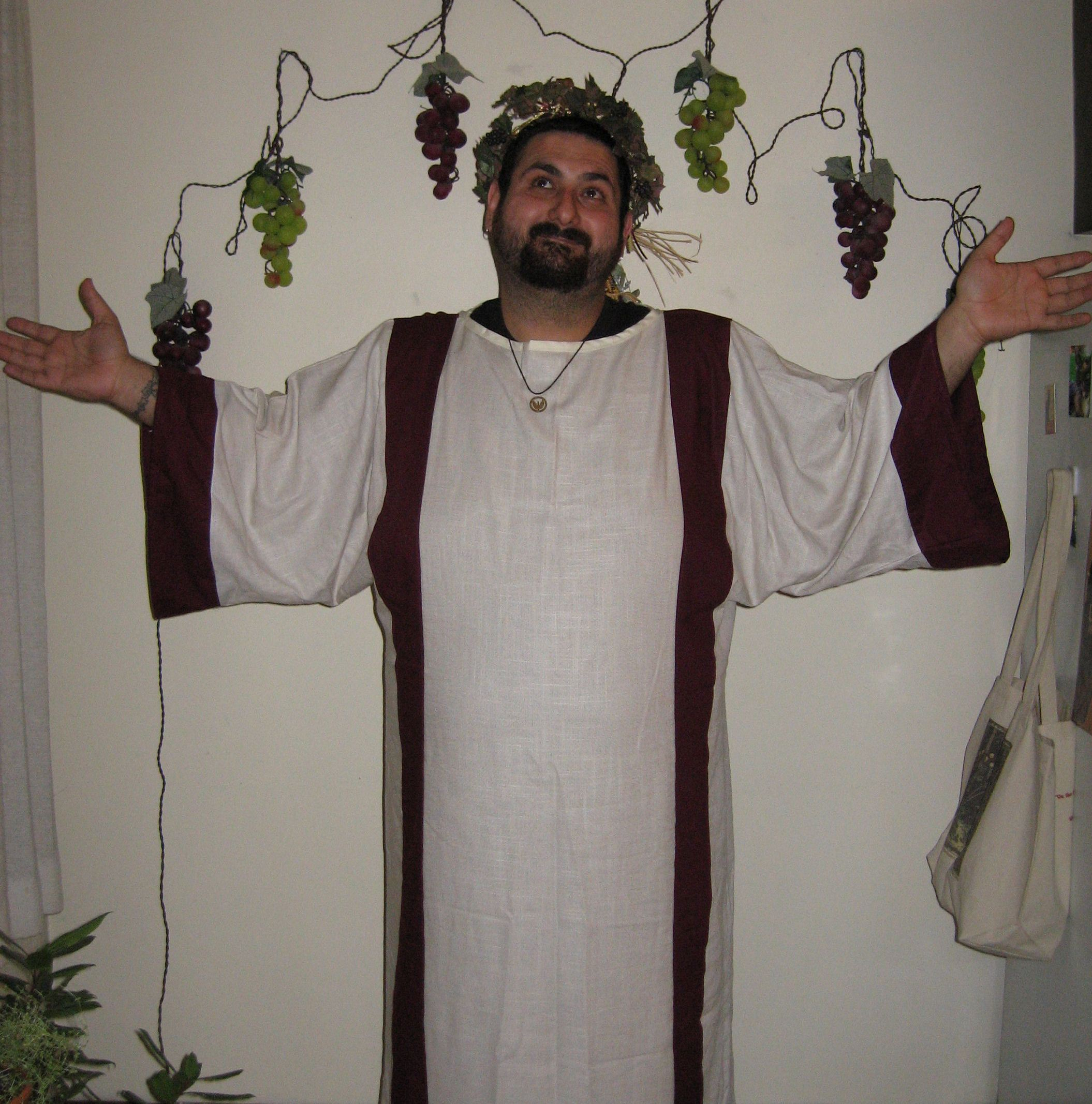
Oh, forgot to add…
I’ll make the final decision once proper divination has been done, but until then I figured it wouldn’t be a bad idea to see how you, the readers, felt: should I include hymns for the Skythian, Slavic and Baltic Gods (or at the least the ones pertinent to the Starry Bear tradition) in my Polytheist Hymnal along with pieces for members of the Egyptian, Ancient Near Eastern, Greek, Roman, Germanic and Scandinavian pantheons? Or is that too much, and I should just save them for some future volume? Perhaps you think I should expand it even further. and if so whom would you like to see? (Request not commission, don’t worry.)
final bout of begging
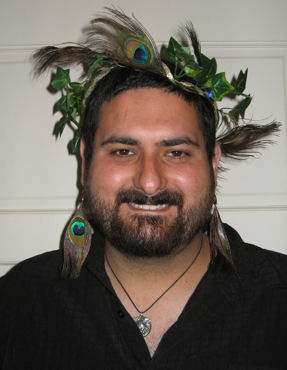
And that’s almost it for the commissions, with just hymns to al-Lāt, Asklepios’ family and a trilogy for Hekate remaining to be written. Of course after that I’ve still got something like 44 divinities to do, several of whom are getting multiple pieces – but if you’d like to sponsor something Paypal me $20 per hymn. You can also just request something, though it’s probably going to the back of the line, there’s no guarantee I’ll even get to it, and you won’t be credited when I do. But hey, it’s worth a shot, innit?
Hymn to Nephthys the Reveler
For Elizabeth
To Nephthys the Reveler
Hail Nephthys, dutiful daughter of Geb
and starry Nut, you who have known
greater grief than your fellows,
O mistress of the house of Seth who longs
for his return from the desert where he hunts
wild beasts and shirks his responsibilities,
foremost among those who mourn
with Isis for the Green One,
Osiris, king of those below,
whom they will never see again,
mother whose alabaster arms are empty
with only the memory of the happy,
dog-headed boy you once nursed at your breast
to fill them with, Anubis who was reared
by your sister as a playmate for Horus the prince.
But, O Nephthys, you are also companion
in the revels of Petempamenti, who delights
in the drum, the sistrum and the shrill
shriek of Min’s pipes played by his shaggy servants
and the spirits who inhabit trees and lakes.
Lord of the mask is he, and God of the sacred beverage
made from the fruit of the vine
after it has been stomped thoroughly
and left to ferment in large amphorae underground.
He alone of the divine host of Upper and Lower Egypt
has the power to help you forget your sorrows for a few hours
and even put a smile on your beautiful face,
O Nephthys, whom only the initiates of his mysteries
have heard the laughter of. So remember us,
dear Goddess, as we remember you in our gay songs.
Along with the noose and torch she holds a knife
This last one was made up entirely of ancient epithets of Hekate (drawn primarily from the Orphic Hymns) stitched together in novel ways. Hence the title, which is French for Orpheotelest.
To Hekate the Bricoleur
Hail terrible Hekate fond of solitary ways
angry one heralded by roaring beasts
sepulchral Persian hidden in the night
earthy attendant light-giving protector of dogs
three-formed guardian at the gate
lady of the house nurturer of children tender of bulls
who treads the earth with golden sandals and draped in saffron
kind-hearted savioress Hekate hail!
To Hekate of the Black Sea
I call to you Hekate who was worshiped
with wild nocturnal rites on the shores of the Black Sea
by mixed populations of Greeks, Colchians, Persians
and even the horse-loving Skythians. It was here
that your priestess Medeia, whom you esteemed
as if she was your very own daughter, through your tutelage
learned all of the properties of plants and stones,
how to weave magical charms and cast spells,
the sacrifices that placate ghosts, purifications
and unbindings, mystery-rites and infernal evocations
which she passed on to Orpheus the Thracian bard,
whom she loved but could not marry. It was here, too,
that you experienced love and bore to Hermes the Guide of Souls
a fine child who reflected its parents in each of its heads,
and was given your mingled names to be known by.
And here also you watched the devastation of your beloved cities
which once had built temples, kept festivals, minted coins,
and every home maintained shrines in your honor
as wave after wave of nomadic populations from the central Asian steppes
crashed against their walls and overcame them.
Now it is happening again, as marauders rampage across Ukraine
leaving rubble and fire and scattered corpses in their wake.
Worse still, O Hekate Mistress of the Gallows,
the Muscovite horde are ripping children
from the arms of their mothers and stealing them from orphanages
so that they can carry them back to their snowy homeland
where they will be given a new name, a new language, and new customs
and made to forget the old and everything that once nourished them.
O grave Goddess with deep roots in the land of the Black Sea,
watch over and protect these children, I pray; go with them into exile
and guide them safely home with the light of your torches,
and do unending grievous harm to anyone who would hurt these innocents,
or in any way be involved in this atrocity,
from the soldier to the clerk to the false parents
who would take in what does not belong to them.
Return blood to blood and flesh to flesh, O merciful and wrathful One
who dwells at the crossroads, and help all Ukrainians be restored
to the moist soil that birthed them, and let them not lose hope along the way.
Hymn to Asklepios
For Johanna
To Asklepios
I call to you Asklepios,
black-robed God of healers
who holds a coiling serpent
in one hand, and on the other
is perched a raven with night-dark wings,
potent symbols of your power and dominion,
and also your divine parentage.
Asklepios who visits the dreams
of the sick and despairing
and reveals life-saving cures
and clues to the mystery of who we are,
Asklepios who places inspiration
in the mind of the therapist
so that their words can untangle
the threads of trauma that hold
their patients fast,
Asklepios who unseen guides the hand
of the surgeon, the dentist and the root-cutter
preparing pills, philters and fumigations
for the restoration of mind and body
from assorted plants and fungi
just as the ancestors once did,
Asklepios who burns up pollution,
and causes the daimones who feed on
those afflicted with illness, pain and insanity
to flee in terror before your might and righteous wrath,
please, O Great One of Epidauros, be with those
who praise your beautiful name, and offer plentiful
sacrifices on your altar, and hold your image dear
in their hearts, and obey all your prescriptions,
and Asklepios please bring swift relief
and an end to soul-gnawing suffering,
and I promise you will always be honored.
To Hermóðr
Hail to you Hermóðr, valorous son of Óðinn
the Chooser, whose heart has been tested in battle,
whose bond is trusted throughout the nine worlds,
and whose iron will never can be turned from its goal.
O swift-footed Hermóðr, messenger of the Gods
and friend to all but the oathbreaker, your proud father
gifted you with your gold-gleaming helm and unpierceable
chainmail when you killed your first monster,
a Troll who would attack road-weary travelers
when they tried to cross its bridge.
And that was but one of many times
you have acted for the betterment of humanity.
You, O silver-tongued Hermóðr, were taught
clever riddles and beautiful song by Bragi,
Iðunn’s husband, your boyhood companion.
With words you wove a net for the capture of Loki,
slippery as a salmon and himself supremely skilled at flyting.
And you, O Sleipnir-riding Hermóðr, won the undying esteem
of Frigga when you, alone of the Gods, were able
to shake off the shock and grief at Baldr’s death
and find your voice to answer her request for someone
to undertake the long and dangerous journey
to Hel’s kingdom and bargain with her dread sovereign
for the release of the much-mourned one.
Though you were not able to ransom him,
still you gained all of her love and all of her favor for trying.
So hail to you, O potent Hermóðr who begot
a famous line of kings, may your kindness and heroism
never be forgot by those who revere
and have remained true to the Old Gods!
Hymn to Mithras
To Mithras
Hail to you Mithras born of stone and flame,
who transforms the sacrificial blood of the bull
into flowers and grain, friend of the raven,
companion of the roaring lion,
one who makes a banquet for the Sun,
and knows all the lore of the stars
and the science of initiation rites.
Mithras, strength of the soldier, guarantor of the oath and treaty,
protector of brides and venerable fathers,
you who are always attended by Cautes who bears the torch
and Cautopates who wields the caduceus.
Mithras you stand firm against the wicked and unjust,
and seek always to right what is wrong and unbalanced –
and you teach us to do likewise, and how to find
the strength to fight within.
.
 The House of Vines