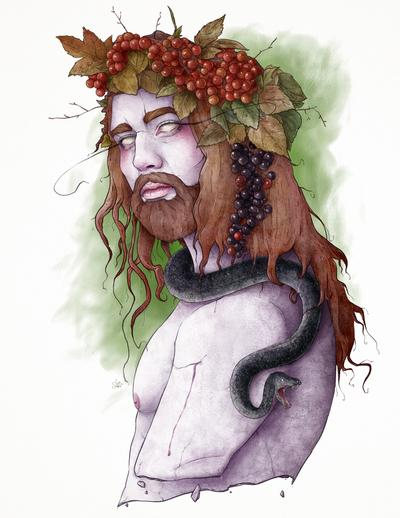
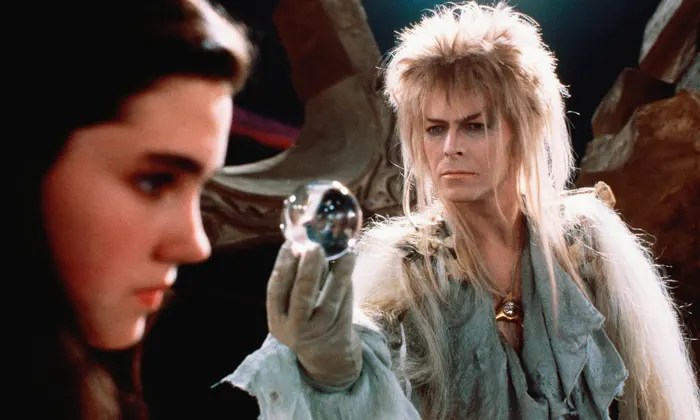
βίος. θάνατος. βίος. ἀλήθεια. Ζαγρεύς. Διόνυσος. = Life. Death. Life. Truth [literally Loss of Forgetfulness]. Zagreus. Dionysos.
Some notes I’ve collected on abortion and Dionysos
I know that I’ve come across a couple more sources in the course of my studies not mentioned here, but that was before the shift in my views took place and I didn’t bother keeping records. I’m presenting this information to explain, not to persuade. I’m not trying to change anyone’s minds.
ISmyrna 728 (LSAM 84; SEG XIV.752)
… son of Menandros, the revealer of the god (theophantēs), set this up… All you (?) … who enter the sanctuary and shrines of Bromios (“Thunderer”) should refrain from the exposure of new–born infants for forty days, so that blood guilt does not ensue. Likewise refrain from contact with a woman’s miscarriage (or: abortion) for the same number of days. Now if death and fate descends on someone in the household, perform the rites outside the gateway of the household after one–third of the month (i.e. ten days), and if some defilement comes from other households, stay away three days after encountering a decaying corpse. (10) Nor should those wearing black clothing approach the altars of the Lord, nor should anyone lay hands on sacred offerings not yet sacrificed, nor … bring (?) … an egg into the Bacchic festivities, especially during the banquets, nor offer a heart on the sacred altars … also abstain from mint, which Demeter scattered (?) … most hateful root of beans from … make a proclamation about the Titans to the initiates (mystai) … and it is not lawful to rattle the reeds … thrown, by whom the initiates … sacrifices … nor carry …
[. . . .]της Μενάνδρου ὁ θεοφάντης ἀνέθηκεν. | [πάν]τ̣ες ὅσοι τέμενος Βρομίου ναούς τε περᾶτε, | τ̣εσσαράκοντα μὲν ἤματα ἀπ’ ἐχθέσεως (ἐκθέσεως) πεφύλαχθε | νηπιάχοιο βρέφους, μὴ δὴ μήνειμα γένηται, || ἔκτρωσίν τε γυναικὸς ὁμοίως ἤματα τόσσα· | ἢν δέ τιν’ οἰκείων θάνατος καὶ μοῖρα καλύψῃ, | εἴργεσθαι μηνὸς τρίτατον μέρος ἐκ προπύλοιο· | ἢν δ’ ἂρ’ ἀπ’ ἀλλοτρίων οἴκων τι μίασμα γένηται, | ἠελίους τρισσοὺς μεῖναι νέκυος φθιμένοιο, || μηδὲ μελανφάρους προσίναι βωμοῖσι ἄνακ̣τ̣[ος, —] | μηδ’ ἀθύτοις θυσίαις ἱερῶν ἐπὶ χῖρας ἰάλ[λειν, —] | μηδ’ ἐν Βακχείοις ᾠὸν ποτὶ δαῖτα τ[ίθεσθαι (?) —] | καὶ κραδίην καρποῦν ἱεροῖς βωμοῖς̣ [— — — —] | ἡδεόσμου τ’ ἀπέχεσθαι, ὃν Δη̣μ̣[ήτηρ ἀμάθυνεν (?)·] || ἐχθροτάτην ῥίζαν κυάμων ἐκ σπέ̣[— — — —] | Τειτάνων προλέγειν μύσταις̣ [— — — — — ] | καὶ καλάμοισι κροτεῖν οὐ θέσ̣[μιον εἶναι — —] | ἤμασιν, οἷς μύσται θυσί̣[ας — — — — —] | [μηδ]ὲ̣ φορ̣ε̣ῖν Σ̣Υ̣ (?) [— — — — — — — —]
Translation by Philip P. Harland
ISmyrna 728 (LSAM 84; SEG XIV.752)
_____tes, the son of Menander, the theophant, has dedicated (this): All those who set foot in the temenos and temples of Bromios, be careful to wait 40 days after the exposure of a newborn baby, so that divine wrath may not be aroused; likewise so many days after a woman’s abortion (or miscarriage). But if fateful death cover any relative, be excluded from the propylon a third part of a month; but if a pollution comes from other people’s families, wait three suns after the corpse perishes. Do not go near the altars of the lord if you are wearing black clothing; nor lay hands on sacrifices of sacrificial victims not to be offered (or: unoffered sacrifices of sacrificial victims), nor even set (?) an egg as a meal in the Bakcheia, and it is not lawful to burn heart on the sacred altars, and stay away from mint, which (?) …………. which is the most hateful root from the seed of beans …….. proclaim to the mystai (about) the Titans …….. and it is not lawful for them to make rattling noises with reeds, on the days, on which the mystai ……. sacrifices …….. and do not wear (?) ……….
Translation by Susan Guettel Cole
Notes
For exposure of a child, forty days. A lex sacra from Ptolemais requires 14 days in some cases and may have required 40 days in others; LSCG Suppl. 119, first century B.C. (the text is corrupt). Nilsson attributes the requirement at Smyrna to the concern for children in Bacchic cults. Cameron, CR 46 (1932) 109-10, argues that in spite of the widespread practice of exposure of unwanted children in antiquity, a special concern for children who died shortly after birth appears as early as Plato, and suggests that this was an Orphic concern. A child who died too soon [1a)/wroS1]1 was assigned a special place of suffering in the underworld (Verg. Aen. 6.426; Plut. De Gen.Soc. 590f; Luc. Kat. 5; Tert. De Anima 55). Exposure of children was also a concern of one branch of the Stoics (Mus. Ruf. 15). The divinity for whom the text from Ptolemais was inscribed is not known, and it is therefore impossible to conclude that a concern for an exposed child was a feature of Bacchic cult. Children seem to have played an important role in Dionysiac cult in the Imperial period. They appear often in representations of Dionysaic cult activity; see F. Matz, DIONUSIAKH TELETH [1Wiesbaden 1963]1 pl. 8.1, the initiation of a young boy. Dionysiac motifs decorate the sarcophagoi of children who died young; see F. Matz, Die dionysischen Sarkophage (Berlin 1968-75) nos. 16, 78, 156, 199-202, 214, 230, 236. Dionysiac themes, howver, appear infrequently in the epitaphs for children who died young; see A-M. Vé.rilhac, PAIDES AWROI (ATHENS 1978) I nos. 47, 79, 80, 190, 196.
For a miscarriage or abortion, 40 days. Greek vocabulary does not distinguish between voluntary and involuntary abortion; see J. and L. Robert, BE 1955.189. A waiting period of forty days after miscarriage or abortion is customary in other cults; see E. Nardi, Eranion in honorem G. S. Maridakis I (Athens 1963) 432-85 and Studi in onore di Edoardo Volterra I (Milan 1971) 141-48; R. Parker, Miasma (Oxford 1983) 354-56. In addition to the inscription from Ptolemais (which gives 40 days for miscarrage or abortion), cf. LSCG Suppl. 54 (Delos), 91 (Lindos); LSCG 55 (Laurion), 139 (Lindos). LSCG 171 (Isthmos) gives a ten day waiting period; BCH 102 (1978) 325 (Megalopolis) gives 44 days. LSCG 124 (Eresos) requires a waiting period of 40 days in the case of a stillbirth. Forty days at Smyrna, therefore, is not excessive.
The wearing of white was a requirement in some Orphic or Pythagorean groups; see Hdt. 2.81; Eur. Cret. 79 (Austin); Diog. Laert. 8.19; Iamb. VP 100, 149, 155.
Pythagoreans did not eat the heart of any animal. According to Aulus Gellius (4.11), Plutarch (fr. 122 Sandbach) attributed this fact to Aristotle (frag. 194 Rose; see also Plut. Quaes. Conv. 635c; cf. Porph. VP 42 (=DK 58 C 6: mh\ kardi/an e)sqi/ein). The Pythagoreans did not eat heart because they believed that the heart was the source of life and strength (Clem. Al. Str. 2.17.2, 2.22.5; see M. Tierney, Mé.langes E. Boisacq [Brussels 1935] 317-21; W. Burkert, Weisheit und Wissenschaft [Nüaut.rnberg 1962] 166-67=Lore and Science in Ancient Pythagoreanism [Cambridge MA 1972] 180-85). Such a restriction could be operative here. It is almost certain that the restriction here is explained by the myth of the dismemberment of Dionysos by the Titans, where Athena preserves the heart of Dionysos (Firm. Mat. De Err. Prof. Relig. 6 p.15,2 Ziegler=Kern, OF 214). The myth, in its essentials, may be as old as the fifth century B.C. (Pind. frag. 133; cf. W. Burkert, Homo Necans, 225 n.43.). The Titans themselves are .cm this is the american ed mentioned in this inscription (see line 16); for reservations about this connection, however, see Henrichs, Lollianos, 70 n.6. M. Tierney, CQ 16 (1922) 77-88, argues that the Gurob papyrus (=Kern, OF 31) describes a sacrifice of a ram and goat to Dionysos Zagreus, where the heart was not eaten, but taken away, reading in line 3 [kar]dioforeiaS1 teleth/n and arguing on the basis of Clem. Al. Protr. 2.22, that kardi/ai were part of the secret objects in the Dionysiac cista mystica.
Cf. OP. Hal. 3.488-97: kli/nato d) ei)S1 eu)nh\n *)Ai+dwne/oS1: a)ll) o(\te kou/rhn &bar; Persefo/nhn h(/rpacen a)p) Ai)tnai/oio pa/goio, &bar; dh\ to/te min kla/zousan u(perfia/loiS1 e)pe/essi,&bar; zh/lw| margai/nousan a)ta/sqala, mhni/sasa &bar; Dhmh/thr a)ma/qunen e)pembai/nousa pedi/loiS1:&bar;…poi/h d) ou)tidanh\ kai) e)pw/numoS1 e)/kqore gai/hS1. Ovid knew the story of Minthe, daughter of Peitho, changed by Persephone into a plant (Met 10.728-30; cf. schol. Nic. Alex. 374; Lobeck, Aglaophamus (1829) II 833-34). .cm this is Nicander, Alexipharmaca- Demeter and Persephone find Minthe an abominable rival, but Demeter herself once accepted a drink made with mint, barley and water. This mint was pennyroyal [1blh/xwn or glh/xwn: glh/xwni terei/nh|, Hymn. Hom. 2.209). For the medicinal uses of blh/xwn/glh/xwn, see A. Delatte, Le cycé.on (Paris 1955) 726 (BAB:Ecit. 40 [1954]).
There were various forms of mint, some beneficial, others harmful. An Orphic poem explains why kala/minqoS1, a wild form of h(du/osmon, once “a great and fruitful (fere/karpon]1 plant upon the earth” became a plant sterile and without fruit (a)/karpon]1: Demeter, in her grief changed its nature (Etym. Gud. s.v. mi/nqh; Kern, OF 44). The mythical character Minthe and the plant she represents seem to be associated with the cult of Demeter. Strabo gives the myth of Persephone and Minthe as aetiology for the mountain named for Minthe, located in the area of Pylos, near a temenos of Hades and a grove of Demeter; Strab. 8.3.14, 344c.
The issue here, however, is why such a plant should have meaning for Dionysiac cult. The Orphic poet, who explains the transformation of wild mint from fruitful to barren is perhaps the clue. Dionysos, like Demeter is a god of plant and human fertility. Like Demeter he is known by the epithet Karpofo/roS1; see SEG 19.481-83, 24.1122, 1124; For Kallika/rpoS1, see below nos. &oma (Mopsuestia), &qma, &rma (Aigeai). For Poluka/rpoS1, see IGBR I&S’&sub2;. 195.1-2, apparatus (Odessos). For Eu)ka/rpoS1, see IGBR:Ecit. I&S’&sub2;. 351 (Messambria). Dionysos is associated with forces that make the earth and humans fruitful. For his epithet Fleu/S1, “one who makes to swell or teem with abundance,” see IEphesos 902, 1257, 1270, 1595 (=nos. &nga., &sga., &qga., &rga.); IErythrai 207 (=no. ifa.); IPriene 174 (=no.pha.). For a discussion of the meaning of the epithet, see no. nga. (Ephesos), on lines 6-7. For these characteristics as especially characteristic of Dionysos in Ionia and Ionian colonies on the Black Sea, see N. Ehrhardt, Milet und seine Kolonien (Frankfurt 1983) 169-70. Dionysos himself is described by Fere/karpoS1 (Hymn. Orph. 50.10), the same epithet used by the Orphic poet to describe mint before Demeter’s attack made it sterile. It is Dionysos’ power as a god of fertility that would be directly threatened by a plant associated with sterility. It is important to note that Dionysos was thought to have influence not only on the fertility of the earth, but on the potency and fertility of humans, males in particular. This aspect of Dionysiac frenzy is best represented in cult by the Phallephoria, the processions at the Dionysia where reprentations of the phallos were carried around the theater. This aspect of Dionysos is not restricted to fertility rituals, but seems to have been part of the worship of Dionysos as god of the theater. For evidence from Delos for the celebration of the phallephoria as part of the Dionysia, see P. Bruneau, Recherches sur les cultes de Dé.los (Paris 1970) 312-321, texts dating from 304 to 169 B.C.; see no.tta, Delos). For Dionysos as the god of the fallhfo/ria, see Herter, RE XXXVIII (1938) 1673-81. When Dioscorides describes the negative effects of a surfeit of mint on the sexual capacity of the male, he describes a reaction that would threaten the role of Dionysos as a god of male potency and sexual activity. It is this aspect of Dionysiac fertility that the prohibition against mint at Smyrna must have been designed to protect.
CGRN 144 (SB I 3451; AGRW 16232)
Those entering into the … temple (?) … are to be pure in accordance with the following: from death of one’s own family member or … of another (?) … on the 7th day; from death at child–birth, having taken part in a miscarriage (or: abortion), on the 40th day; from having given birth and nursed, on the … xth day; and if it is exposed, on the 14th day; from having sex with a woman on the 2nd day, and the same holds for women having sex with men; responsibility for a miscarriage (or: abortion) on the 40th day, … on account of encountering death (?) … ; and giving birth and nursing on the … xth day; and if the infant is exposed on the 14th day; from a woman’s monthly period on the 7th day; … the woman from (?) having sex with a man on the 2nd day; and from contact with (?) myrtle on the 2nd day.
τοὺς εἰσιόντας εἰς τὸ̣ [ἱερὸν] ǀ ἁγνεύειν κατὰ ὑποκε̣[ίμενα]· ǀ ἀπὸ πάθους ἰδίου καὶ [ἀλλοτρίου] ǀ ἡμέρας ζʹ, ἀπ̣’ ἀπαλλ[αγῇ ἡ γο]ǀǀ[ν]ή, ἐκτρωσμοῦ συν[ελθόντος, μʹ]. ǀ τετοκυαίας καὶ τρεφούσης ․ʹ· ǀ καὶ ἐὰν ἐχθῇ ιδʹ· τοὺς δὲ ἄ[νδρας] ǀ [ἀ]πὸ γυναικὸς βʹ, τὰς δὲ γ[υναῖκας] ǀ ἀκολούθως τοῖς ἀνδρά[σιν· τὴν μὲν αἰτί]ǀǀαν ἐκτρωσμοῦ μʹ, [ἀπαλλαγῆς ἔνεκα]· ǀ τὴν δὲ τεκοῦσαν καὶ τρέ̣[φουσαν ․ʹ]· ǀ [ἐ]ὰν δὲ ἐχθῇ τὸ βρέφος [ιδʹ]· ǀ ἀπὸ καταμηνίων ζʹ· [τὰς δὲ γυναῖκας ἀπ’] ǀ ἀνδρὸς βʹ, μυρσίνην δὲ [βʹ].
Translation by Philip P. Harland
Notes
Regulations for Entry into a Temple (I BCE)
Ptolemais Hermiou (Upper Egypt)
Although no association is mentioned here, this regulation for entrance sheds light on similar temple-regulations connected to associations, such as the Dionysiac initiates at Smyrna (see GRA 140 = ISmyrna 728).
NGSL 7 (CGRN 155)
Monument (stelē) of Isis and Sarapis. May the god bring good fortune. This is a holy temple of Isis, Sarapis, and Anubis. Anyone who wants to sacrifice may enter into the temple, being purified from childbirth on the 9th day, from miscarriage (or: abortion) on the 44th day, from menstruation on the 7th day, from contact with death on the 7th day, (10) from goat or lamb meat on the 3rd day, from other meats (or: foods) on the same day after washing from head to foot, from sexual intercourse on the same day after washing… (remaining four lines largely lost).
Translation by: Philip P. Harland
στάλα Ἴσιος Σαράπιος. ǀ Θεός, τύχα ἀγαθά. ἱερὸν ἅγιον Ἴσιος ǀ Σαράπιος Ἀνούβιος. vac. εἰσπορεύεσǀθαι εἰς τὸ ἱερὸν τὸν βουλόμενον ǀǀ θύειν καθαρίζοντα ἀπὸ μὲν ǀ λέχ[ο]υς ἐναταίαν, ἀπὸ δὲ διǀαφθέρματος vac. τεσσαράκοντα ǀ καὶ τέσσαρας ἁμέρας, ἀπὸ δὲ τῶ[ν] ǀ φυσικῶν ἑβδομαίαν, ἀπὸ φό[ν]ου ǀǀ ἑπτὰ ἁμέρας, ἀπὸ δὲ αἰγέου καὶ ǀ προβατέου τριταῖον, ἀπὸ δὲ τῶν ǀ λοιπῶν βρωμάτων ἐκ κεφαλᾶς ǀ λουσάμενον αὐθημερί. ἀπὸ δὲ ǀ ἀφροδισίων αὐθημερί vac. λουσάǀǀμενον, ἀπὸ ΠΑΘΙΝ[—]ΙΑΜΕΙΙΓΑΝ ǀ ΜΟΑΝ αὐθημερὶ λουσἀμε[ν]ον Υǀ[— — —]νεσθαι ΜΗΔΕΜ[— — —] ǀ [— — —] εἰσπορεύεσθα[ι — — —] ǀ [— — —]ΜΕΩΝΠΟ[— — —] ǀǀ [— — —]ΣΘΕ[— — —].
Translation by Philip P. Harland
Notes
Regulations of the Temple of Isis, Sarapis, and Anubis (200 BCE)
Megalopolis (Peloponnesos)
Slab of limestone found in 1975 700 metres northeast of the theatre at Megalopolis (64 x 54.5-57.2 x 14.0-15.4 cm). Now in Megalopolis archaeological museum (inv. 133; see Lupu in NGSL 7). There is no mention of an association in the inscription but we do know (from the Delos evidence) that sanctuaries for Egyptian deities could be frequented by such groups. Other regulations for entry into sanctuaries for other deities do mention groups of initiates, including the sanctuary for Bromios at Smyrna (see ISmyrna 728 on this site).
Well, this is going to piss a bunch of people off…
Neptunesdolphins wrote the following:
You know that is one definition for impiety – the presumption that the Gods are always on your side, because you said so.
Beckett tries to couch his writing in terms of well this is the Gods, and this is me, which is fine. But getting into the weeds and writing about Pagans in general, he links the two such as the Gods are for a woman’s right to choose (i.e., abortion). Well, I can think of several Gods who might baulk at that such as the Gods of Childbirth and Fertility. I can be pro-choice, but I cannot assume any of the Gods I follow are.
A God may tell me to do something political since that may be what They do, which is fine. But as you state there is a difference between me and Them.
What I find interesting is when Beckett rails about Christian Nationalists (and others) who do the same thing – assume that God and they think exactly the same.
BTW, nice tea cozy.
To which I replied:
Much appreciated. I think the cozy is rather stylish myself.
And precisely. Although Dionysos is very much about choice and bodily autonomy I’ve found a number of instances where abortion is discouraged or carefully regulated within his cults. I can think of a number of reasons for this – uniquely among the Gods Dionysos is represented as a fetus or premature child; he also has a strong concern for life in general, and young life in particular; as a God of luxuriant vitality, and growth and fertility more generally, abortion is the antithesis of that. I also strongly suspect that the purification rites imposed weren’t punitive but designed to help the woman process what happened and deal with grief and other unresolved emotions which might not otherwise have been addressed within their society before undergoing a process of reintegration and resuming their religious obligations.
So it’s complicated, especially since we’re left with the prescription in isolation. And interestingly the word used can either refer to the intentional termination of a pregnancy or an accidental miscarriage – not only is no context provided to help determine which is meant (assuming they saw a distinction between them) – but most sacred laws don’t even touch on this, so you can’t look to other sources for clarification either. (I will note that in the instances where this regulation shows up we’re either dealing with a Dionysiac cult interested in promoting fertility or else there’s a strong Orphic and Pythagorean influence which means we’re dealing with a non-normative form of the God; in other Dionysiac cults, as with Greco-Roman religion generally, abortion/miscarriage tends to be overlooked.)
Unsurprisingly this is something that’s gone unnoticed and uncommented on by the majority of contemporary Dionysians, most of whom are left-leaning and take it for granted that Dionysos shares their liberal viewpoint. I generally don’t bring it up because I don’t want contemporary politics to get in the way of them having a rich and satisfying relationship with Dionysos. However reflecting on this has definitely shifted my views on the subject – to the point that I’m no longer in favor of abortion, though I don’t want to see restrictive laws imposed since I have an inherent mistrust of the government and history has shown that such legislation just makes a bad situation many, many times worse. I’d rather see effort put into education, moral and societal reform, access to contraception and the morning after pill as well as sterilization procedures, eliminating some of the bureaucracy and hoops around adoption and surrogacy, providing support and resources both during and after pregnancy, and whatever else it takes to make sure that every child born is wanted, loved, healthy and properly cared for as well as ensuring the health and wellbeing of the mother – not to mention a bunch of needs and services I’m not aware of because I’m a dude, and early on made the decision to remain child-free.
And I think everyone needs to step up to make this happen – the nuclear family is unnatural and ineffective. In any properly functioning society you’ve got the grandparents, and older children, a pack of aunties and uncles, friends and neighbors, etc. etc. etc. all willing to pitch in and help the young couple out. It truly does take a village to raise a child. But today everything is so atomized and disconnected it’s no wonder we’re producing Millennials and Gen Zers, with all of their defects, dysfunction, and degeneracy. It’s not their fault they are so entirely lacking in virtue and functionality – that’s a failure of society at large. No wonder millions of mothers would rather murder their babies than raise them in the world we have collectively created. We can do better.
And that’s my Ted Talk, folks.
And just to be clear: I think abortion is wrong, not the women who get them. I don’t consider it my place to pass judgment on an individual’s decisions about their body, especially when they find themselves in such a personal and desperate situation. My place is to help create a society where abortion isn’t considered necessary except in the case of medical emergencies. And that, I think, can only be done on the tribal level.
And I have no idea what Dionysos thinks on the subject, as it’s never come up. And if I did I wouldn’t mention it, because I believe that my arguments are morally correct, logically consistent, humane, and capable of standing on their own.
Everything is number
According to isopsephy (basically Greek gematria, a favorite practice of the Pythagorean Orphics) Dionysos’ allonym Βάκχος has the numerical value of 893 (which is the solution to my Riddle, in case you missed the acrostic.)
893 is a number with some interesting properties, especially when applied to the text of the Bible. For instance “wilderness” (Num 14:2; Exo 7:16), “transgressor” (Pro 21:18), αναγγέλω (“to call; announce” = Joh 16:25) as well as μεθυσκεσθε (“to make drunk” = Eph 5:18) all add up to 893. Also, I chose the verses carefully as these words crop up in a number of places.
And the sum of the following verses (taken from here since I don’t do math) is also 893:
- Of fowls also of the air by sevens, the male and the female; to keep seed alive upon the face of all the earth. (Gen 7:3)
- And it came to pass at midnight, that the man was afraid, and turned himself: and, behold, a woman lay at his feet. (Rut 3:8)
- And thine age shall be clearer than the noonday; thou shalt shine forth, thou shalt be as the morning. (Job 11:17)
- And as they did eat, Jesus took bread, and blessed, and brake it, and gave to them, and said, Take, eat: this is my body. (Mar 14:22)
- How that by revelation he made known unto me the mystery (as I wrote afore in few words) (Eph 3:3)
All very interesting and Dionysian, but I’m curious how 893 turns up in inspired texts such as Homer’s Iliás or Odússeia, the fragments of Empedokles and Herakleitos, the Orphika, and Nonnos’ Dionysiaká say. I chose “inspired” rather than “sacred” since only Empedokles and the Orphika would technically count, despite the depth and meaning to be found in the rest since it’s important to recognize the distinctions in this type of literature and evaluate them properly.
Of course, now that I’ve brought it to your attention you’re going to start seeing 893 (or 8/93) everywhere, in meaningful and meaningless ways. You’re welcome. Io evohe! Io io Bakchos!
To Dionysos Eleutherios
Hail to you Dionysos, freedom’s God
and beloved consort of richly-crowned Eirene
who brings sweet concord to the people
and whose grace is so desperately needed
at this time. Zeus’ pet eagle no longer sits
tamely at the side of the Heavenly Father,
symbol of justice and far-reaching equanimity,
but now is perched upon the shoulder of dread Enyo,
who has burst her brazen bonds and strides through many lands,
her dark shadow inciting men to madness, division and strife.
The eagle calls out for blood and vengeance, its shrill cry
echoed in that of weeping brides and fatherless sons,
speaking of dark days behind us, and darker days to come.
Wretchedness and woe may be upon numberless peoples,
foreign and domestic, but I cry with the Vínland Mainades
who cry, “Down from the Sacred Mountain have we come,
to the banks of the Potomac, and the shining marble
of the nation’s capital. Come out of your homes,
o sons and daughters of the patriots and revolutionaries
who through struggle and sacrifice kept the torch of hope
that serves as an inspiring beacon to the oppressed of the world burning,
dawn the star-spangled fawnskin and lift high the ivied wand,
and sing with us praises of Bromios, the beautiful and boisterous one
whose simple worship gladdens the heart.”
Sweet it is to lose yourself in the dance,
to feel the juice of the grape course through your body,
stirring your spirit until you toss back your head
and give the ecstatic cry Euoi! Euoi! Io Euoi!
Drunk on the God, we have no care
for burdensome possessions, and the foolish rantings
of angry kings and haughty potentates,
for with Dionysos we know ourselves to be free,
and have the Earth’s rich bounty as our inheritance.
Ie ie Bakcheios! Io io Bromios! Hail Eleutherios!
Sannion’s Guide for the Apocalypse
Druids aren’t the only people with cool hats. As Archiboukolos of the Starry Bull tradition I have one too.
According to John Beckett and co. there’s a great war, sorry — Great War in the Otherworlds and the “good guys” are 100% in support of his progressive politics and values while the forces of evil and uncreation are backing his ideological opponents, the Republicans and cultural conservatives more generally.
How surprising.
A friend asked my thoughts on the subject and, well, I strongly suspect that if I shared them here I would be in violation of WordPress’ Terms of Service.
Instead I’m going to take a point on which Beckett and I are in full agreement – we’re headed into some very uncertain times – and suggest some practical steps people can take to mitigate stress and suffering during them.
Read Seneca and Plutarch. Build a network of family and friends you can rely on as things get tougher and start breaking down. Know and have good relations with your neighbors. Learn how to do things the old way; in other words, develop practical skills that are not dependent on modern technology. Learn the essentials of emergency medicine and keep a well-stocked kit. Garden, buy local, barter and trade, etc. as you’re able, as well as learn basic survival and prepper skills (i.e. foraging, hunting, how to cook and preserve food, how to fight and use various weapons, etc.) but without going completely overboard and letting fear and paranoia govern your life. Maintain your religious practices, especially those involving local land-spirits and the dead who can be potent allies, especially against malignant spirits. Perform regular cleansings, protections and psychic hygiene, whether you think you need such things or not. Listen to what your Gods and Spirits are telling you, even if it doesn’t make complete sense at the time. Trust that more than what the experts, influencers and other authority figures are trying to convince you of, especially if there’s a conflict between them. Keep an eye on the news, without obsessing over it so you have a sense of what’s going on locally and in the wider world. But minimize your exposure to social media and pop culture and be intentional, selective and critical when you do consume such content. And the rest – don’t worry about it unless it starts impacting your life. Then pray, make offerings, amp up your psychic defenses, divine frequently, and consult religious specialists and other respected authorities within your community to figure out how to proceed. Did I mention prayer and making offerings? You should do that, a lot.
Anything you guys would add?
Of course I think all of these are things that a mature, responsible adult should be doing whether the eschaton is imminent or not, but that’s just me. However if you do follow these simple prescriptions I guarantee that you’ll be ahead of the pack should the shit hit the fan.
And here’s the screed of the prophet Beckett, should you be so inclined to read it for yourself.
To Dionysos Who Rises
Rise up, O Lord!
No longer suffer the inequities of this unrighteous tyrant
with mildness and restraint, but like boiling lava flowing down
the side of a mountain, come, come! Come mad and raving Dionysos,
to inflict terrible destruction upon this fool who would wage war
on a peaceful people, and lay the wretch low!
Rise up, O Lord!
As you rose up against Pentheus, who vainly sought to oppose
your worship in the very city of your birth. You enticed him
into insanity, and beneath a pine-tree his own mother
tore him to pieces.
Rise up, O Lord!
As you rose up against Lykourgos, who put your women to flight.
You blinded him, and made him think that his son was made of vines,
then opened his eyes that he might witness
the bloody spectacle he had wrought.
Rise up, O Lord!
As you rose up against the daughters of Minyas,
who shunned your sacred rites. You inflicted
such hunger upon them that they cast lots
to see which of their children they would boil in a pot.
Come, come night-roving Bakchos, terrible to look upon,
roaring like thunder, like a bull in frenzy, shake the Earth
to its core, and topple this arrogant bastard I pray!
Venus in the ninth house
Firmicus Maternus, Mathesis 3.6.17
Constant attacks (assidua … interpellatione pulsari) by daemons are indicated by Venus in the ninth house by day. It creates natives who are squalid and stay in temples or roam about, and such as never cut their hair, and such as claim to announce to humanity pronouncements from the Gods, the sort that are often in temples and are accustomed to prophesy (vaticinari); often they are interpreters of dreams.
When it is deposited in a house, it protects it from all sorcery and the shades of daemons and empty dreams and blasts of lightning.
Damigeron, De lapidibus 7.1-14
The coral stone has the greatest powers in magical usage and in the achievement of serious undertakings. For it is hardy and repels all delusions of dreams by its remedy. It provides the greatest protection (tutamentum) against the wrath of masters when the name of Noctiluca (‘night-shiner’), that is the sign of Hecate, or the face of Gorgo is engraved in it.
The person carrying it is never harmed by any drug (medicamento) nor by lightning nor by a shade sent against them.
In war and in a fight, it is of the greatest assitance. And it will be invincible and efficacious and insuperable, without fear and without sadness, and makes the one holding it safe, easily able to accomplish what they will and gives easy access (to the powerful? into houses?). Furthermore, when it is first consecrated, then ground up, and sown together with corn or barley or any other crop, it keeps hail and all pernicious weather away from the earth. And strewn over vines or olives, it repels all destructive force of winds.
When it is deposited in a house, it protects it from all sorcery (maleficio) and the shades of daemons (umbris daemoniorum) and empty dreams and blasts of lightning.
If you have it with you on a ship, you will accomplish much more, because it resists winds and tempests and whirlwinds. So great is the power allotted to this stone as a remedy against adverse forces (partes).
This protective object (tutamentum) ought to be consecrated by a God and at holy places (sanctis locis), so that it has the greatest effect, day and night, at a dirnual or nocturnal hour. And the stone coral offers good protection (praesidium).
And therefore weakness which is induced by a pestilent wind is more easily cured by the salutory airflow of suffumigants.
Vegetius, Digesta artis mulomedicinae 3.12.1-4
This composition of suffumigants repels bewitchment/the evil eye (fascinum), purifies (lustrat) an animal, chases daemons away, and removes/keeps away diseases; for the fume and breath (spiritus) of the odor, when it enters through the mouth and nostrils, penetrates to all the recesses of the organs very often cures places which potions cannot cure. Likewise, a cough in humans is healed with the vapor of suffumigants above all. Furthermore, the authorities of veterinary medicine (mulomedicinae) assert that the most desperate and dangerous diseases derive, not from faults in the fodder or the water, but from the corruption of the air. And therefore weakness which is induced by a pestilent wind is more easily cured by the salutory airflow of suffumigants.
Their composition is as follows:
essentially the same recipe as above
These ingredients are all dried and mixed together; when the need arises, you take one spoonful of this mixture and strew it over ‘live’ coals, and you suffumigate the animal with its head uncovered, so that it receives the fume through the mouth and nostrils. This suffumigant not only heals the troubles of beasts of burden, it also repels oncoming human diseases and hail, it scares off daemons and puts shades to flight.
oppose with their odor the diseases of humans as much as of animals, and chases daemons away
Vegetius, Digesta artis mulomedicinae 1.20.1-3
There is also another composition of suffumigants (suffimentorum) for warding off diseases, but more expensive and, it is thought, more effective:
living sulphur, 1 pound (libra = 12 ounces)
Judaean bitumen, 1 pound
opopanax, 6 ounces
bearsfoot, 6 ounces
galbanum, 1 pound
Castoreum, half a pound
“crude air” (?), 6 ounces
(H)ammoniac salt, 2 ounces
Cappocian salt, 3 ounces
stag horn,—
“male” jet stone, —
“female” jet stone, 3 ounces each
haematite stone, 2 ounces,
magnet (sideritis) stone,—
argyritis (silver dross/litharge) stone, 1 ounce each
“sea-tails” (caudas marinas),—
sea snakes (ungues marinos), to the number of 7 each
“sea grapes” (uvae marinae), 3 ounces
deer marrow,—
cedar pitch,—
liquid pitch, 3 pounds (pondera) each
bones of ink-fish, to the number of 7
gold, half an ounce
a “pod”(?) of gold-dust
And these all when mixed together and burned oppose with their odor the diseases of humans as much as of animals, and chases daemons away; it is said that they keep away hail and purify the air. But if you cannot find the stones mentioned, or decide not to buy them because of the high cost, the rest of the ingredients will work well enough.
this far north
Oh, and afterwards we had to run some last minute errands, including stopping off at the gas station. While I was filling up the tank and Galina was inside paying, a truck hauling a large trailer pulled in, the kind of trailers that are commonplace in Wyoming and Montana where I grew up, but not so much out here in the scenic Hudson Valley (even this far north.) At first I thought the guy was hauling horses, but then I noticed the horns. Looking closer it became clear that the trailer was carrying a bull and his harem of cows. I take that as a powerful omen, and confirmation that tonight’s divination session was on point.
the taste of honey
This has been a truly trying weekend, but it was capped off with an incredibly intense divination session during which Dionysos-Óðr came through so strongly that hours later Galina had a contact high from the residual energy and could taste honey in the air. Hail Dionysos! Hail Óðr! Even now I’ve still got a buzz going and can feel his strength, joy and creative frenzy coursing through me. I needed this. Thank you for the grace of your presence, my Lord, and may you always be hailed.
A Pantheon of Dionysoses
I suspect that I am unique in my treatment of the different epikleses of Dionysos not just as different pathways to the deity, but almost as different Gods in and of themselves with unique attributes, associations, rules for engagement, personalities, etc. Now obviously they’re all Dionysos – or as the Gurôb Papyrus proclaims, “εις Διόνυσος!” – but they’re also … something else, which is why all of the divergent parentages, mythologies, local cultuses, etc have never really bothered me or inspired a need to artificially reconcile them. (Things get really interesting when you encounter two or more Dionysoi simultaneously, let me tell you!) Here are the forms of Dionysos which are represented in the Bakcheion. (Note that I am alphabetizing them according to their English transliteration, not the original Greek. Also note that I am not including the God’s mortal avatars, many of whom are included on the Retinue Shrine. Though not all, which is never possible where Dionysos is concerned. Likewise, these are not all of the forms of Dionysos that I honor, just the ones represented in the Bakcheion.)
Asterios (Ἀστέριος) = “Starry”
Bakcheios (Βάκχειος) = “Frenzied”
Choiropsalas (Χοιροψάλας) = “Cunt-plucker”
Choroplekes (Χῶροπλέκες) = “The Danceweaving One”
Chthonios (Χθόνιος) = “Underground”
Dendrites (Δενδρίτης) = “He in the Trees”
Di-wo-nu-so (𐀇𐀺𐀝𐀰) = “[Cretan] Dionysos”
Eubouleos (Εὐβουλεος) = “Of Good Counsel”
Kradiaios (Κραδιαῖος) = “Sacred Heart”
Liber Pater = “Father Freedom”
Lusios (Λυσιος) = “Who Brings Release”
Mainomenos (Μαινόμενος) = “Whose Madness Spreads”
Melpomenos (Μελπόμενος) = “Who Celebrates with Song and Dance”
Oinos (Οίνος) = “Wine”
Omadios (Ὠμάδιος) = “Eater of Raw Flesh”
Phanes (Φάνης) = “Manifestation”
Phleos (Φλέως) = “Who Causes to Swell”
Thurepanoiktes (θὐρεπανοίκτης) = “Opener of the Door”
3 for Freyja
I found this image of Freyja over at r/polytheism, posted by u/Arkham_13 and entitled “Freyja, day 22 of Inktober [nsfw]”
And so I thought I’d share some older hymns for Freyja with y’all, it being her day and all (except when it belongs to Frigga.)
To the Mistress of the Silver Distaff
I call upon Freyja who tends the graves of the ancestors
and joins her deep, rich voice to theirs
in the ancient songs that stir life’s currents
and cause brightly hued flowers to unfurl,
branches to bend under the weight of swollen fruit,
animals to fatten and beget plentiful offspring
and fields of golden wheat to rise high
as the thigh of a thickly-muscled thrall;
Freyja who dances in darkest night
as bear-stars and waggon-stars
and stars of the hunt circle and shine overhead
and fey figures leap and laugh
in the leafy trees that surround her;
Freyja, whose delicate, knowing fingers tease
and twine, twist and untangle the fateful thread.
Oh gracious Goddess, hear our prayers
and bless the dead who are dear to us
that our entire line together may honor and serve
you and the other holy Immortal Ones too.
To the Charming One
O Goddess of Witches and Seers
pay heed to my prayers, and I plead
guide my studies and help me hunt power,
you who know the secret language of trees
and the properties of every plant,
runecarver, worldwalker, threadspinner,
limbloosener, shapechanger, farstriker,
corpseraiser, cursecaster and clamorstirrer;
skillful Freyja of the many wiles,
you who pour libations,
and delight in the drum,
you who walk in smoke,
and soar on falcon wing,
you who veil the mysteries,
and reveal what is hidden in the heart,
you who are expert in every sacrifice,
and mistress of the techniques of archaic ecstasy,
you who are found in the wild places,
and mindfully tending the hearth
– hail greatest Völva! Most potent
and most ruthless of the Ásynjur
who bent even Alföðr to her womanly will
in trade for weaving wisdom
and other secrets still;
further I beseech you,
keep every wicked, wrathful and ruinous thing
from me and from mine,
and Lady, I will sing your praises
the next day and every day after.
To the Lady of the House
To the home that ever honors you, O Glad-of-heart,
bestow health, wealth and overflowing good luck
that our neighbors may look upon us
and envy our pious and well-ordered existence,
especially the diligence and delight
with which we conduct your venerable domestic rites.
For you, Freyja, Keeper of the Keys,
are the model we imitate; the loving manner
in which you looked after your kin when but a tender girl,
especially your handsome brother
and dear old father Njörðr.
They wanted for nothing,
and back then you busied yourself always
with keeping your abode in Vanakvisl
gleaming clean, everything in its proper place
and the cupboards and pantry ever fully stocked.
Like a ferocious feral feline
you chase off all that does not belong,
especially the corrupt, unharmonious and malign,
and Freyja, Receiver of Many, it is you
who preside over guest-friendship and feasting,
you who banish cares
and bring refreshment with the mead-cup,
you who fill hearts
with precious love of their own,
an appreciation for what we have,
and what it took to get it,
respect for the labor of all
who keep a household running properly,
honor to the aged and responsibility
for the young and the vulnerable,
and above all the value
of distinct but complementary virtues.
Freyja, O Mistress of the Winding Way,
help us to be patient, understanding and kind
with those whose lives have been entwined with ours,
and always to cherish them and to see
the beauty and uniqueness in them.
This we pray Goddess
of daughters, sisters, wives, mothers, widows
and the good men who love and care for them.
To She Who Smiles
Hear my prayers Freyja,
as once you heard the cries of little Gersemi
when she was cutting her first teeth;
you held her close to your heart,
rocked her and kissed her treasured forehead,
but she was inconsolable;
even her precious sister Hnoss,
who never left your side back then,
shed pearlescent tears in sympathy
and you too suffered their sufferings
until that man, your husband, walked through the door
bearing a sack of toys he’d picked up in his wanderings
for your daughter’s tooth-gift.
He joked, made funny faces,
and his laughter was like the bellow of an aurochs
when his apple-cheeked Gersemi
stuck her tiny pink tongue out at him
and she forgot all her pain.
You smiled then;
all was right in Sessrúmnir.
Goddess, such potent love I feel
for all who are here with me,
and the members of my family and tribe
who live far from me
– watch over every one of them, I ask you,
bless and protect us all
and should your journey-loving daughters
ever set foot at our doorstep,
know that they will be well-received.
The Retinue Shrine Explained
My common shrine to Dionysos and his Retinue is a work in progress. For instance, I need to hang the masks on the wall above it and add representations for a number of important Gods and Spirits. But I’m picky and haven’t found the right representations for them yet. I am also patient, and willing to wait for those right representations to find their way to the Bakcheion. (Click the link and scroll down for pics.)
So far I’ve got:
- Framed picture of Dionysos Omadios (Eater of Raw Flesh)
- Hekate
- Cup with hound for Maira
- Top for Strobilos
- Comedy and Tragedy masks
- Beige urn for the Dionysian Dead
- Bowl of knucklebones for Astragaloi
- Bronze woman with tripod for Kirke
- Skull fountain for Ikarios
- Clown noisemaker for Krotala and the Harlequinade
- Freyja riding Hildisvíni
- Bust of Proserpina
- Dionysos’ Sacred Heart
- Castanets for Krotala
- Caryatid for Karya
- Headless Clown Spider for Arachne and the Harlequinade
- Apple with puzzle inside for Mela and Trochos
- Egg with skulls for Phanes and the Dead
- Dried pomegranate for Persephone
- Pomegranate seeds on tray for the blood of Dionysos
- Aniconic idol with Labyrinth and Boukranion for Di-wo-nu-so, the Cretan Dionysos
- Mask of Dionysos Eubouleus (Of Good Counsel)
- Oliver Stone’s The Doors dvd and The Doors Greatest Hits cd for Jim Morrison
- Spider husk in a jar for Arachne
- Fox face for the Bassarids
- Plaque of Ariadne
- Icon of Dionysos Choroplekes (The Danceweaving One)
- Terracotta statute of Erigone
- Bronze disc depicting the Harlequinade
- Aphrodite
- Bone bullroarer for Rhombos and the Dead
- Wood bullroarer for Rhombos
- White mask for the Titans
- Framed picture of Dionysos Mainomenos (The One Whose Madness Spreads)
- Brown face of Dionysos Dendrites (He in the Trees)
- Painting of Columbina
- Black urn for the Bacchic Martyrs
- Spider candle-holder for Arachne
- Double herm of Dionysos Phleos and Ariadne Antheia
- Red Wheel for Trochos
- Bronze disc depicting a Satyr
- Bowl with stars and lyre for Orpheus
- Taras
- Gold mask for Arlecchino
- Dryad
- Korybant
- Melampos under an arbor
- Bottle with Etruscan designs for Akoites
- Seilenos cup
- Grape candle-holder for Ampelios
- Mini-shrine for David Bowie
- Deck of David Bowie playing cards
Hunting the Wild Eastern Sow
The icon of Dionysos Choiropsalas and his female companion highlighted in my Bakcheion pic post is rather intriguing. I assumed that she was either a Nymph or Mainad since I’m not familiar with a Greek or Roman Goddess by that name, and I think I did a thorough search when I first acquired it which turned up zilch. It is an interesting name, however: Αυγέτρις, from the Ancient Greek αὐγή (augḗ, “sunlight, dawn”) likely derived from Proto-Indo-European *h₂ewg- (“to increase, to enlarge.”) Considering how often Daughters of the Sun and Dawn Goddesses show up in Starry Bull and Bear stuff and my poetry generally, that’s quite significant. Naturally this also reminds one of the Germanic word auge (“eye; to see.”)
Χοιροψάλας is, of course, one of my all-time favorite Dionysian epithets.
Do not Argives sacrifice to Aphrodite divaricatrix [lit. “with spread legs”] (Peribasos), Athenians to her as “courtesan” (Hetaira), and Syracusans to her “of the beautiful buttocks” (Kallipygos), whom the poet Nikander has somewhere called “of the beautiful rump” (Kallipluton)? I will be silent about Dionysos Choiropsalas. The Sikyonians worship Dionysos as the God who presides over the woman’s secret parts; thus they reverence the originator of licentiousness, as overseer of what is shameful. (Clement of Alexandria, Exhortation to the Greeks 2.39)
Many scholars, too, prefer to remain silent when it comes to this aspect of the God, often leaving it in untranslated Greek or blushingly rendered into Latin. It means “cunt-plucker” or more literally “pig-catcher,” from the Greek χοῖρος meaning “sow,” often slang for female genitalia.
While it’s true that Dionysos likes piggies, and not just in an Eleusinian context:
Swine are held by the Egyptians to be unclean beasts. Firstly, if an Egyptian touch a hog in passing by, he goes to the river and dips himself in it, clothed as he is; and secondly, swineherds, native born Egyptians though they be, are alone of all men forbidden to enter any Egyptian temple; nor will any give a swineherd in marriage, nor take a wife from their women; but swineherds intermarry among themselves. Nor do the Egyptians think right to sacrifice swine to any God save the Moon and Dionysos; to these they sacrifice their swine at the same time, in the same season of full moon; then they eat of the flesh. The Egyptians have an account of the reason why they sacrifice swine at this festival, yet abominate them at others; I know it, but it is not fitting that I should relate it. But this is how they sacrifice swine to the Moon: the sacrificer lays the end of the tail and the spleen and the caul together and covers them up with all the fat that he finds about the belly, then burns all with fire; as for the rest of the flesh, they eat it at the time of full Moon when they sacrifice the victim; but they will not taste it on any other day. Poor men, having but slender means, mould swine of dough, which they then bake and sacrifice. To Dionysos, on the evening of his festival, everyone offers a porker which he kills before his door and then gives to the swineherd himself who has sold it, for him to take away. The rest of the festival of Dionysos is ordered by the Egyptians much as it is by the Greeks, except for the dances; but in place of the phallos they have invented the use of puppets a cubit long moved by strings, which are carried about the villages by women, the male member moving and near as big as the rest of the body; a flute-player goes before, the women follow after, singing of Dionysos. There is a sacred legend which gives the reason for the appearance and motions of these puppets. (Herodotos, Histories 2.47-48)
From the rest of Clement’s passage I think it’s pretty clear which type of sow he hunts. (Though note that Herodotos also connects the pig-sacrifice to phallophoria.)
Also, let’s not be coy. While Dionysos has tons of epithets and cult practices associated with that nebulous concept “fertility” – this is straight up about genitals and fucking.
Now those of you who are familiar with the Starry Bear side of things are probably stroking your chins about now and going, “Hey wait, isn’t Dionysos’ other wife associated with pigs too?”
And you would be correct!
Freyja is most gently born (together with Frigg): she is wedded to the man named Ódr. Their daughter is Hnoss: she is so fair, that those things which are fair and precious are called hnossir. Ódr went away on long journeys, and Freyja weeps for him, and her tears are red gold. Freyja has many names, and this is the cause thereof: that she gave herself sundry names, when she went out among unknown peoples seeking Ódr: she is called Mardöll and Hörn, Gefn, Sýr. Freyja had the necklace Brísinga-men. She is also called Lady of the Vanir. (Gylfaginning 35)
Of course, pigs and more particularly the boar have tons of significance among the Norse, and within Vanic cults in particular representing war, valor, luck, kingship, the hunt, abundance, fertility, the domestic sphere, and yeah, raw sexuality. But note that Freyja isn’t just called Sýr — she also transforms her champion Óttar into the golden-bristled battle-swine Hildisvíni and rides him out to meet the Giant Völva Hyndla, something I’ve discussed at length in my piece comparing Freyja and Kírkē, the Daughter of Helios. Also note that while Sýr almost certainly means “sow” a number of Scandinavian and German Romantics attempted to make it mean “Syrian” connecting Freyja with Near Eastern Love and War Goddesses such as Ishtar, Astarte and Aphrodite whose lost love was slain by a boar.
Circles, etc.
A glimpse inside the Bakcheion
Since Anthesteria just wrapped, I figured I’d give y’all a guided tour of the Hudson Valley Bakcheion, formerly Galina’s library until I discovered and colonized it.
The entrance is protected by this apotropaic image:
The first thing you’ll notice upon stepping through the door is a small round table upon which I’ve placed a bowl of chernips and methods of cleansing involving the other cardinal elements. (Not shown.) Above it is a representation of the World Tree, central to both Heathenry and Orphism — though interestingly not Greco-Roman religion generally. (Also not shown.)
To the right hang icons of Liber Pater and Iðunn, to ensure that this is a fertile place for devotion.
Facing out to the creek and the many backyard shrines below is my writing desk, numerous protective charms and amulets hanging from the lintel, and a shrine to the Gods and Spirits of the Green Way. (Not shown.)
Above it hangs this icon of Dionysos Choiropsalas and a Nymph.
The center of the room consists of a divination station, where all of my tools of the trade are kept. (Not shown.) Although it’s set up to read for clients I haven’t seen anyone here in the five years that the Bakcheion has been operational, preferring to deal with strangers downstairs in the living-room or better yet out by the yard shrines.
Here is βασσάρα, guardian of the temple. She bites atheists and other impious.
That is my thyrsos next to her, and a rabbit-topped walking stick.
Here are shrines to Dionysos Lusios and Bakcheios, respectively.
Between them is Arachne. She bites too.
Next to them is my oracular throne, which is covered by a bearskin when not in use. (Not shown.)
Here is my Starry Bull shrine, the centerpiece of which consists of the books I’ve written articulating the tradition.
Normally there’s another shrine cloth and the books are better arranged, but there was an unfortunate incident involving beeswax which I need to remedy.
Dionysos Asterios got a slice of chocolate bourbon pie and a fine Spanish wine on Choes.
And here is the common shrine to Dionysos and his Retinue.
There’s more, but it’s not for public consumption.
Hope y’all had a wonderful Anthesteria!
Look who showed up for Anthesteria
A while back Galina was doing some browsing on Etsy when this statue of Dionysos caught my eye. I am very difficult to shop for, so when I showed interest she jumped on the opportunity to gift me something special. Honestly, it’s been a while so I kind of forgot all about it until the box arrived on our doorstep just as we were going out for a rambling walk through our city on this first night of Anthesteria, which she has posted about here. Later tonight he will be formally installed in my temple space – either as part of the Starry Bull shrine or the one for the Retinue. (I don’t think he fits in with the other shrines, to Dionysos Bakcheios and Lusios respectively, or the Green Way station where I keep all of my φαρμακεία accouterments under his watchful eye. But I’ll feel things out and probably divine before beginning the installation ceremony.) Regardless I think he will make a wonderful addition to the Bakcheion and I take his arrival on Pithoigia of all days as a most favorable omen.