Category: Uncategorized

A Communion Rite

In 1973, Nigerian playwright, novelist, poet, and essayist Akínwándé Olúwo̩lé Babátúndé S̩óyíinká – better known in the West as Wole Soyinka – adapted Euripides’ Bakchai to explore contemporary African themes, both political and cultural. As part of these changes he introduced a second chorus of slaves and a blend of Yoruba and Christian elements, which made the play more ceremonial – and closer to how ancient Greek theater was done. If you get the chance, definitely check out a live production. It’s quite the experience. 

In the meantime, here’s a selection from the play:

CHORUS: Come, come Dionysos …
LEADER: Oh Thebes, Thebes, flatten your walls.
Raise your puny sights
To where the heights of Kithairon await you.
CHORUS: Yes, yes …
LEADER: On the slopes where Dionysos will come
Run free with you in your labour of song
Your dancing drudgery, your chores of dreaming —
In the truth of night descends his secret —
Hold, embrace it.
CHORUS: Yes, yes … set me free … set me free.
LEADER: The sun touches the vines on the slopes
And that is godhead. Dew falls on the grass
And that is godhead. The sap awakens —
A birth
A dawn
A spring
Pure dewdrops down the mountain
That is godhead. And you
Nestled in earth’s womb are
Green leaves in winter, woodsap in snow
You are the eternal ivy on the wand of life
Emerald pines that defy the winter
Dates of the oases in drought of deserts.
BACCHANTES: Bromius … Bromius …
LEADER: Seek him in your breasts with love, within
Your hidden veins, in the quiet murmur of your blood
Seek him in the marrow, in the wombstone, he is fount
Of Life. He makes an anvil of the mountain-peaks
Hammers forth a thunderous will, he farms the slopes
And the vine tempers his will. In plains and valleys
Nest his joyful Bacchae, his mesh of elements
Reconciles a warring universe.
BACCHANTES: Come Bromius, come …
LEADER: He is the new life, the new breath, creative flint
Flood earth with his blood, let your shabby streets
Flow with his life, his light, drum him into the heart
Like thunder. He is the storehouse of life
His bull horns empower him
A bud on the autumn bough, he blossoms in you
His green essence fills your womb of earth …
BACCHANTES: Bromius … Bromius …
LEADER: There is power in his thyrsus, feel!
It pulses. Feel! It quivers and races with sap.
Throat, tongue, breast, calling forth the powers of life
Hold him, embrace him. His dance covers you
His drums envelop you, your skin os one with his drum
Tuning and straining tight. Spindle and shuttle
In your hand — behold — the wand of god
The hearthstone his thyrsus, thrusting from earth
The fire is tamed in new greenery of life,
In fawn-skin and ivy, and the thorn of life comes
Piercing your blood …!

this idea had a pagan origin

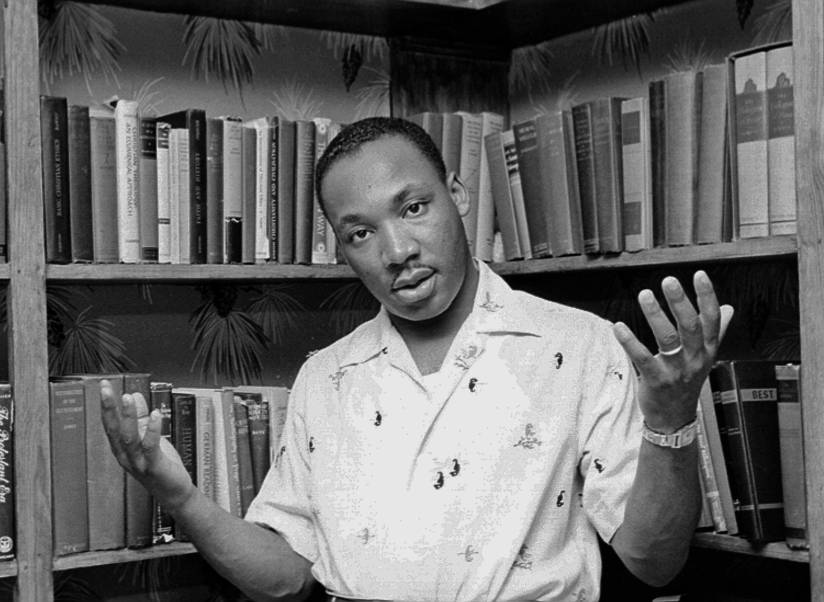
Although Martin Luther King Jr. is primarily remembered for his oratory many of the papers he wrote while attending Crozer Theological Seminary have been preserved, including this one he wrote for the course Development of Christian Ideas entitled “The Influence of the Mystery Religions on Christianity” for which he received an A.

However when we come to the idea of Jesus’ decent into hell it seems that we have a direct borrow from the Adonis religion, and in fact from other religions also. Both the Apostles Creed and the Athanasian {Creed} say that between the Friday night and Sunday morning Jesus was in Hades. Now this idea has no scriptural foundation except in those difficult passages in the First Epistle of Peter [Footnote: I Peter 3:19–4:6.] which many scholars have designated as the most ambiguous passages of the New Testament. In fact the idea did not appear in the church as a tenet of Christianity until late in the Fourth Century.[Footnote: Weigall, op. cit., p. 113.] Such facts led almost inevitably to the view that this idea had a pagan origin, since it appears not only in the legend of Adonis, but also in those of Herakles, Dionyses, Orpheus, Osiris, Hermes, Balder, and other deities.

The Purple One

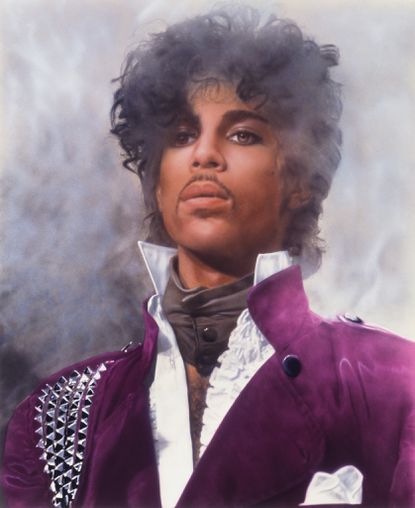
The artist formerly known as [Symbol] embodied the traits of the God so deeply I’d suspect he might have been a Neos Dionysos if not for his deep devotion and adherence to the teachings of the Jehovah’s Witnesses.

Still, I’m not the only one to notice these themes in Prince’s work; Katy Waldmam writes in an article for Slate entitled The Surreal, Dionysian Poetry of Prince’s Lyrics:

“All art aspires to the condition of music,” wrote Walter Pater, and Prince’s lyrics are as hot and dreamlike and weird as his sound. Saturated in color, wild with bizarre imagery, they overload the senses and short-circuit the brain. Rolling Stone described the Purple One’s aesthetic as “sensual anarchy,” a phrase that helps capture the intoxicating drive of his poetry. (What if not poetry would you call these lines from “Raspberry Beret”: “Now, overcast days never turned me on/ But something about the clouds and her mixed.”) Prince told us to move and dance and fuck our way to utopia, to grind “until the castle started spinning/ or maybe it was just my brain.”

He was our Dionysus, and his lyrics were full of beasts. “You’re just as soft as a lion tamed,” he crooned. “Take me to the place where your horses run free,” he begged. And he saw in color: red corvettes, pink cashmere, purple rain, purple everything. Prince understood T.S. Eliot’s notion of the objective correlative, the concrete object that stands for a chaotic, vibrant mass of emotions. “She wore a raspberry beret,” he sang, and once it was worn he didn’t say much more.

Pop songs aren’t often surrealist paintings, but Prince knew how to create a hallucinatory scene. His lyrics invite you into an altered state of consciousness: “Dream if you can a courtyard.” “I was dreaming when I wrote this.” Consider that courtyard for a second, “an ocean of violets in bloom,” in which “animals strike curious poses.” Even before the doves start shedding human tears, you’re on a rocket ship to the Martian version of Versailles.

His music (which I listened to on cassette and MTV over and over again) provided some of my first entries to the realm of Dionysos, before I even knew what that was. It hit me hard when Prince died back in 2016, especially hearing about the chronic pain condition that dogged his final days. (For reasons I’m sure I don’t have to explain.) May he find a peace in the beyond which the fentanyl never gave him.

Happy Black history month from the House of Vines!

In Euripides’ famous play The Bakchai, the exceptionally wise prophet Teiresias gives the following speech (lines 200-209) to his ivied comrade Kadmos, the former king of Thebes and an émigré from far-off Phoenicia:

To the Gods we mortals are all ignorant.                                       
Those old traditions from our ancestors,
the ones we’ve had as long as time itself,
no argument will ever overthrow,
in spite of subtleties sharp minds invent.
Will someone say I disrespect old age,
if I intend to dance with ivy on my head?
Not so, for the God makes no distinctions—                         
whether the dancing is for young or old.
He wants to gather honours from us all,
to be praised communally, without division.

These are such important words, for they remind us that all the categories which are so important to humans – age, sex, race, physical ability, etc. – mean nothing to Dionysos, who welcomes all into his wild revels. This radical inclusivity is true not only of his worship in antiquity but can be found in thiasoi and other Bacchic communities today.

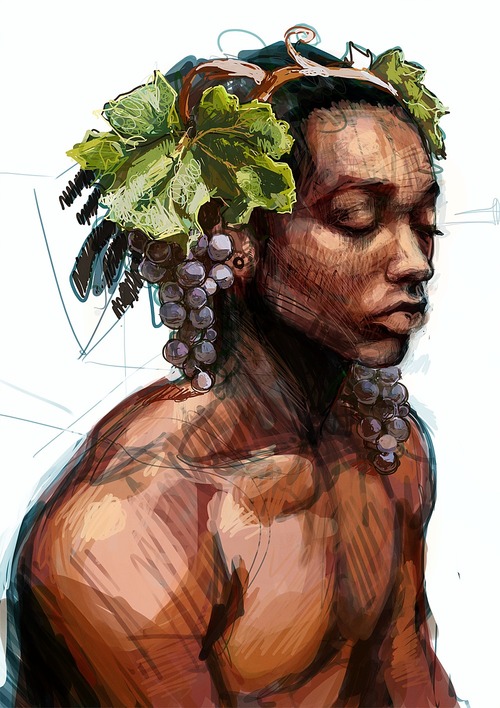
And so in that spirit I would like to share some of the contributions that Africans and Black Americans have made over the centuries to the Dionysian tradition. It was difficult to limit myself to just 10 figures or events, but hopefully that will be enough to inspire my readers to dig deeper and uncover other examples, of which there are many.

The symbol

The symbol is greater than visible substance… Unhappy the land that has no symbols, or that chooses their meaning without great care. (Freya Stark, East Is West)

Mr. Dionysos Goes to Washington

Here’s a play I wrote for the Dionysia in 2003. I actually had the pleasure of seeing it performed by a Wiccan coven I briefly worked with in Las Vegas; what’s more, I got to play the part of Dionysos.

The Bacchae 2005 or The Burning Bush

Dramatis Personae
George W. Bush

Dick Cheney
Chorus
White House Page
Secret Service Agents (3)
Dionysos
Anchorwoman

Interior of the Oval Office: indicated by a chair, a table, and a flag. George W. Bush is sitting in the chair, Dick Cheney is at his side, and behind them stand the Chorus.

George W. Bush: So how is the invasion going?

Dick Cheney: Very well, Mr. President. Our troops have already taken Paris, and two-thirds of France has been liberated. Things are still a little shaky in Bordeaux where we met with some unexpected resistance, but that should be mopped up by night’s end.

Bush: Have we found any Weapons of Mass Destruction yet?

Cheney: Uh … unfortunately not, Mr. President. And there was some minor protest of our unilateral strike by the international community. But not much. It was France, after all.

Bush: It’s truly a shame that France became a rogue nation. Nice people, the French – though that whole Jerry Lewis thing is a little odd. But I like their bread. And their fries!

Cheney: Yes, well now they’ll be able to enjoy their baguettes with a side of Freedom and Liberty. Once Haliburton has finished rebuilding France’s infrastructure that is.

Chorus: Zeus’ pet eagle no longer sits tamely at the side of the Heavenly Father,
Symbol of justice and far-reaching equanimity.
But now is perched upon the shoulder of dread Ares,
who has burst his brazen bonds and strides through the land,
his dark shadow insighting men to madness and war.
The eagle calls out for blood and vengeance,
Its shrill cry echoed in that of weeping brides and fatherless sons.
Dark days behind us, and darker days to come.

Bush: So how are the other points on our agenda coming along? I’ve got a State of the Union address to prepare.

Cheney: Well, there’s been a slight bump in the road to progress up in Alaska.

Bush: A bump, you say?

Cheney: Yes. It seems that there was a little spill in the Natural Preserve where we’ve been drilling. Nothing major, mind you. Won’t even be a drop in oil prices. But there are a few dead animals and some black beaches now.

Bush: Just great! This is going to look horrible when it hits the news. My ratings are going to plummet.

Cheney: It won’t reach the news, Mr. President. Our trained puppies in the Media say what we tell them to. And as far as they’re concerned, nothing’s happened up there – and nothing will. We’ve already got our men picking up the seal and bird carcasses, and who’s going to notice a few oily rocks?

Bush: I don’t like this. What if all those hippies were right?

Cheney: Mr. President, don’t get all emotional on me. Besides, you can’t make an omelet without a few cracked eggs: progress and financial stability require sacrifice.

Bush: I suppose. Give me some good news, please!

Cheney: Our ‘Defense of Marriage’ Act has passed both Houses – without so much as a peep – and is just waiting for your signature to be made Law, Sir.

Bush: That’s great news! Such a holy and universally esteemed institution must be protected. Why, if we granted equal recognition to those homos, who knows what would be next. I once saw a man on Jerry Springer who made love to his dog. Should they be allowed to get married too?

Cheney: No Sir, they should not. And nothing, not even the Constitution, will stand in our way of upholding decency and God’s own morality.

Bush: Amen! Speaking of which, how are things going on the religious front? What was the response to my declaration to recognize Christianity as our State religion?

Cheney: Well, Sir, it looks promising – I mean, during the elections we did pretty much fill both Houses with loyal men who’ll grant you whatever you ask – but there has been some pretty strong opposition to your proposal. In fact, for the first time in centuries, Jews and Moslems are getting along, peacefully united in their hatred for you.

Bush: What do you mean? Aren’t they Christian too?

Cheney: Uh … no Sir.

Bush: But Jesus was a Jew. It doesn’t matter if they wear those silly little beanies when they do it, we all pray to the same God.

Cheney: They don’t seem to see it that way, Mr. President.

Bush: Well, they had better. We’re in a time of war, fighting for the future of our country. We need all the support we can get – especially from Almighty God himself. Anybody who disagrees with me is clearly un-American, un-Christian, and siding with the terrorists. If they’re not careful, they’ll end up being tried as enemy combatants.

Chorus: O beautiful for spacious skies,
For amber waves of grain,
For purple mountain majesties
Above the fruited plain!
America! America!
God shed his grace on thee
And crown thy good with brotherhood
From sea to shining sea!

White House Page enters, breathless.

White House Page: Excuse me, Mr. President. I hope I’m not disturbing you, but I’ve got urgent news.

Bush: No, ma’am. We were just finishing up here, right Mr. Cheney?

Cheney: Well, there were a few more things I wanted to address – like my proposal to transfer funds from Medicare to Homeland Security so that we can better spy on those pinkos in Hollywood – but it can wait.

Bush: Very well. So what’s this urgent news you’ve brought me?

Page: Well, Sir … it seems like your daughters are up to it again.

Bush(holds his head, as if he’s got a headache) What is it this time?

Page: Well, Sir …. (The page looks at the desk, the wall, down at her feet, anywhere but the President.)

Cheney: Out with it now!

Page: Well, Sir … it seems that your daughters are drunk.

Bush: So what’s new?

Page: They’re drunk, and running around the streets of Washington … uh … topless, Sir.

Bush and Cheney: What?!?

Page: Yes. It’s like something out of one of those Girls Gone Wild videos. They’re wearing these odd animal-skin capes and headbands made of ivy and grape-leaves, and other than that, there’s not a stitch of clothing on their bodies.

Bush: But it’s February, for God’s sake! They must be freezing.

Page: They don’t appear to be Sir. But maybe the frenzied dancing and singing are keeping them warm.

Bush: Where are they doing this? Please tell me it’s somewhere out of sight. Some secluded club, where we can go in and make sure that this story never reaches the light of day.

Page: I wish that were the case, Sir. Your daughters are dancing in the streets down below, right in front of the White House gates for all to see.

Bush and Cheney: What?!?

Page: I’m afraid so, Sir. Mixed in with all the protestors and rabble that usually gather out front.

Bush: Oh Jesus Christ, I can’t believe this! How could they do this to me? My enemies are just going to love this. It’s going to be all over the papers. Can you imagine what the headlines will be?

Cheney: This is bad.

Page: It gets worse.

Bush: (bangs his fist on the table) How? How can it get worse than this?

Page: It seems your daughters have joined some kind of free love hippie cult. They’re dancing down there naked at the instigation of a long-haired, bearded cult leader, dressed in strange flowing Arab robes.

Bush: This is too much! I can’t believe this. It has to be some kind of joke. It really isn’t very funny to say things like that, you know. I’ll have your job for this.

Page: Mr. President, I’m telling you the truth. I wish it weren’t true. I wish I wasn’t the one who had to carry this news to you. But it’s my job, and it’s not fair to punish the bearer of bad news.

Cheney: You’ve said enough, now get out of here before we decide to do exactly that.

White House Page exits.

Bush: What are we going to do? I simply can’t believe this. My daughters, daughters sprung from my very own flesh … hippies. This is an outrage!

Cheney: I’ll take care of this for you, Mr. President. We’ll send the Secret Service down there and bust heads until we get your daughters back. They aren’t in their right minds: they’ve been brainwashed by this strange cult leader. We’ll paint the streets red with their spilled blood and brains if we have to, to get your daughters back – and to take this man into custody.

Dick Cheney exits.

Chorus: Down from the Mountain have we come,
To the banks of the Potomac,
And the shining marble of the Nation’s Capitol,
Come out of your homes, o people,
Dawn the fawnskin and lift high the ivied wand,
and sing with us praises to Bromios, the beautiful and boisterous One,
whose simple worship gladdens the heart.
Sweet it is to lose yourself in the dance,
To feel the juice of the grape course through your body,
Stirring your spirit until you toss back your head
And give the ecstatic cry Euoi! Euoi! Io Euoi!
Drunk on the God, we have no care for empty possessions,
And the foolish rantings of angry Kings,
For with Dionysos, we know ourselves free,
And have the Earth’s rich bounty as our inheritance.
Ie ie Bacchos! Io io Bromios!

Bush: Oh, shut up.

Dick Cheney enters, followed by several Secret Service Agents who are holding, between them, the Stranger, his hands bound.

Cheney: We caught the rogue, and he didn’t even put up a fight. He was standing down there, amid a throng of his followers decked out like it was Mardis Gras. They were singing and dancing, some of them playing tambourines, others pipes, and others still plaiting garlands of flowers for the spectators to wear. It was like a party was going on down there – not a protest. But when they saw the Secret Service Agents come near, a change came over the crowd. They began screaming for blood, and hurled the foulest of insults at us. They rushed the gates, and would have broken through, but this one just lifted his hands, and said, “Let them pass unharmed. I have business with the President.” And the wild, raging crowd quieted, lions become lambs as the gates parted and our men walked up to him. He simply held out his hands, and let us cuff him, then let us escort him away, stopping only to say, “Remain still, my Bacchae, and keep your faith. I will soon return.”

Secret Service Agent 1: That’s the power of the gun. It turns even the bravest man into a craven coward.

The Stranger: I am no coward: had I wished, your throat would have been torn out, and you’d be choking on your own black blood, and not your stupid words.

SS Agent 1: (lifts his hand to strike him) Why I ought to!

Stranger: But you won’t.

Bush: Stop! There’ll be plenty of time for that later. First I want to find out what this man’s done to my daughters.

Stranger: I freed them. I helped them discover who they truly were, and brought that out for the world to see.

Bush: You brainwashed them. You corrupted them. You made them do dirty things.

Stranger: I made them do nothing: that was already in their hearts. I simply removed the restrictions. Had your daughters been truly chaste and modest, then that’s what would have come out. But then, you know better than I how your daughters resent the yoke, how wild and sensual their spirits are.

Bush: I don’t need you to tell me about my daughters!

Stranger: (wryly) No, I imagine you don’t.

Bush: Leave us. I want to interrogate this man alone.

SS Agents: Are you sure, Mr. President? What if he …?

Bush: You heard me!

The Secret Service Agents reluctantly leave.

Dick Cheney prepares to leave as well.

Bush: No, not you. You’re my right-hand man.

Cheney: I’m considerably more than that.

Bush: That’s why I need you to stay.

George W. Bush gets up from his chair, and stands in front of the Stranger trying to look intimidating.

Bush: Who are you?

Stranger: I am a Mystery.

Cheney: Don’t get smart with us, what’s your name?

Stranger: I have many names in many lands.

Bush: Then how shall we call you?

Stranger: You may call me Dionysos.

Bush: Do you lead that cult down there?

Dionysos: I lead them from their homes and dreary lives, lead them to the distant mountain, lead them in their sacred songs, lead them as they dance their holy dances, lead them as they celebrate the ineffable mysteries by moonlight. Yes, I am their leader.

Bush: What sort of mysteries are these?

Dionysos: Something only the initiate may know.

Cheney: This is some strange New Age cult, right?

Dionysos: No. My worship is as old as time.

Bush: It’s a scheme. Something you thought up to make yourself rich, and to ruin people’s lives.

Dionysos: Only one as venal as you would think such thoughts. No, my worship is what enriches people’s lives, not your endless chasing after money.

Cheney: Commie!

Bush: (touching Dionysos’ robes) Look at how’s he’s dressed. These soft, flowing robes. Why, these are the clothes of a Moslem terrorist. And look at this beard! (grabs the ends of his beard) What’s he hiding under this beard? An evil heart? A sinister nature? A mind plotting against America? No decent man wears a beard. Rasputin, Osama, Saddam: all the villains have got beards.

Dionysos: But you’re clean-shaven.

Bush: What’s that supposed to mean?

Dionysos: You heard me.

Cheney: How dare you say that to the President of the United States of America?

Dionysos: (stands fully upright) How dare he? How dare he claim what is not rightfully his? How dare he parade as a just and upright man, while his nature is base and his heart full of sin? How dare he use deception to enflame the lust for unrighteous war in his people? How dare he trample on the rights of the free individual man, censuring his words, policing his thoughts? How dare he show such contempt for his people, letting the poor languish in destitution and sickness, while bestowing even greater wealth upon his friends? How dare he despoil and exploit the resources of the Earth, generous mother of us all? How dare he flout the laws of his land, bending them to his own corrupt uses? How dare he, indeed!

Cheney: Enough! Stifle yourself, or I’ll do it for you!

Dionysos: Raise a finger against me, and you’ll regret it.

Cheney: What can you do? You’re locked in chains.

Dionysos: I remain in chains only because I consent to.

Bush: Oh yeah?

Dionysos: Yeah.

Dionysos raises his hands and the manacles fall off.

Cheney: (stepping between Dionysos and George W. Bush) Don’t you dare harm the President. You’ll regret it!

Dionysos: I’m not going to harm him. Yet. First he must be given a chance to see the error of his ways and repent. I am a just God, after all.

Bush: There is only one God!

Dionysos: I have met considerably more than that walking through the gilded halls of my Father’s palace on Mount Olympos.

Bush: The only true God is Jesus Christ. In his name, I rebuke this insanity of yours.

Dionysos: (laughs) You would rebuke me by myself?

Bush: You truly are insane! You think you’re Jesus?

Dionysos: I don’t think: I know. For I, Dionysos, am the True Vine. It was I who turned the water to wine; I who healed the sick in spirit; I who bade the women leave their homes to follow me no matter the strictures of family and society; I who purified the temple and made the triumphant procession amid ivy and palms into Jerusalem; I who gave the Apostles the gift of prophecy; I who was hung upon the tree for the remission of sins; and I who rose again; I, whose blood is the wine. I, Dionysos, did all this!

Bush: Blasphemy! I won’t stand here listening to that. Guards! Guards!

The Secret Service Agents come running in. They circle around Dionysos menacingly.

Bush: Get this man out of here! Take him down to the basement for interrogation. Summon John Ashcroft. He’ll know what to do with a man like this.

Cheney: Not so brave now, are you?

Dionysos: Nothing can happen to me at your hands that I do not allow. I go now, humbly, to make my return all the more conspicuous. Soon it shall be you trembling before my might. Fighting against the Gods is as futile as kicking against a stone: you shall see.

Dionysos puts up his hands, and lets the Secret Service Agents lead him away.

Cheney: Did you hear that man? How foolish and audacious he was. The very nerve, speaking to you like that, Mr. President!

Bush: Ashcroft will bring about a change of attitude in him, I’m sure: he has his ways.

Cheney: Even I’m a little squeamish around that man. He raises torture to an art form. He has tools that can remove a man’s tongue without even leaving a mark. I wouldn’t want to be that foolish Dionysos right now.

Chorus: Rise up, O Lord!

No longer suffer the inequities of this unrighteous King with mildness and restraint,
But like boiling lava flowing down the side of a mountain, come, come!
Mad and raving, to inflict terrible destruction upon this fool and lay him low!

Rise up, O Lord!

As you rose up against Pentheus, who vainly sought to oppose your worship in the city of your birth. You drove him into a frenzy of madness, and beneath a pine-tree, his own mother tore him to pieces.

Rise up, O Lord!

As you rose up against Lykourgos, who put your women to flight. You blinded him, and made him think that his son was made of vines, then opened his eyes that he might witness the bloody spectacle he had wrought.

Rise up, O Lord!

As you rose up against the daughters of Minyas, who shunned your sacred rites. You inflicted such hunger upon them that they cast lots to see which of their children they would boil in a pot.

Come, come night-roving Bacchos, terrible to look upon, roaring like thunder, like a bull in frenzy, shake the earth to its core, and topple this arrogant bastard!

The lights suddenly flicker and go out.

Cheney: Ah! The floor is shaking! We’re under attack!

The lights come back on. George W. Bush is cowering under the table.

Cheney: Mr. President! Mr. President! Are you okay?

George W. Bush climbs out from under the table, brushing off his jacket.

Bush: I … I think so. What happened?

Cheney: I don’t know, Mr. President. The whole room shook and then the lights went out. An earthquake, perhaps? Or a bomb going off? Your guess is as good as mine. But at least we’ve got power back.

The Secret Service Agents bust through the door.

SS Agent 1: Oh, thank Heavens, the President is alright!

SS Agent 2: Yes, we got here before he did. Quick! Take up your positions!

The Secret Service Agents spread out around the room, taking up defensive postures.

Cheney: What in the hell is going on here?

SS Agent 3: The prisoner got loose!

Cheney: He’s just one man. Why all the commotion?

SS Agent 2: He’s not a man. Had you seen what we saw, you’d be convinced of that.

Bush: What was the loud boom, and why’d the power go out?

SS Agent 2: The whole earth trembled when he broke his bonds: in death and madness his divinity was made manifest.

SS Agent 3: Shut up, you superstitious fool. It was just a coincidence. There was an earthquake, and in the confusion the prisoner got free. That’s all.

SS Agent 2: How can you deny what you saw with your own eyes? You saw the ivy suddenly appear, covering the walls and twining itself around the table on which the stranger sat. You heard the ghostly sound of drums and cymbals and shrill pipes that came from nowhere and everywhere at once. Saw the floor washed with red wine. Smelled the sweet, cloying incense. Heard things walking about the room that were not there. And finally, you saw the fierce beasts fall upon Ashcroft, tearing him to shreds as we fled in fear. How can you deny what we all saw and heard?

SS Agent 3: Hallucinations; nothing more than hallucinations. When the earthquake happened it must have broken open some of Ashcroft’s nerve gas, and we all started to hallucinate.

Bush: What’s going on? I don’t understand. Where’s the prisoner?

SS Agent 2: He’s on his way here. He’s coming for you, Mr. President.

Cheney: Enough of that! Now tell us what happened. How’d you let him escape: he was just one prisoner!

Secret Service Agent 1: We had no trouble bringing him down to Ashcroft’s interrogation chamber. Like a lamb being led to the slaughter, he meekly let us take him without complaint. In fact, he didn’t say a thing the whole time: he just stood there in eerie silence, his face like an unseeing mask. Even when Ashcroft strapped him to the table and brought out his tools, he uttered not a word. Now Ashcroft’s needles and knives have reduced the hardest men to tears: Saddam he had blubbering like a baby in minutes. But this one, he could not reach, no matter what atrocities he performed on his flesh. We would have thought him dead – there was enough blood on the floor to prove it – but his chest still rose, and his eyes continued to stare, and all the while, that hateful, mocking smile remained on his lips. It drove Ashcroft insane! He began stabbing the prisoner, screaming, ‘Do something, do something!’ And then, the prisoner did something.

Bush: What? What did he do?

SS Agent 1: The earth shook. He sat bolt upright, the straps on the table splitting apart. Ivy, and wine, and music filled the room. And suddenly, we were not alone. Swirling around him as if he were the calm center of a devastating tornado were … things. I can’t say what exactly they were. Now they had one shape, and now another. But they were fierce, and bestial, and I, I who have served my country my whole life, who have faced death in the deserts of Iraq, turned and fled, fear clutching at my heart with it’s black claws.

Cheney: Your story is preposterous! It’s too much to be believed.

SS Agents 1 & 2: Soon, you shall see – and you will believe.

Dionysos enters. The Chorus screams.

Dionysos: I have come! I am Dionysos, the son of Zeus, Lord of the fruitful Earth, who has given man sweet wine for the enjoyment of life, and blessed mysteries to purify his care-worn soul. Down from the Mountain have I come, snowy Nysa where dance the lovely-ankled nymphs and the shaggy-haired satyrs, my dear companions. I have come to Washington because you are an arrogant King, who hates my ways, and would rather send young men to kill and die in gold-hungry conquest than see them lay in loving embrace, their hair soaked in sweat after long hours of honoring me with their bodies. Many times have I come to you, and you did not recognize me. Even when the voice of your people rose up and pleaded for you to put off this crazy bloodthirstiness of yours, and welcome the Goddess Peace once more into your land – you would not listen. And so now I have come, I who am most gentle and most fierce, and now you will listen to me!

Cheney: Don’t just stand there! Get him.

Secret Service Agent 3 steps forward, as if to charge the intruder – but then notices that the other Agents are holding back. He loses courage, and falls back.

SS Agents 1 & 2: No, we won’t fight against a God. Listen to him: what he says makes a lot of sense. You are ruining our country: put on the ivy-crown and dance with us in joyful celebration. Great is the God Dionysos! And great his worship! Io euoi!

Chorus: Io euoi! Io io euoi!

Cheney: Cowards and fools! No, I will never honor this liar, falsely claiming to be a God. I fear no one! Aaaarrrgghh!

Dick Cheney lunges for Dionysos but manages only two steps. Dionysos holds up his hand.

Dionysos: I know how to make a dick go soft.

Dick Cheney clutches his heart, convulses.

Cheney: No! Not again! Aaaaaggghh!

And collapses to the floor, dead.

Dionysos turns toGeorge W. Bush.

Dionysos: O puppet, what will you do, now that your strings have been cut, and your puppet master lies broken?

Bush: I’m not a puppet! I made all the decisions around here.

Dionysos: Then you have a lot to answer for, little man.

Dionysos advances on George W. Bush, who backs up until he bumps into the table.

Bush: I have nothing to answer for. I made all the right decisions. America was attacked! We had to defend ourselves!

Dionysos: Then you should have gone after those who harmed you. When you spill innocent blood, it calls out to heaven. And how do you answer to the crime of stealing from the coffers, while the poor die in the streets from want?

Bush: Being President is hard work: I deserve some reward. The poor will always be with us.

Dionysos: And the law: you claim it is your sacred duty to uphold it, yet you have corrupted its spirit, and used it as a bludgeon against your enemies. You have overstepped your bounds: you have tried to impose your will in places it has no right to go.

Bush: The State is the father of the people: and I am the State. Like any father, it is my duty to protect and guide my children, to correct them when they do wrong.

Dionysos: And so you answer, and stand condemned by your words. You are hateful to me, and I will not allow your arrogance to go unpunished.

Dionysos raises his hands, as if to strike him, and George W. Bush falls to his knees, clutching his head, and weeping.

Dionysos: In times past, I would have brought you down like a stag felled by hounds. I would have torn you to pieces, and took pleasure in your flesh parting beneath my fingers, your warm, red blood gushing out to stain the black earth. I would have delighted in your piteous yelps of pain, would have smiled as you shrieked out your last breath. But these are different times, crueler times, and there are bitches more fierce than my maenads now. I will give you over to them!

The stage clears, replaced by a News Anchorwoman, seated at the desk.

Anchorwoman: And in a stunning turn of events today, President George W. Bush called a halt to all foreign involvement by American troops. He called the invasions of France and other countries, ‘Grossly unjust and uncalled for’ and said that ‘he sincerely apologized for any inconvenience the Imperialistic Military Industrial Complex had caused’. He also disbanded the ‘Patriot Act’, the ‘Defense of Marriage Act’, and the ‘Affirmation of the Christian Religion’ Act – saying that this legislature was ‘insane’ and ‘everything that decent Americans should stand against.’ He has also promised that he will bring about universal healthcare and give tax breaks to the working poor. And, perhaps most shocking of all, President Bush announced today that he will be seeking a divorce from his wife, and replacing her with his new lover, Raoul Hernandez, a Cuban refugee and exotic dancer, who some sources claim, has also worked as a male prostitute. These sudden, sweeping, and drastic changes have met with almost universal condemnation. For special commentary, we now turn to conservative columnist ….

The End

Mr. Bojangles

By far the best version of “Mr. Bojangles” is by Sammy Davis Jr.

If you disagree, fight me.

Unless you’re thinking of the original by Jerry Jeff Walker, which I’ll also accept. It’s a very different song with a very different feel, which is why it works. Everyone else – including Neil Diamond and Nina Simone, it pains me to admit – just come off as second-rate Sammies, cause the man’s fucking incomparable.

There’s a great story behind the song, which Wikipedia does an adequate job synopsizing.

If you’ll step out, he’ll step in. 

Isokrates, Aiginetikos 5-6
Thrasyllos, the father of the testator, had inherited nothing from his parents; but having become the guest-friend of Polemaenetos, the soothsayer, he became so intimate with him that Polemaenetos at his death left to him his books on divination and gave him a portion of the property which is now in question. Thrasyllos, with these books as his capital, practiced the art of divination. He became an itinerant soothsayer, lived in many cities, and was intimate with several women.

Help in time of need

I’ve got a couple tentative writing projects in the works, and some other things that need further testing and tweaking before I can do any kind of serious systematizing and distillation for others – but none of that’s currently grabbing me by the balls and demanding I get ‘er done, as it were. So, as is my custom when this happens, I’m turning to you, my dear readers, and asking for recommendations. Anything you’re curious about, want my take on, or asked before and I never got around to it? I make no promises – my writing is entirely dependent on that fickle beast, inspiration – but I’ll give it my best shot.

Trust the science

Back in 2020 a French study found that “nicotine may inhibit the penetration and spread of the virus and have a prophylactic effect in Covid-19 infection.”

Now, according to Newsweek, “two scientific papers published this month have added to the growing body of evidence indicating that cannabinoids may hold significant antiviral potencies and could potentially be used to create a prophylactic treatment for Covid-19.”

I just checked and heavy caffeine and red wine consumption are also showing a lot of promising results in combating Covid-19.

So, basically, the science is saying that my combined vices have made me immune to this fucking virus. Excellent.

anti-semantic violence

Alex: Do you know the definition of insanity?

Todd: Of course. [Todd scratches his nose, nervous to be in the presence of this man and hoping it doesn’t show.] It’s doing the same thing over and over again and expecting different results, right?

Alex: No! That was just a clever witticism Einstein came up with. 

Todd: Then I … I guess I don’t. 

Alex, shaking his head: And I’m the one here behind bars– … Insanity is mental illness of such a severe nature that a person cannot distinguish fantasy from reality, cannot conduct their affairs due to psychosis or is subject to uncontrollable impulsive behavior.

Todd: And … ?

Alex reaches through the bars and twists the young detective’s head until his neck cracks and his body slumps forward. Alex rifles through the dead man’s pockets until he finds Todd’s keys, then opens the cell door and walks out.

He rides again

Shortly before this a man that many said was a daimon — though he himself claimed to be the famous Alexander of Macedon and resembled him in looks and general attire — set out from the regions along the Ister, after somehow or other making his appearance there. He made his way through Moesia and Thrace performing Bacchic rites. He was accompanied by as many as four hundred men equipped with Bacchic wands and fawn-skins, but they harmed no one. In fact all in Thrace at the time agreed that bed and board would be provided for the man and his company at public expense. And no one — no governor, soldier, procurator or local magistrate — dared to confront or contradict him. He traveled the whole time as if in a solemn procession as far as Byzantium and then, taking ship, he made his way to the region of Chalcedon where he performed some sacred rites by night, buried a wooden horse, and then vanished completely, never to be heard from again. (Cassius Dio, Roman History 80.18.1-3)

The chaste woman will not be defiled by Bacchic rites

Another older piece, but the themes are relevant so I’m reposting it. 

So there’s a discussion playing out on Tumblr about whether all the Gods love all people which was started by someone’s comment that Aphrodite hates asexuals, based on a rather shallow reading of Euripides’ play Hippolytos. Not going to comment on any of that, though in passing someone remarked:

Also I think people forget about Dionysus?? Like he is the God of sex and wine. Although I don’t think he would out right smite them, but I think he’ll try to tempt them.

Which I will address, as it touches on something that I think a lot of people, including really smart and seriously devoted people, tend to overlook when it comes to him.

Dionysos is paradox.

Just about everything one can say about him is true, and it’s complete negation is also true.

This is something the Orphics of Olbia knew well when they wrote:

SEG 28.659:
βίος. θάνατος. βίος. ἀλήθεια. Ζαγρεύς. Διόνυσος

Life. Death. Life. Truth. Zagreus. Dionysos.

SEG 28.660:
εἰρήνη. πόλεμος. ἀλήθεια. ψεῦδος. Διόνυσος

Peace. War. Truth. Lie. Dionysos

SEG 28.661:
Διόνυσος. ἀλήθεια. σῶμα. ψυχή

Dionysos. Truth. Body. Soul.

Dionysos is definitely about the sexy times, as evidenced by the giant imitation cocks people carried in his festivals which often turned into violent drunken orgies. His best friends are lusty satyrs and home-wrecking madwomen. He churns up erotic excitement and a lot of folks, particularly in Southern Italy, looked forward to carnal union with him in the afterlife. His own proclivities run the gamut from pretty boys and genderqueers to fairly straight-lacedheteronormativemonogamy.

That’s not paradox though.

As his son by the Goddess Aphrodite was fond of saying, haec cunnum, caput hic praebeat, ille nates for it’s all the same in the dark.

In Euripides’ play The Bakchai Pentheus is obsessed with the idea that the Theban women have been led astray by the perverse stranger and are engaged in all sorts of lewd activities on the mountainside:

They creep off one by one
to lonely spots to have sex with men,
claiming they’re busy maenads worshipping.
But they rank Aphrodite, Goddess of sexual desire,
ahead of Bacchus their lord.
People say some stranger has arrived,
some wizard, a conjurer from the land of Lydia—
with sweet-smelling hair in golden ringlets
and Aphrodite’s charms in wine-dark eyes.
He hangs around the young girls day and night,
dangling in front of them his joyful mysteries.
If I catch him in this city, I’ll stop him.
He’ll make no more clatter with his thyrsos,
or wave his hair around. I’ll chop off his head,
slice it right from his body.

To which the aged Tieresias replies:

On women, where Aphrodite is concerned,
Dionysos will not enforce restraint
such modesty you must seek in nature,
where it already dwells. For any woman
whose character is chaste won’t be defiled
by Bacchic revelry.

Once Pentheus has the stranger (who is none other than Dionysos himself) in his possession he presses the point:

Well, stranger, I see this body of yours
is not unsuitable for women’s pleasure—
that’s why you’ve come to Thebes. As for your hair,
it’s long, which suggests that you’re no wrestler.
It flows across your cheeks that are most seductive.
You’ve a white skin, too. You’ve looked after it,
avoiding the sun’s rays by staying in the shade,
while with your beauty you chase Aphrodite.

Their exchange is like a tango, part duel and part dance of desire, with Dionysos cool, calm and collected the whole time as Pentheus becomes increasingly hysterical. At one point they are interrupted by the Messenger whom the king had sent out to spy on the women and what he reports is completely at variance with Pentheus’ lust-fueled delusions:

They were all asleep, bodies quite relaxed,
some leaning back on leafy boughs of pine,
others cradling heads on oak-leaf pillows,
resting on the ground—in all modesty.
They weren’t as you described—all drunk on wine
or on the music of their flutes, hunting
for Aphrodite in the woods alone.
Once she heard my men,
your mother stood up amid those Bacchae,
then called them to stir their limbs from sleep.
They rubbed refreshing sleep out of their eyes,
and stood up straight there—a marvelous sight,
to see such an orderly arrangement,
women young and old and still unmarried girls.
First, they let their hair loose down their shoulders,
tied up the fawn skins (some had untied the knots
to loosen up the chords). Then around those skins
they looped some snakes, who licked the women’s cheeks.
Some held young gazelles or wild wolf cubs
and fed them on their own white milk,
the ones who’d left behind at home a new-born child
whose breasts were still swollen full of milk.
They draped themselves with garlands from oak trees,
ivy and flowering yew. Then one of them,
taking a thyrsos, struck a rock with it,
and water gushed out, fresh as dew. Another,
using her thyrsos, scraped the ground. At once,
the God sent fountains of wine up from the spot.
All those who craved white milk to drink
just scratched the earth with their fingertips—
it came out in streams. From their ivy wands
thick sweet honey dripped. Oh, if you’d been there,
if you’d seen this, you’d come with reverence
to that God whom you criticize so much.

The eros that these women experience is not directed towards other humans, nor even to the God who has driven them frenzied from their homes, husbands and children – it is rather a transpersonal connection to nature and the beasts of the wild, with whom they feel a profound kinship. He has roused them from ordinary existence, lifted them out of the confines of their small and circumscribed identities, blurred the boundaries between them and all of creation, showed them that they are capable of being so much more than they ever dreamed of and given them the power to work miracles. They are filled with a lust for life and take animals, literally life embodied, to their breasts not for pleasure but to share the sustenance of their own life with them. They are imitating the primordial nymphs who had been the nurses and care-givers of the infant God when he was most vulnerable, as Diodoros Sikeliotes explicitly states:

Consequently in many Greek cities every other year Bacchic bands of women gather, and it is lawful for the maidens to carry the thyrsos and to join in the frenzied revelry, crying out ‘Euai!’ and honouring the God; while the matrons, forming in groups, offer sacrifices to the God and celebrate his mysteries and, in general, extol with hymns the presence of Dionysos, in this manner acting the parts of those who of old were the companions and nurses of the God. (Library of History 4.3.2-5)

Nor is this the only instance where we may observe such Dionysian chastity. There are numerous vases and other artistic representations of mainades fending off the unwanted sexual advances of satyrs with their thyrsoi, as well as thiasoi that were restricted to the female sex and sometimes even elderly women who were outside the domain of Aphrodite, such as in Italy:

Then Hispala gave an account of the origin of these rites. At first they were confined to women; no male was admitted, and they had three stated days in the year on which persons were initiated during the daytime, and matrons were chosen to act as priestesses. (Livy, History of Rome 39.13)

And at Athens:

I wish now to call before you the sacred herald who waits upon the wife of the king, when she administers the oath to the Gerarai as they carry their baskets in front of the altar before they touch the victims, in order that you may hear the oath and the words that are pronounced, at least as far as it is permitted you to hear them; and that you may understand how august and holy and ancient the rites are. I live a holy life and am pure and unstained by all else that pollutes and by commerce with man and I will celebrate the feast of the wine God and the Iobacchic feast in honor of Dionysos in accordance with custom and at the appointed times. (Demosthenes, Against Neaira 74-78)

Interestingly, there were also thiasoi that excluded women (I.Kallatis 47) and men who abstained from sex in service to the God:

I, who never in my life experienced Kypris and was an enemy of wickedness, was taken as a companion (hetairos) by Bromios together with the Fates. Bromios has me as a fellow-initiate in his own dances. My name is Julianus, and I lived 18 years. My father was Julianus and my mother was Apphia. Having died, they honored me with the tomb and this inscribed monument. His step-father Asklepiades, his aunt Juliane, his maternal uncle Dionysios, Ammianos, and Stratoneikos honored him. Year 325 of the Sullan era, 12th of the month of Peritios. (TAM 5.477)

And in myth Dionysos helps bring sanity to a raging hermaphroditic deity by castrating hir:

In him there had been resistless might, and a fierceness of disposition beyond control, a lust made furious, and derived from both sexes. He violently plundered and laid waste; he scattered destruction wherever the ferocity of his disposition had led him; he regarded not Gods nor men, nor did he think anything more powerful than himself; he contemned earth, heaven, and the stars. Now, when it had been often considered in the councils of the Gods, by what means it might be possible either to weaken or to curb his audacity, Liber, the rest hanging back, takes upon himself this task. With the strongest wine he drugs a spring much resorted to by Acdestis where he had been wont to assuage the heat and burning thirst roused in him by sport and hunting. Hither runs Acdestis to drink when he felt the need; he gulps down the draught too greedily into his gaping veins. Overcome by what he is quite unaccustomed to, he is in consequence sent fast asleep. Liber is near the snare which he had set; over his foot he throws one end of a halter formed of hairs, woven together very skilfully; with the other end he lays hold of his privy members. When the fumes of the wine passed off, Acdestis starts up furiously, and his foot dragging the noose, by his own strength he robs himself of his sex; with the tearing asunder of these parts there is an immense flow of blood; both are carried off and swallowed up by the earth; from them there suddenly springs up, covered with fruit, a pomegranate tree. (Arnobius of Sicca, Against the Heathen 5.5-6)

A fate which Dionysos, himself, is said to have suffered as Clement of Alexandria’s Exhortation to the Greeks relates:

If you wish to inspect the orgies of the Corybantes, then know that, having killed their third brother, they covered the head of the dead body with a purple cloth, crowned it, and carrying it on the point of a spear, buried it under the roots of Olympus. These mysteries are, in short, murders and funerals. And the priests of these rites, who are called kings of the sacred rites by those whose business it is to name them, give additional strangeness to the tragic occurrence, by forbidding parsley with the roots from being placed on the table, for they think that parsley grew from the Corybantic blood that flowed forth; just as the women, in celebrating the Thesmophoria, abstain from eating the seeds of the pomegranate which have fallen on the ground, from the idea that pomegranates sprang from the drops of the blood of Dionysos. Those Corybantes also they call Cabiric; and the ceremony itself they announce as the Cabiric mystery. For those two identical fratricides, having abstracted the box in which the phallos of Bacchus was deposited, took it to Etruria–dealers in honourable wares truly. They lived there as exiles, employing themselves in communicating the precious teaching of their superstition, and presenting phallic symbols and the box for the Tyrrhenians to worship. And some will have it, not improbably, that for this reason Dionysos was called Attis, because he was mutilated. And what is surprising at the Tyrrhenians, who were barbarians, being thus initiated into these foul indignities, when among the Athenians, and in the whole of Greece–I blush to say it–the shameful legend about Demeter holds its ground?

Delia Morgan explores this side of Dionysos in her powerful piece, The Ivied Rod: Gender and the Phallus in Dionysian Religion:

Nowhere is the paradox of Dionysos more dramatic than in the stark contrast between the god of the phallus and the ‘effeminate’ god of women. Ancient sources make frequent reference to Dionysos as ‘womanly’ or ‘not a real man’ (Evans, 20-21; Jameson, 45); they sometimes dress him in women’s clothing as well. Dionysos himself was never shown with an erection. This iconographic convention, along with the occasional reference to effeminacy or androgyny, has led to various theories seeking to drastically unman the god, as it were; some writers read into these details the idea that perhaps Dionysos himself was asexual (Jameson, 44), or even emasculated through castration (Kerenyi, 275-277, 285). Jameson, for example, in examining some of the mythic fragments dealing with Dionysos, has arrived at the idea of the wine god as weak, cowardly and asexual – all aspects which would support the charge of effeminacy. (Jameson, 50, 59-63). He cites the myth of Lycurgus, who drove the young god into the ocean with an ox-goad. Francois Lissarrague states: “Dionysos as depicted is scarcely sexed; he is never seen in an erect state or manipulating his phallus.” Another factor frequently cited as support for the effeminacy of Dionysos is his feminine appearance. Early iconography of Dionysos shows him as a youthful adult with long hair and a beard, exotically dressed in a long chiton and himation. Dionysos had to be feminine, for the same reason that he had to be foreign and bestial: he was Other, opposed by nature to the dearest values of Greek society. He was wet and wild, emotional and disorderly, a god of madness and shape-shifting. He could not be a ‘real man’ in the eyes of the Greeks because a real man could not be allowed to possess these attributes. He was a strange god, and a god of the periphery – edging on the dark and unknown. The periphery, the uncivilized, was the realm of women and beasts; hence his companions were maenads and satyrs. His dangerous influence further exacerbated the problem with women: possessed by Dionysos, they became even more irrational, passionate and wild. Liberated by the god, they abandoned their chaste behavior and wifely duties and danced madly through the forests, defying all social restraints. By enhancing those qualities that were seen as the dark side of femininity, Dionysos himself could be seen as partaking of a female extreme; his nature was in some threatening ways even more feminine than that of an ordinary woman. The charge of effeminacy was not taken lightly in ancient Greece or Rome; there were social stigmas and sometimes civil penalties attached to the label. In Greece, a man earned a reputation as a ‘kinaidos,’ an effeminate man, through a penchant for taking a passive role in sexuality or through excessive unrestrained lust; he was not to be allowed to take leadership roles or any active public role in government. (Winkler, 176-178, 188-190) Given the seriousness of the accusation when directed against a man, what religious import could be read into the charge of effeminacy when directed against a god? Dionysos was the only major god to be spoken of in this way; he was thought by many to be a dangerous foreign import, although evidence points to his presence in the pantheon from the Mycenean era. He was seen as a subversive influence, who in his myths faced opposition by kings and led entire cities into chaos and revolt. His religion was always regarded with some fear and ambivalence, almost as a necessary evil.

This is something that I have experienced myself and discussed a while back in Chthonic Dionysos and the Saints of the True Vine:

This Dionysos is dark and still and somber, the quiet amid the storm, the masked pillar around which those filled with his frenzy dance and shout in ecstatic celebration. He is not completely immobile – his movements are just slow like the shoots of a plant triumphantly rising up through the soil, like the gradual formation of stalactites in a cave, like the procession of the stars through the heavens. The face of this Dionysos is always concealed in shadows, except for his eyes which are bright with the flames of madness and gaze into the depths of your soul and beyond. His voice echoes across a vast chasm even when he is nearer to you than your next heartbeat. There is an impenetrable denseness to his spirit, a gloom so black and so full of painful memories that even he has difficulty bearing its weight. He is ancient beyond all reckoning and yet remains unwearied by all that he has witnessed and experienced. His heart is fierce with love for the fragile and ephemeral things of this world, rejoicing and suffering along with them. He cannot turn his face away from them – he must witness it all, even if it makes him mad. And though part of him remains forever down in the caverns deep beneath the earth, another part extends upwards into our world, surrounded by an innumerable host. The lusty satyrs, the madwomen, the nymphs who nurse him and the dead who belong to him, an invisible troop of wild spirits that march unseen but clearly heard in his processions, who race through the fields and forests and city streets on certain especially dark nights in pursuit of the victims of the hunt.

Nothing about Dionysos is simple so we would do well to avoid the sort of simplifications one frequently finds in discussions about him on Tumblr.

Bakcheia for the Barbarians

I was asked how someone who is primarily devoted to the divinities of another pantheon should go about incorporating Dionysos into their worship routine. Rather than go into all of the theological quandaries and the history of intercultural exchange, I’m going to keep things fairly simple and focused on the practicalities of doing so.

The first step is to confirm with both Dionysos and your own Gods and Spirits that this is permissible and will not violate any individual or traditional obligations you may have. If there are boundaries and restrictions in play, determine how best to navigate them in a manner that is respectful and pleasing to both parties. You may want to consult diviners and religious specialists to assist with this process, especially if negotiations are required.

Although Dionysos is widely traveled and has important ties to members of diverse pantheons there are some beings he just doesn’t share space with well, either because of personality clashes or conflicting energies. (True both within the Hellenic pantheon and outside it.) This could necessitate maintaining a shrine for him in a totally different part of your home from theirs, or outside it, or even honoring him without one.

You should also determine what sorts of devotional activities you can engage in for Dionysos, if these will put you in a state of ritual impurity with regard to the others, what you’ll need to do to restore that equilibrium, and how far apart this needs to be spaced. For instance, Dionysian worship can involve alcohol, drugs, sex, dancing, flogging, the consumption of meat, spending time in wild places, exploring the dark, painful, dangerous, and repressed parts of ourselves, and conversing with strange Spirits and the dead. Surprisingly, not all divinities are down with that.

He often brings about catharsis by tearing things apart and then putting them back together again; while radical transformation doesn’t occur every time you invite Dionysos into your life, it is something you should at least consider within the realm of possibility if you do so, and your Gods and Spirits may have opinions on that. Dionysos is big on consent and generally will not overstep your bounds if they are clearly and firmly articulated (especially if other divinities are involved) but anything up to that point could be considered fair game.

That said, he’s incredibly accommodating and flexible, so if you are not permitted to engage in certain activities he can usually find a workaround. For instance, there are plenty of Dionysians I know who for whatever reason (taboo, sobriety, stomach problems, etc) drink infrequently or not at all, and yet they still have incredibly rich and intimate relationships with the God.

Once you have established all of the above (or even while the process is ongoing) begin learning about Dionysos and the sorts of things he likes. I’ve written extensively about this at the Bakcheion, but don’t limit yourself to just that. In addition to scholarly resources there are a lot of really passionate, devoted and creative Dionysians in our overlapping communities who have written books, and blogs and websites, participate in online groups and forums, or are just out there doing their own thing that you can draw on. Each has a unique understanding of who Dionysos is and what has worked for them as far as honoring him goes. Test out different ritual styles and methodologies, noting what gets you the results you desire and what doesn’t. Once you have the basics down, branch out to things like monthly or weekly observances, festivals, city rambles and visits to forests, mountains and other wild places. Experiment with dance, sacred movement, austerities, trance and meditation, dreamwork, entheogens, and similar methods of inducing ecstatic and visionary states. Make art for him. Hell, you can even study mime and theater, which at the very least will make you a better ritualist.

The final consideration should probably wait until you have solidified Dionysos’ presence in your life – though it certainly doesn’t have to if there is some pressing reason – and that’s figuring out how he fits into the ecology of your private religious life. It may be fine to keep him an outsider you just honor on special occasions or as circumstances require. You may also integrate him into your household cultus either by keeping separate shrines and rites for him in the Hellenic manner while honoring your other Gods according to the customs they prefer, or if everyone is copacetic and divination confirms you can extend those forms of worship to include him, or create a new blended style. I don’t know if this would work with every type of polytheism but in my experience Dionysos has been quite receptive to elements of Kemetic, Heathen, Hindu and even folk Catholic forms of worship over the years. However, don’t assume anything and verify before proceeding! Also the appropriateness of this may change with time. (And then change back, and change again. Dionysos is … weird.)

Hamas claims Israel deployed ‘killer Zionist dolphins’ near Gaza

A friend and long-time reader of this blog sent me the following video:

Looking to verify these claims, I did some internet sleuthing and uncovered a bunch of news articles, including this piece for Forbes by a London-based journalist condemning the long and sordid history of using sea creatures for combat.

Some are speculating that his countryman Malik Faisal Akram may have taken the Rabbi and several members of the Congregation Beth Israel synagogue in Colleyville, Texas hostage in retaliation. I want to believe that these people are nuts and there are no connections between the two events. But when you start off with killer Zionist dolphins, man, all bets are off. (And no, I’m not linking to their crazy bullshit. Do your own sleuthing. I got standards here at the House of Vines. Not many, but I got ’em.)

However, since dolphins belong to Dionysos I am taking this as further proof that Dionysos loves the Jews.

That’s how you become the GOAT

When I’m struggling religiously (usually because of my assorted chronic ailments) I think of an anecdote related by Arrian of Nicomedia in his Anabasis of Alexander.

Arrian writes that Alexander the Great, after receiving a terrible wound on the battlefield, became so ill that he was forced to remain bed-ridden. However, “he was carried out on a couch to perform the sacrifices custom prescribed for each day; after making the offerings he lay down in the men’s apartments till dark.” (VII.25.2)

And I think, fuck. If this man – mortally wounded, inconceivably far from home, and engaged in leading probably one of the greatest military campaigns known to history – could find time in his day to honor his Gods, why, there’s no reason I can’t too.

And I get up and make my prayers and offerings.

A Brief Meditation on Dionysos in Orphic Hymn 30

“The Wild, Ineffable, Secret One of the Two Horns, of the Two Forms, The Ivy-lush, Bull-faced Warrior, He of the Euhoi, the Pure One” – Orphic Hymn 30

What an image these words conjure! Have you ever seen a bull enraged? They are huge creatures to begin with, powerful, immense. There is a primal virility about them. Looking at them, one cannot help but think of the earth. Looking at their horns, one cannot help but think of being gored on them. And how the bull moves! Lithe, graceful, dancing on its feet, even as it lunges its massive frame.

Now imagine a great warrior. Strong, masculine. Girt in armor, his sword glinting in the early morning light. This is a man who leads other men; a man who is skilled in making war; a man whose hands are red with the blood of his enemies.

Now put the two images together. A warrior, with the face of a bull. All that power, aggression, masculinity, that wild destructive force, barely contained. This is a face of our God!

There is a part of Dionysos which is terrifying, destructive. An inhuman intelligence, which looks on with unblinking eyes at the most ghastly of atrocities, mute witness to life’s unimaginable cruelties. This Dionysos who tears things apart, who revels in an orgy of destruction, the beautiful bloody consummation of life. The pulse of life is staccato: with one beat, it breathes things into being; with the next, they pass out of it. Our Lord presides over both. He is equally in the heat of passion, the first cry of an infant and the pounding of adrenaline and fear through our ears, the moment when we cry out our life’s last breath. He is everything pure, primal, undiluted. That which flows, which spills past its bounds, that which expresses its individuality, regardless of the limits of others. Dionysos is the instinct, the moment, pure experience before mind interferes.

Assorted early prayers

An Invocation

Greetings, O Dionysos! You who are hailed by the Satyrs and Maenads as the Beautiful One, the Fertile Bull, the Dancer on the mountain, Mad One, Boisterous One, Full of Life, Ecstatic, many-formed and many-named Lord of ineffable Mysteries, hear my words, and come! Join me in my rite, and graciously accept these gifts I have to offer you.

To close the rite

I thank you, O Dionysos, kindly Lord whom my heart adores, for coming and accepting these gifts, offered in gratitude for the multitude of gifts and blessings that you have given me. May the memory of your beauty and greatness remain with me throughout the day, a constant source of joy and strength for me.

Wine consecration

This, O Lord, is your greatest gift to care-worn mortals, for it eases our suffering, and when we are drunk from it, we are filled with joy and a lively spirit. Without wine, there would be no festivals, no fine banquets, no sacrifices for the Gods, and love would completely disappear from the world. But wine is even more precious than that, for this wine is your blood, first poured out upon the black earth when the Titans set upon you with their murderous knives. A part of you dwells in each sip of wine, and dwells within us when we drink it.

From a rite for oracular dreams, adapted from the PGM

Hear me, kindly Lord of the earth’s rich bounty,
master of my passionate heart,
Dionysos at the head of the triumphant procession,
Bromios entwined in ivy and ripe bunches of grapes,
Zagreus who dwells in the deep and hunts beneath the moon’s full light,
And by whatever other names you like, hear me, as you have heard me before!
Lord who weaves the fantastic dreams while we sleep,
who sends forth oracles by day and night.
Who fills minds and bodies with powerful, prophetic spirits,
Who dances with the mad women on the side of the mountain.
Hither, O Blessed One, O mighty son of heavenly Zeus,
be kind and look upon me graciously,
and to your passionate servant reveal a sign,
and send to me an oracular dream, true and without fault.

To make chernips

Take a bowl and fill it with water. Hold it aloft and say:

“Water, be pure! Become like the tears that Ariadne shed when she beheld the beauty of Dionysos on Naxos; become like the streams that flow through the forests on Mount Nysa, where the pure and lovely Nymphs dance; become like the waters that washed off the foolishness of Midas. Water, you are pure! You are pure! You are pure!”

Incense offering

The first offering to be made to Dionysos is that of incense. Light the incense and then hold the burner up before you. Say:

“As fragrant as your skin when you appeared to Ariadne on rocky Naxos, is this (name of incense). May it fill the temple with its pleasing scent, a reminder of the day on which you were born, when the fruit sprouted on the vine, the earth adorned itself with green grass and flowers of every hue, and the air was sweet with the scent of fine Arabian incenses: the whole world rejoiced at that time, as I rejoice now in you.”

Hymn to Dionysos

Dionysos, I sing, whose head is twined with ivy
and grapes in ripe bunches that tumble to his gentle shoulders,
clad in their fawn-skin cloak.
Swift-moving God, racing down the side of Olympos,
or through the wooded coverts of the Nysan plane,
attended by goat-footed Satyrs, and the lovely Nymphs,
giving out the call, “Euoi!”
All-conquering, fierce-eyed One,
who wields his thyrsos like a fiery brand,
striking with madness those who offend him.
Mystery discovered through our bodies,
in dancing round bonfires till exhaustion overtakes us,
and the touching of
trembling flesh against trembling flesh
underneath the all-seeing moon.
I suppose there are older Gods, and stronger –
but there has never been a God dearer to my heart
than the son of Semele and Zeus who reigns in Heaven!