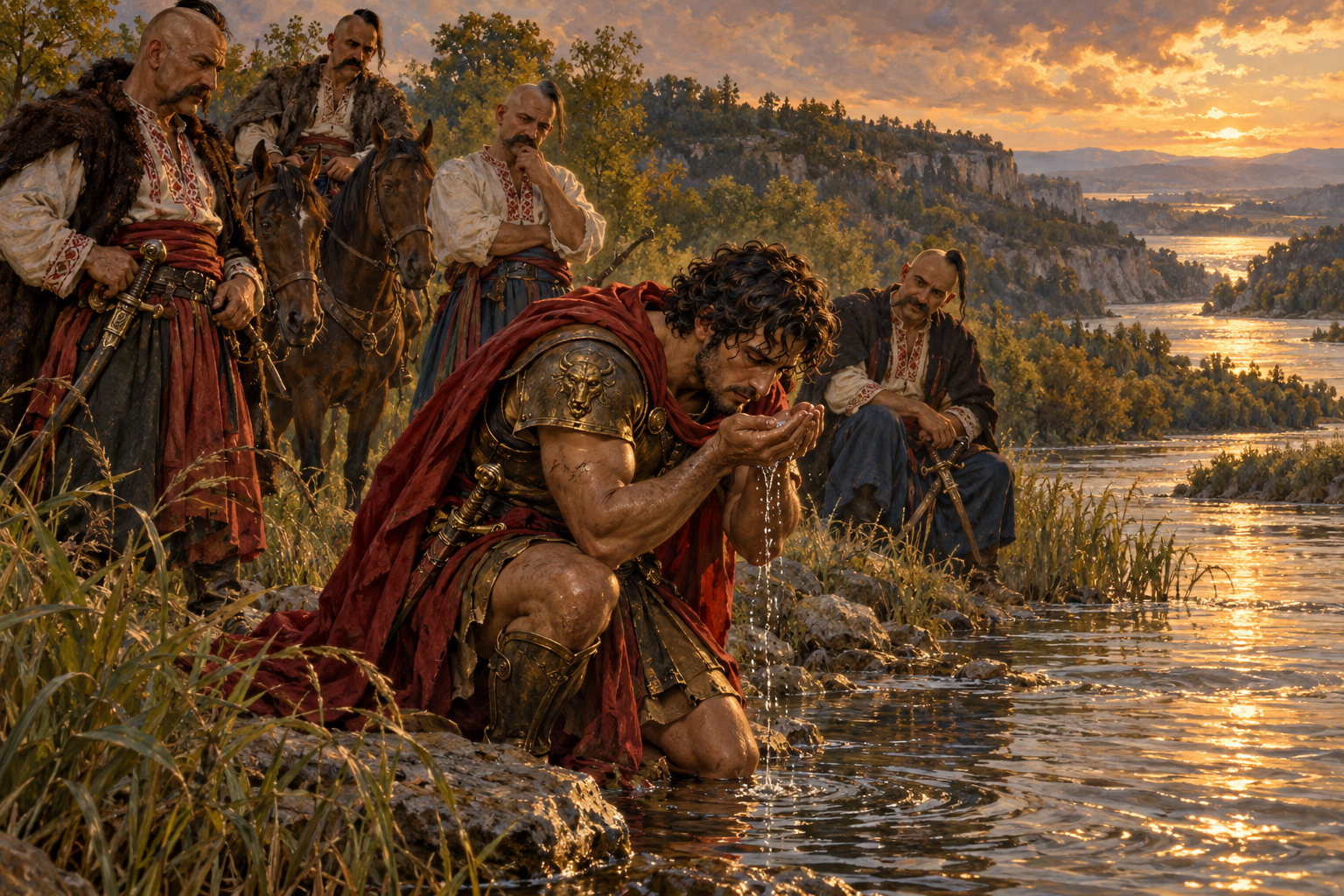
I am compiling the lore of the Starry Bull tradition into a book called The Labyrinth of Words, and I noticed an interesting parallel between two of the sources. The first is Dionysios of Byzantium, Anaplous of the Bosporos 45:
Σκύθην γάρ φασι μετανάστην ἐκ τῆς αὐτοῦ, προσορμίσασθαι Ταῦρον ὄνομα· τοῦτον δὲ ἐπὶ Κρήτης φασὶ πλεύσαντα διαφθεῖραι Πασιφάην τὴν Μίνωος· ὅθεν ὁ μῦθος τοῦ τε ἔρωτος καὶ τῆς ἐξ αὐτοῦ γενέσεως.
They say that Taurus, a Skythian who had left his homeland, anchored here. From here, they say, he sailed to Crete and seduced Pasiphaë, Minos’s wife. This gave rise to the myth of the love affair and the birth of a child by him.
The Greek actually says Πασιφάην τὴν Μίνωος—“Pasiphaë, Minos’s” without specifying their relationship, so out of respect to her I corrected it to “Minos’s wife.” Taurus is a rational allegorization of Poseidon’s bull. But the truly interesting detail is that he comes from Skythia.
Now compare that with Nonnos, Dionysiaka 13.238-252:
τοῖος ἀπὸ Κρήτης πρόμος ἤλυθεν· ἐρχομένῳ δὲ
θερμοτέραις ἀκτῖσι χέων μαντήιον αἴγλην
Ἀστερίῳ σελάγιζεν ὁμώνυμος Ἄρεος ἀστήρ,
νίκης ἐσσομένης πρωτάγγελος· ἀλλ᾽ ἐνὶ χάρμῃ
νικήσας νόθον οἶστρον ἀήθεος ἔσχεν ἀρούρης
νηλής· οὐ γὰρ ἔμελλεν ἰδεῖν μετὰ φύλοπιν Ἰνδῶν
πάτριον Ἰδαίης κορυθαιόλον ἄντρον ἐρίπνης,
ἀλλὰ βίον προβέβουλε λιπόπτολιν, ἀντὶ δὲ Δίκτης
Κνώσσιος ἐν Σκυθίῃ μετανάστιος ἔσκε πολίτης,
καὶ πολιὸν Μίνωα καὶ Ἀνδρογένειαν ἐάσας
ξεινοφόνων σοφὸς ἦλθεν ἐς ἔθνεα βάρβαρα Κόλχων,
Ἀστερίους δ᾽ ἐκάλεσσε καὶ ὤπασεν οὔνομα Κόλχοις
Κρητικόν, οἷς ξένα θεσμὰ φύσις πόρε, παιδοκόμου δὲ
πάτριον Ἀμνισοῖο ῥόον Κρηταῖον ἐάσας
αἰδομένοις στομάτεσσι νόθον πίε Φάσιδος ὕδωρ.
Such was the commander who came from Crete. As he advanced, the star of Ares shone upon Asterios, its namesake, pouring out a prophetic light with fiercer rays: the first herald of victory yet to come. But once he had won the battle, a fierce longing seized him for an unfamiliar land. After the war in India he would never again see his homeland or the helmet-bright cave of Mount Ida. He chose instead a life away from home: in place of Dikte, the man of Knossos became a settler in Skythia. Leaving grey-haired Minos and Androgeneia behind, this cultivated man went among the barbarian tribes of the Kolchians, killers of guests. He called them Asterians, giving a Cretan name to people whose nature had given them foreign customs. And leaving the waters of Amnisos, the Cretan stream that had nurtured him, he drank with lips that felt shame the alien waters of the Phasis.
Dionysios’s Taurus is a Skythian migrant who sails to Crete and becomes the father of Pasiphaë’s child. Nonnos’s Asterios, a son of Minos and Androgeneia in this version, leaves Crete and settles among the Kolchians in Skythia. Both passages make migration between Crete and Skythia the setting for a strange reshaping of identity.
And the names make the juxtaposition irresistible: Taurus evokes the bull, while Asterios is the Bull of Minos.
And those last two lines deserve some exploration. Asterios leaves the water that raised him and drinks from a foreign river. Read through the Orphic contrast of Mnemosynē and Lēthē, that becomes a passage about what exile does to memory and identity: he carries a Cretan name into Kolchis, gives that name to others, and then takes its water into himself, sacrificing his old identity. And in case the Orphic undertones aren’t clear enough, the water he’s giving up is the Ἀμνισος, as in ἀνάμνησις, or recollection from ana– (“back”) and mimneskesthai (“to recall”) to “recall back.” He can name the Kolchians after himself, but he cannot make the Phasis into the Amnisos. That drink is the moment when “the past is another country” stops being a metaphor.
Yeah, there’s probably no etymological basis for connecting Amnisos and ἀνάμνησις but it sounds good, damn it, and as Kratylos teaches us that’s what truly matters in the end.

