O gracious Dionysos, by the great suffering of your indestructible heart
I implore you to come and heal my damaged heart, mind and body.
I implore you to banish the worrisome and obsessive thoughts
that are causing unceasing stress and anxiety in my life.
I implore you to loosen and release the psychological conditions
that keep me in harmful and unhappy patterns of behavior.
I implore you to dissolve any traumas and torments
that have scarred and stunted me
going all the way back to childhood,
and any generational curses or guilt
that have traveled through the blood
to maim and distort my life,
and the lives of those who are close to me.
I implore you to release the hold that bitter memories have on me,
and the hatred I have allowed to fester in my soul as a result
against those who have wronged and offended me.
I implore you to take away my soul’s anguishes,
especially those which are the root cause
of my bodily pains and illness.
O gracious Dionysos, by the great suffering of your indestructible heart
I fervently pray that you help and heal me
in all these ways, and in ways I have not thought to ask for.
Author: thehouseofvines
Strength II
Remember, O Dionysos who intercedes
with the Lady Persephonē, that I am
a child of Earth and starry Heaven,
a creature of conflicting impulses
madly running through the dark,
confusing corridors of the Labyrinth
searching for answers to questions
I don’t even know how to frame.
I want to do right, to be pious,
to glorify you, and to bring honor
to my people through my words and deeds,
and yet it is so easy to fall short,
to act wrongly, to think the things
that I should not, to give in
to pessimism and doubt,
or worse the haughtiness
and violence which are in me
because of my Titanic ancestry.
Force of Liberation,
Breaker of Chains,
Loosener, I implore you,
Dionysos grant me
strength of will,
and the grace to subdue
my old self to the new,
and the new self to you,
that I may be counted worthy
to bear the blessed name of Bakchos,
and celebrate your orgies in the afterlife
with the other wine-rich initiates.
Strengthened by love of you,
I shall renew my struggle
and sacrifice to you the best
version of myself I can produce,
day by day and night by night
until I reach your surpassingly beautiful mountain,
where I may dance forever with you, Loudroaring One.
The Retinue
Hail to every last God and spirit
gathered round the throne
of Zeus’ indomitable son,
the King of Nysa,
Dionysos the Starry Bull;
may they never thirst!
Hail to his wives,
and to his lovers,
his brothers and sisters,
his mothers and his children,
and any divine friends who may be visiting
from far off lands;
may they never thirst!
Hail to the Titans and the Toys; may they never thirst!
Hail to the Nymphs and Nurses; may they never thirst!
Hail to the Muses and Sirens; may they never thirst!
Hail to the Centaurs and Gryphons; may they never thirst!
Hail to the Satyrs and Silens; may they never thirst!
Hail to the Fauns and Paniskoi; may they never thirst!
Hail to the Korybantes, Kabeiroi, and Kouretes; may they never thirst!
Hail to the Kallikantzaroi, Kukeri and Kobaloi; may they never thirst!
Hail to the Fairies and Goblins; may they never thirst!
Hail to the Harlequinade; may they never thirst!
Hail to the Furious Host; may they never thirst!
Hail to those who have joined his mighty Army
from numerous places and pantheons;
may they never thirst!
Hail to the myriads of Dionysian Dead;
the Martyrs and Prophets; the Blessed Initiates;
the Orpheotelestai and all those who performed
his sacred rites and dances;
the Boukoloi; the Nyktipoloi; the Rhizotomoi;
the Bakchoi and Bakchai; the Bassarai; the Lenai;
the Thyiades; the Aletides; the Klodones; the Mimallones;
the Komastai; the Technitai; the Basileis;
the Tragic Heroes and Heroines;
the outcast, the lost, the drunkards, the insane,
and all the rest; may they never thirst!
Purification III
Dionysos, sin-devourer,
master of many kinds of catharsis,
inventor of rites of liberation,
establisher of customs of holiness,
cleanse from us any impurity
wherever it may be found in us.
Dionysos, render and weaver,
fill our hearts with a loathing
for that which is wicked, ugly, and false,
and ardent longing for that which is
beautiful, good, and true.
And may we immerse ourselves
ever deeper in your traditions,
and walk always in your ways,
Dionysos who releases, and who saves.
Protection II
O Dionysos on whose stage
great tragic truths are acted out,
O Dionysos who taught Orpheus mellifluous
charms to make even beasts, and trees, and stones
join in your intoxicating, contagious dance,
O Dionysos who punished the daughters of Thebes
for the slanders they spread about your dear mother;
I pray, gracious Lord, protect us from the evils
that lurk online, as well as in the things
that we read, and watch, and discuss with our fellows.
Guard our minds and hearts from the barrage
of filth, and negativity, and the countless lies
intended to manipulate and lead us astray
which run rampant in our world today.
Grant us discernment, and the strength to choose
what is right and noble, uplifting and pious,
no matter how difficult and unpopular
such decisions may prove to be.
For it is better to incur the wrath of the many,
than to risk the corruption of our soul,
and worse, your displeasure
O Dionysos, granter of salubrity.
Petition I
Hear my prayers, O Dionysos Doseros,
for I am one who has burned incense for you,
and recited your sacred hymns,
and adored your image in its shrine,
and set out bread and meat to nourish your body,
and poured cool water and sweet wine
to quench your thirst.
I have kept the memory of you alive in my heart,
and I have tried to walk upright in your ways,
and shun all those deeds
that are hateful before your eyes.
You are the indomitable one,
who hears all prayers
and has the power to grant them,
and you never turn aside a supplicant.
Hear my words, O Dionysos Dotēs,
for this is what I pray!
Burn away every sign of weakness within me,
and grant me strength of arm, nobility of spirit,
keenness of mind and pious reverence
for the Gods and their ways.
When my soul rages about worldly things,
deliver me purified by your soul-stirring rituals.
Teach me how to transform suffering into joy
and never let me lose heart.
Make my thumos to shine as brilliant
and pure as Helios upon the horizon.
Fill my ears with the harmonious music of the heavens;
make my speech ring with your prophetic truth.
Drive me always to be savage and free,
impervious to persuasion and coercion.
And may swift death overtake me
if I should ever forget your name
and beautiful face, my sweet Lord.
Opening the Day
I exultantly greet the day,
my heart in awe at the beauty of the world.
Hail to you Gods of the Heavens, and the Earth, and those Below.
Hail Gods of the mountains and forest,
Gods of the mighty rivers and the towering trees.
Hail Gods of the desert, the ocean and the sweeping plains,
Gods of the fertile fields and the bustling cities.
Hail to the Gods of love and frenzy,
of dance and poetry,
of wisdom and prophecy,
of justice and piety,
of strength and prosperity,
of all the virtues and blessings
that make life rich and worth living.
Hail to the mothers and fathers who came before me,
to all those who have experienced the ecstasy of Dionysos,
carried the thyrsos, and danced in his sacred orgies.
Hail to the Gods who guide my heart,
and the helper-spirits who show me the way.
Hail to the whole Divine Assembly
– I rejoice in your presence
on this beautiful day of manifestation,
the world refreshed and vital
as it was upon the first day.
Let today be like that first day
full of limitless possibility,
and boundless fecundity.
All the bad things
and the failures of yesterday
are sunk in the water.
They are forgotten.
They are no more.
Today I begin anew
and shall shoulder my responsibilities
with a proud and joyous heart.
Today I shall do everything in my power
to increase justice and holiness,
and strive to improve my community
however I can, so that we will have
something worthy of them
to pass on to those who come after.
Today let every word that I speak be true.
Today let equanimity guide every action that I perform.
Today may I offer comfort to those in need,
and show kindness to the stranger.
Today I shall be temperate and disciplined
and do the good things necessary
to make my life prosper.
Today I shall set aside all petty grudges
and refuse to let needless anger
or unjust violence take root in my heart.
Today I shall remain ever mindful of the Gods
and seek them out in the world around me.
This is the vow I bind myself to
for today and today only,
witnessed by the all-seeing Sun
and Earth who is everyone’s mother.
And lastly, I pray to all the Gods of my people,
my family, my fellow adherents and initiates
in the Starry Bull tradition; may you walk with them
today, O Gods, and grant them life, health, and stability.
May you make their hearts joyous and fill their souls
with courage, love, beauty, wisdom, and creativity.
May all obstacles be removed from their path
and may any enemies who come against them
be struck down and trodden under foot.
May the community prosper and grow
and continue eternally to do the work
of King Dionysos and his Furious Host.
New Bacchants
Dionysos who has concern
for even the chickpea, though it is
considered a small and worthless thing,
protector of all young life,
from the budding flower
to the unsteady fawn taking its first steps
away from its mother’s side, I pray,
strengthen the hearts of those who
have begun to place their hope in you.
Grant them a true vision
of your life-transforming mysteries
so that they will always thirst for more,
and never be satisfied with the false things.
Lead them to one who can correctly
instruct them in your rites and lore,
and model proper piety, morality,
and professionalism through
their every word and deed.
Guard their minds against pride,
doubt, delusion, acedia, modernity,
and all other errors that can corrupt
and destroy their relationship with you.
Bless them with inebriation, wonder,
joy, health, vitality, creativity, abundance,
and all other things that flow
from your sacred madness,
and stir up in them a yearning
to be known as a Bacchant,
and not just one of the wand-bearers.
Lineage I
I make these offerings for Dionysos,
our Savior and the heart of the mysteries.
I make these offerings for Orpheus,
who discovered the blessed mysteries
which bestow enlightenment and release.
I make these offerings for all of the
Prophets, Priests, Poets, and Performers
who shaped the tradition as I have received it.
I make these offerings for my teacher,
who poured the tradition
into my heart and mind,
making me ready and worthy
to receive initiation into the mysteries.
I make these offerings for my initiator,
who gave me what I will need
to live free and without fear,
and find my way to the starry land
when I die, overcoming
all obstacles and temptations. .
I make these offerings for every
member of the Starry Bull tradition,
and all other Dionysians, Hellenic polytheists,
polytheists of other traditions, neopagans
and anyone else who praises the name
of the great Liberator.
I make these offerings for those
who are mired in the filth of ignorance,
deceit, and wickedness, and pray that they
find their way to the truth that sets them free,
and worship of our Lord Dionysos who is
Bakcheios, and Lusios, and Sōtēr, and Asterios.
Clergy I
O Dionysos who appeared
to the Theban people
as a Lydian religious specialist,
a vagabond prophet and sacrificer
who knew the songs and dances
that turn the hearts of the Gods
away from wrath and chastisement
and instead incline them
to provide innumerable blessings
for the community, I pray,
give special thought and care
for those who have taken up
the craft of the sacred,
those who lead your ceremonies,
those who counsel your people
in times of doubt and confusion,
those who interpret the lore,
those who studiously observe
all of your prescriptions and prohibitions,
those who guide the initiate
through your mysteries,
and organize the spectacular
communal celebrations you adore;
all these and those who fulfill the many
other duties they’ve taken upon themselves
and bound themselves with terrible oaths to perform.
Watch over them, inspire them, help them to always
maintain their piety and professionalism,
Dionysos Isodaitēs, and lighten their way
should they struggle with their vocation,
become mired in pollution,
or lose sight of your treasured revelations,
so that they can return to the path of liberation,
and once more be the kind of righteous clergy
you modeled for us, and which
we are in desperate need of.
Dionysians Everywhere
O Dionysos who leads the mystic thiasos
in the dance of deliverance,
who established distinct rites and customs
in different lands so that all of us
might worship you in the most suitable manner,
who sailed the wine-dark sea in search of Ariadnē,
who descended into the underworld to retrieve Semelē,
who suffered unspeakable indignities in the hope
that you might reach the hearts of your foes,
and reform them.
No distance can separate those you care for
from your love, O Insewn One.
Be with your Bacchants everywhere,
those who adore you,
those who go mad for you,
those who dance your dances,
those who sing your praises
and burn fragrant incense for you,
those who pass down your traditions,
those who search for you,
and all the rest,
whatever their lineage,
affiliations, theology, politics,
or how they conduct the rites,
so long as your precious name
is reverently upon their lips
often and ardently.
Dionysos, I pray,
wherever they go,
be their guide and companion,
let nothing harm them, and no
insurmountable difficulty oppose them.
Make all things turn out happily
and prosperously for them,
may health and vitality be theirs,
and may plentiful wine
and your all-surpassing bliss
be provided to these, your people,
both in this and the other world.
Benediction I
O Dionysos who hears prayers,
and is blessing-generous, hear my prayer
and inspire those who dream,
reward those who are pious and hospitable,
transform those who are arrogant and cruel,
release those who are in bondage,
cleanse those who are polluted,
refresh those who are dried up,
comfort those who are hurting,
heal those who are wounded,
guide those who are wandering,
strengthen those who are suffering,
be with those who fear,
and cherish in your heart
those who are strange, and mad,
and cannot be contained.
Palingenesis
16 years ago I started the House of Vines, so it only seems appropriate that I resume blogging after my 2 year hiatus on this day. (Circles, man. Fucking circles.)
This has been a very fertile period for me, full of lots of writing, worship, study, and transformation. I look forward to sharing all of the above and more with any of you who are still around, and new folks who find their way here in the coming days.
May the blessings of Dionysos and his Furious Host be upon each and every one of you, and their protection too. These are certainly strange times we find ourselves in (a lot stranger than when I first consecrated this space on the internet to them all those years ago.)
A birthday reflection
Time is not just a division of hours, minutes, seconds, etc. It’s vast cycles and curious recurrences and endless possibility manifesting itself in myriads of ways.
Who is he?
The most recent project I’ve been working on has been a thorough collection of titles and bynames of Dionysos for the Starry Bull tradition. Most sites give the same 12-30 epithets, clearly borrowed from the same couple of sources. Even the list I provided on the Bakcheion was embarrassingly partial and hadn’t been updated in years — so I decided to remedy that. Starting with mine as the base (along with a handful of epithets I’ve been discussing on the blog) I then added stuff I didn’t have from Theoi, YSEE, HellenicGods, as well as a couple lists compiled by scholars. Then I consulted material on Perseus, Kernos, JSTOR, and Academia.edu, looked into the epigraphic corpora, several Byzantine lexicographers, Dionysios, Nonnos, the Greek Anthology, the LSJ, Farnell, the Orphica, the PGM, the Tragic and Comic Fragments and other sources folks don’t normally consider when doing this kind of research.
Here is the Starry Bull collection of titles and bynames of Dionysos which clocks in at around 44 pages — yes, pages. I’ll be adding to it, and fixing some formatting glitches as I’m able, but it was time to move on to the next phase of the project.
Nazis and Illyrians, oh my!
Since this is still a contentious issue, apparently, I wanted to announce that I will no longer be using the Sonnenrad Heinrich Himmler designed for Wewelsburg castle to represent the nyktelios experience. It was never about the symbol but what it represented. I only used it because that’s how it initially presented, I liked the labyrinthian effect and the inclusion of Sowilō, one of my favorite Runes (after Úruz, Dagaz, Thurisaz, and Berkana; it’s so hard to choose!) — plus, none of the Old German Sun Wheels had the same resonance. While I disagreed with the politics of its creator and the idiocy of many who use the symbol today, I didn’t really feel I had much of a choice since I draw for shit and the artist I used to work with turned out to be a complete slimeball. I understood I was risking pissing a bunch of folks off, but felt the mysteries coming through were more important. I regret the pain, confusion, etc. that this decision has caused.
But happily while researching the Illyrians and specifically the branch which came to be known as the Iapygians who inhabited that portion of Apulia where Taras/Tarentum and Lecce would one day come to be founded I discovered some pretty fucking cool alternatives. What’s particularly interesting is that a number of these are symbols we’ve already been using in the tradition, a couple of which I even have tattooed on my body — and the fact that these originated in one of the most sacred locales in our tradition is just honey-glaze on the libum. Here’s a Wikipedia, which gives you a sense of what I’m talking about without showing the actual symbol I’m considering adapting.
On this day in 1971 Jim went to join the heroes. Celebrate!
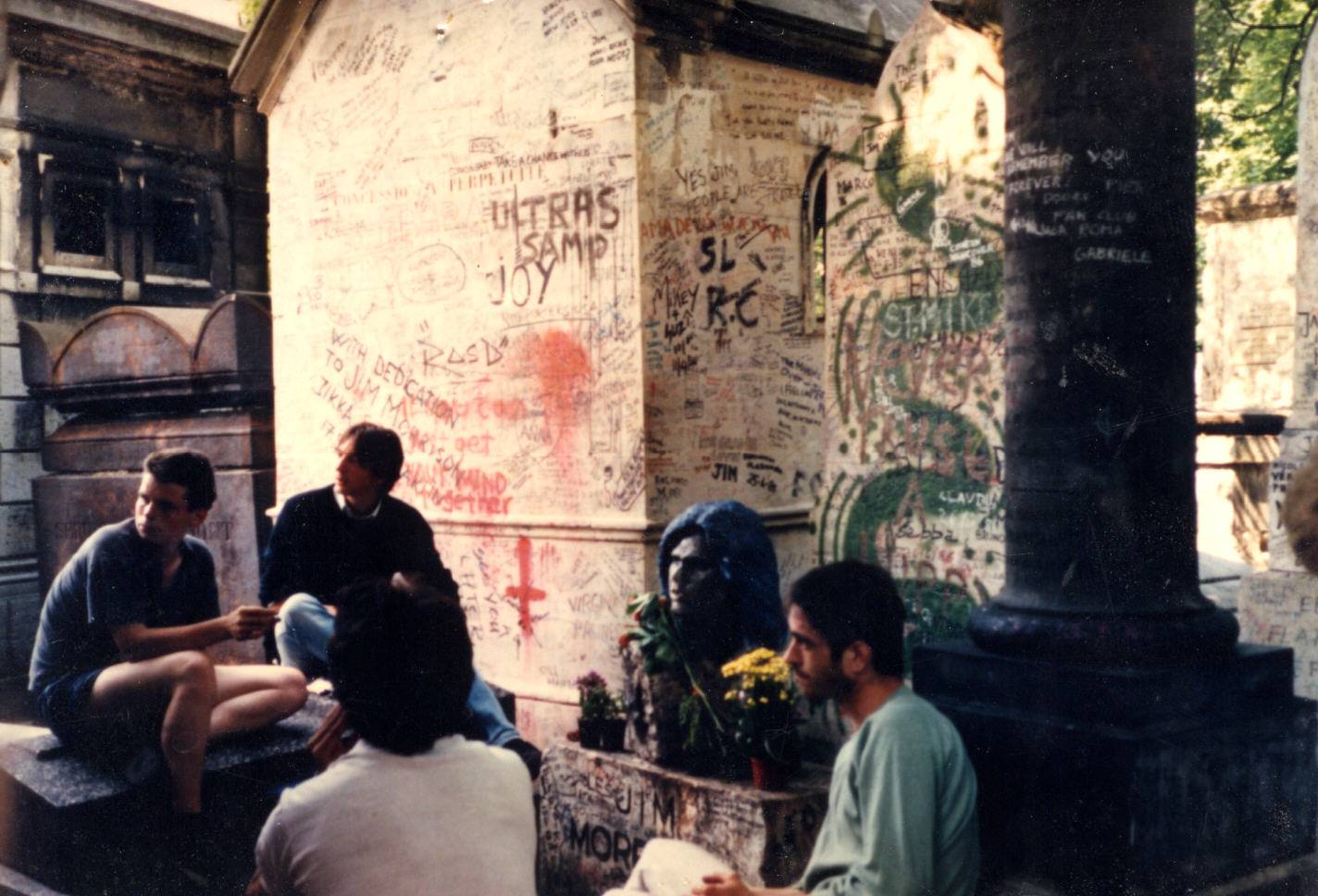
“People fear death even more than pain. It’s strange that they fear death. Life hurts a lot more than death. At the point of death, the pain is over.” — Jim Morrison, prophet
venit ab Eurydice
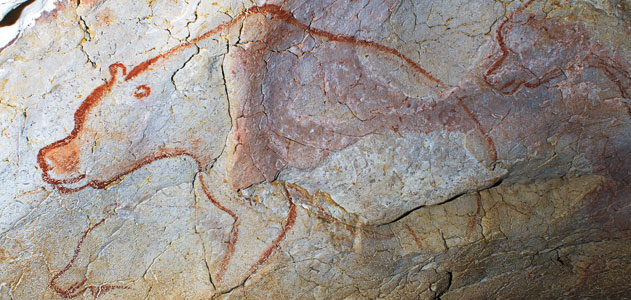
Orpheus suffers a lot of deaths. Not as many as Dionysos by a long shot, but it’s still a lot. I discussed some of the more important deaths here, but I just came across one I’d never read about before and it’s hugely significant.
Marci Valerii Martialis, De Spectaculis Liber 21a
quidquid in Orpheo Rhodope spectasse theatro dicitur, exhibuit, Caesar, harena tibi. repserunt scopuli mirandaque silva cucurrit, quale fuisse nemus creditur Hesperidum. affuit immixtum pecori genus omne ferarum et supra vatem multa pependit avis, ipse sed ingrato iacuit laceratus ab urso. haec tantum, haec res est facta ita, ficta prior.
Martial, On the Spectacles 21a
Everything which is said to have been seen on the stage of Orpheus in Thrace, the scene is presented to you, oh Caesar: Rocks crawled, a wonderful forest ran, such as the forest of the Hesperides is thought to have been. Every race of wild beasts were present, intermingled with the domestic, and many a bird was suspended above the poet, but he himself lie dead, torn to pieces by a disagreeable bear. Only this event is fabricated in such a way, from how it was originally composed.
Ibid 21b:
Orphea quod subito tellus emisit hiatu, versa miramur? — venit ab Eurydice.
Somehow the earth suddenly opened and sent forth a bear, crushing Orpheus; it came from Eurydice.
Mother is the name for God on the lips and hearts of all children
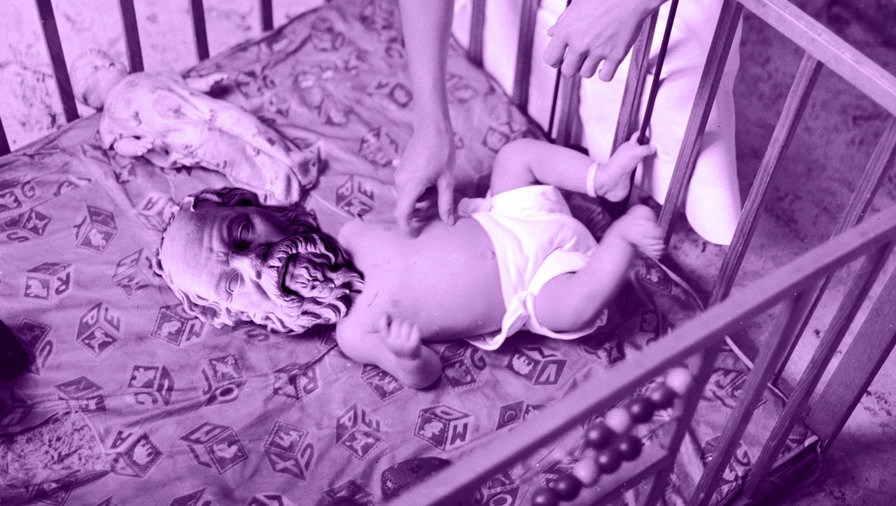
Numerous allusions in both sources favorable to him (like Plato) and those that are hostile (like Aristophanes) make it clear that Sokrates did not have just a casual interest in Bacchic Orphism. He was an initiate, and quite possibly a practitioner i.e. one of those Orpheotelestai his star pupil was so quick to lambast (despite Plato likely being an initiate himself.) Among those who helped shape the mind of Sokrates the two likeliest candidates for introducing him to (and possibly initiating him into) Orphism are Diotima (note that Protogonos is also called Eros; also consider that there were many female Orpheotelestai and Sokrates really liked women, enough to marry them two at a time) or Aglaophamos who was part of the “golden chain” including Pythagoras, Orpheus and Hermes. (A third possibility, of course, is Euthyphro though with the age difference and personality clash I just don’t think he’s a likely candidate. It is interesting that Sokrates meets him in that dialogue at the Courtyard, where Euthyphro was waiting to bring his father up on charges of murder considering the subject matter of so much Orphic myth.) And then, thinking about the Orphic hexameters from Sinai it hit me — where is one’s deepest religious convictions formed? At the knee of the mother (or nurse.) And anyone recall what the mother of Sokrates was named? Phainaréte. Which is formed by joining ἀρετή (“excellence, virtue”) with φαίνω (“to shine, to bring forth into the light”) from which we get Φάνης, the primary Orphic divinity (at least in the 24 Rhapsodies.)
I described their terrible shafts
Something I forgot to mention in the last post: there are intriguing reminiscences between the Orphic hexameters from Sinai and the Proem of the Orphic Argonautika — which are not to be found in the Sacred Discourses in 24 Rhapsodies. (As well as some that are.)

When driven by the goad of Kings Bakchos and Apollon, I described their terrible shafts, and likewise I disclosed the cure for feeble mortal bodies and the Great Rites to initiates. Truly, above all I disclosed the stern inevitability of ancient Chaos, and Time, who in his boundless coils, produced Aether, and the twofold, beautiful, and noble Eros, whom the younger men call Phanes, celebrated parent of eternal Night, because he himself first manifested. Then, I sang of the race of powerful Brimo, and the destructive acts of the Giants, who spilled their gloomy seed from the Sky begetting the men of old, whence came forth mortal stock, which resides throughout the boundless world. And I sang of the service of Zeus, and of the cult of the Mother and how wandering in the Cybelean mountains she conceived the girl Persephone by the unconquerable son of Kronos, and of the renowned tearing of Kasmilos by Herakles, and of the sacred oath of Idaios, and of the immense oak of the Korybantes, and of the wanderings of Demeter, her great sorrow for Persephone, and her lawgiving. And also I sang of the splendid gift of the Kabeiroi, and the silent oracles of Night about Lord Bakchos, and of the sea of Samothrace and of Cyprus, and of the love of Aphrodite for Adonis. And I sang of the rites of Praxidike and the mountain nights of Athela, and of the lamentations of Egypt, and of the holy offerings to Osiris. And also I taught the multitudinous ways prophesying: from the motion of wild birds and from the positions of entrails; how to receive the prophetic dreams that pierce the mind in sleep, and the interpretation of signs and omens and what the motion of the stars means. I taught atonement that brings great happiness for mortals; and how to supplicate the Gods and give offerings to the dead. And I described that which I gained by sight and thought when on the dark way of entering Haides via Taenaron, relying on my cithara, through the love of my wife. And I described the sacred test of the Egyptians in Memphis that is used to convey prophesy, and the sacred city of Apis, which is surrounded by the river Nile.

In fact it also has resonances with one of the other Gold Tablets from Thurii, given here in two translations:
trans. 1
To the First-Born, to Mother Earth, to Cybela, daughter of Demeter.
Zeus, Air, Sun. Fire conquers all.
Avatars of fortune and Phanes. Moirai that remember all. You, O illustrious daimon.
Father who subdues all. Compensation.
Air, fire, Mother, Nestis, night, day,
Fasting for seven days. Zeus who sees all. Always. Mother, hear my prayer.
Fine sacrifices. Sacrifices. Demeter. Fire. Zeus. The Underground Girl.
Hero. Light to the intelligence. The Adviser seized the Girl.
Earth. Air. To the intelligence.
trans. 2
To Earth, first-born Mother, Cybelean Kore said: … [lacuna] …
… of Demeter … all-seeing Zeus.
O Sun, Fire, you went through all towns, when you appeared with the Victories and Fortunes and All-wise Fate, where you increase the brightness of the festival with your lordship, O glorious deity! By you all things are subdued, all things overpowered, all things smitten! The Decrees of Fate must everywhere be endured. O Fire, lead me to the Mother, if the fast can endure, to fast for seven nights and days! For there was a seven-day fast, O Olympian Zeus and all-seeing Sun …
 The House of Vines