Hail, Heart of Dionysos, intoxicate me!
Hail, Heart of my Maddener, make me roar!
Hail, Heart of my Hunter, join me in the chase!
Hail, Heart of my Destroyer, tear me open!
Hail, Heart of my Savior, restore me!
Hail, Heart of my Initiator, perfect me!
Hail, Heart of my Director, instruct me!
Hail, Heart of my Vigneron, cultivate me!
Hail, Heart of my King, be my crown!
Hail, Heart of my Benefactor, enrich me!
Hail, Heart of my Beloved, fill me with your grace!
Hail, Heart of my Friend, comfort me!
Hail, Heart of my Brother, stay with me!
Hail, Heart of the child Dionysos, draw me to yourself!
Hail, Heart of the conqueror Dionysos, defend me against enemy hosts!
Hail, Heart of the stranger Dionysos, make me see things differently!
Hail, Heart of Dionysos dying on the vine, share your sufferings with me!
Hail, Heart of Dionysos in all your states, reveal yourself to me!
Hail, most humble Heart, dwell within me!
Hail, most splendorous Heart, shine within me!
Hail, most compassionate Heart, work within me!
Hail, most ardent Heart, be my reward!
Hail, most holy and indestructible Heart, bless me!
Author: thehouseofvines
Fruitfulness II
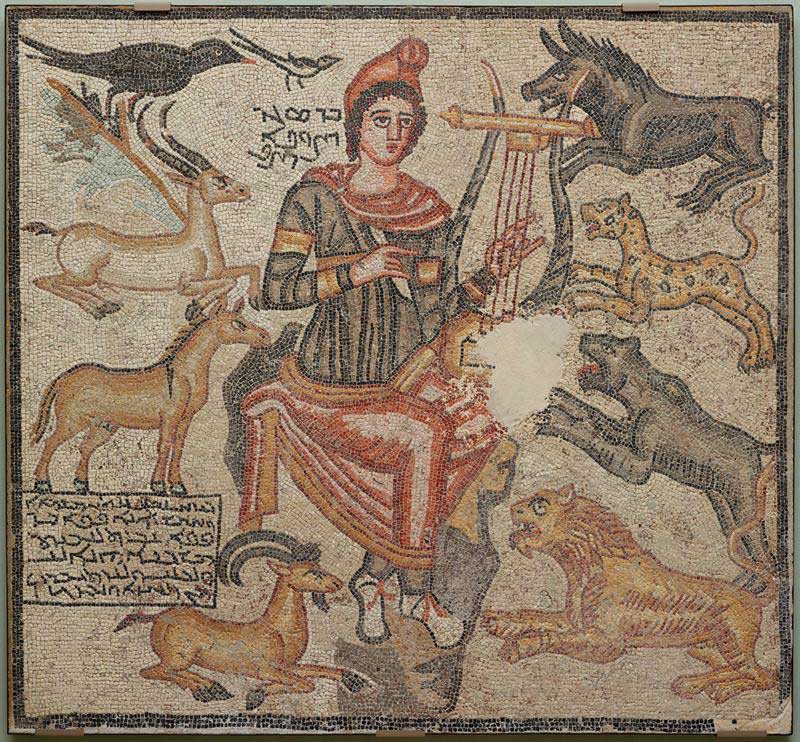
Gold-voiced Orpheus sang that the chalk-faced spirits
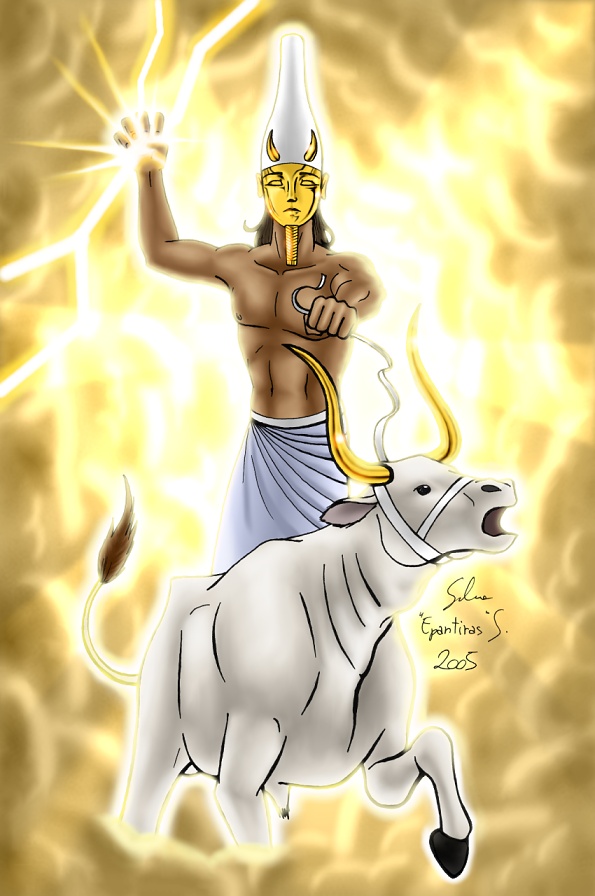
of the wind-swept steppes chased the thunder-sired calf
straight into the mirror that shattered out into our world,
scattering seeds that would grow into pomegranates,
and ash trees, and figs, and apples, and roses, and tulips,
and ivy that strangles, and aconite, and pine, and hemp,
and wormwood, and mushrooms, and most precious of all
the gnarled vine from which grows the grapes we crush to make our wine.
Our God is all this and so much more. And so we give thanks to you
Dionysos, and ask you to bless our garden and all that we are growing in it,
whether that is flowers which delight our eyes with their vivid colors,
or potent medicines for the body and soul, or food to fill our hungry bellies
that is both healthy and delicious, or the ingredients for incenses
and offerings for our household divinities, or whatever else you have
seen fit to make grow in our garden, O Father of Life, Much-Flourishing One.
Fruitfulness I
Dionysos Abrokomes, we thank you
for providing seasonable weather
and making the Earth fruitful so that
it might produce what is needed for life.
Dionysos Beboskekaios, we ask you
to bless all those who labor in the fields,
those who sell their goods at market,
those who prepare our meals,
and those who make the drugs
that keep both our bodies and souls healthy.
Dionysos Gapedon, we offer you
the firstfruits of all that we acquire
or create, mindful that it is only through
your awesome power and benevolence
that such things have been given us,
and hopeful that in respectfully giving back
we shall receive much more from you in the future,
O kind and gracious one.
Family IV
O Dionysos Medōmethēs and Bakchepaian,
we lift up any family members who are going through difficult times,
whether it be illness, emotional pain, or other challenges,
and we ask for your healing touch and comfort be upon them,
for they are dear to us as your own Staphylos and Oinopion.
Family III
King Dionysos Drepanēphoros,
protector of his people,
I ask you to protect my family
from sickness, from harm,
from envy and division,
and from every kind of accident.
Master Dionysos Desmōluthēnaios,
protector of his people,
if any of us have been subjected
to any curses, spells, or bindings,
I beg you to render these curses,
spells, or bindings null and void
through your might and authority.
Lord Dionysos Dialusos,
protector of his people,
if any evil spirits have been sent against us,
I ask that these evil spirits be sent
to the place of punishment within the Labyrinth,
to be dealt with as you please, Dikerōs.
Then, Hunt Master,
I ask you to send your Furious Host
to guard and protect all of the members
of this pious and Gods-loving household.
[Name all family members.]
Family II
Bakcheios who begot many fine children
with your exceedingly beautiful wife Freyja,
and would do anything to defend them,
we pray for the happiness and protection of our family.
Shield us from any danger, Terror of wicked Wights,
and guide our family safely through life’s challenges,
that we may honor you into ripe old age,
and the fruitful continuity of our line be ensured,
O you who fill the halls of Sessrúmnir with joy.
Family I
O Dionysos Syndesmos,
we thank you for the blessings
you have stitched into our family
since bringing us together,
for life can be cold, and cruel, and lonely
without people to share it with.
We are grateful for the love and support
we find in one another, Dionysos Plektos,
and may we never take our family for granted,
or fail to cherish the moments we have together.
Contrition I
O Dionysos Lyaios,
I am impure and broken,
imperfect and yet full
of an ardent longing for you.
I have sullied my mind
with improper thoughts,
and behaved in a manner
that was beneath me,
contrary to the laws and norms
that you have given your people
so that we may live the good life
forever with you on Mount Nysa.
Forgive me,
open me up,
release me,
Lord, I pray!
Let your ecstatic madness engulf me
like the heavenly fire that birthed you,
so that I may rise up shining
and pure as the nocturnal stars once more,
and bellow in the hunt
as one of your Furious Host.
And let these words of yours always
be emblazoned upon my heart:
“you can serve your weakness,
or you can fulfill your purpose.”
I implore you to amputate whatever impedes,
and strengthen that which connects me to you,
O master of my wild heart.
Disappointed, but not surprised.
What the hell? Y’all know that I have no love for Andrew Carlson, the alcoholic, misogynistic, animal-abusing, megalomaniac who larped as a social justice warrior and authority on all things Thracian, but it has been nine days since his fiery demise and there hasn’t been a single mention on the Wild Hunt. I readily admit my opinion is a minority one, and a lot of folks who didn’t know him as well as I did held him in high esteem and lauded his contributions to the contemporary polytheist movement, so these would-be journos’ complete silence is quite striking. Apparently they have given up all pretense of covering community news unless there is some way to turn it into an anti-Trump screed. I should be shocked and disappointed, and yet somehow I am not.
Edited to add: looks like they finally got one up. ‘Bout fucking time.
How the Starry Bull tradition is organized
The core of the tradition can be found at the Bakcheion. Regardless of one’s involvement one should familiarize oneself with the material there.
Guests and all others are Xenoi, “strangers, outsiders.”
Laity are Philoi, “friends of the tradition.”
Students are Akousmatikoi, “listeners, one who is receiving the tradition.”
Those who have undergone the general initiation are Mystai. Each Way has its own additional initiation or series of initiations.
We have two grades of religious specialists: Boukoloi, “cowherders” and Orpheotelestai “experts in Orphic rites.”
The Boukolos has a general proficiency in the tradition, can lead communal rites and assist their Orpheotelest but cannot teach classes or perform initiations.
To become a Boukolos one must undergo specialized training by an Orpheotelest, receive the general initiation, and take classes on the following texts:
- Revelry: A Journey Through the Dionysian Year
- Tending the Bull: A tradition of Dionysian devotion
- Hunting Wisdom: A Bacchic Orphic Diviner’s Manual
- Masks of Dionysos: Getting to Know the God Through His Heroes and Heroines
- Spirits of Initiation: A Study of the Toys of Dionysos
One does not need to have completed Boukolos training to become a Mystes, although it is recommended.
The Orpheotelest is a general religious specialist, community leader, instructor in the tradition, initiator, and has mastered one or more of the Ways of the tradition. Each Orpheotelest is independent and autonomous in how they oversee their strain of the tradition, though they have lineage obligations to the Orpheotelest who trained them, as their Akousmatikoi, Mystai and Boukoloi do to them.
Although one must master at least one of the Ways to become an Orpheotelest, one does not have to be either a Boukolos or Orpheotelest to undergo this specialized training. Training in more than one Way is permitted, though not required. Each Way has its own title which one earns upon completion of training.
- Green Way = alchemy, plant lore, and entheogens. (Rhizotomoi, “Root-cutters”)
- Purple Way = sacred theater, ritual construction, organizing festivals. (Technitai, “Artists”)
- White Way = recitation of hymns, prayers, and incantations. (Hymnodai, “Hymn-singers”)
- Red Way = mastery of a range of ecstatic rites. (Bakchoi, “Frenzied Ones”)
- Black Way = everything pertaining to the Black Sun mysteries. (Nyktipoloi, “Night-roamers”)
- Gold Way = eschatology, funerary rites, hero cultus. (Choephoroi, “Libation-bearers”)
A good start
I woke up this morning to very good news. One of the folks I had in mind with my confessions of a gadfly post can now be scratched off the list. If you knew even a fraction of the damage that Theanos Thrax had done to both individuals and groups within the polytheist movement you would understand why his death is something that our household is celebrating. (Especially since most of his victims were vulnerable women who fell for his “male feminist” and “female empowerment” shtick, which he used to sexually, financially and otherwise abuse them.) The rest of y’all on that list better make amends while you can. Just saying.
What five things do you believe in?
There has been a lot of ethical discourse here since my return, but what are your values, O readers? Give us at least five virtues and vices to reflect upon, be they your own personal ones or those shaped by your religion and ancestral traditions (if there’s even a difference.) And while we have this conversation, do not behave disrespectfully toward your fellow guests or I will escort you out of the House of Vines.
confessions of a gadfly
I realize that the positions I am advocating may seem a little severe, and if it was just a case of some idiots dabbling in magic they do not comprehend, spouting off on political matters they do not comprehend, or giving their opinions rather than making proclamations on behalf of Gods they do not comprehend, I would not care. But all of these things have consequences, especially when they are coming from people who want to be seen as leaders within our communities.
If you want the respect, power, authority, and other benefits that come with such positions then you must hold yourself to a higher standard, and if your behavior fails to meet that standard expect that you will be met with criticism and forced accountability. If you are not willing to submit to that from the people you would presume to lead, let me assure you that you will answer to the Gods for your shortcomings, and if the myths tell us anything, it is that such chastisement rarely stops with the wrongdoers themselves, but spreads to everyone who accepts that authority, or who recognized what was happening and did nothing to stop it.
Harsh, perhaps, but divinities, magic, and the like hold to an older law, a truer law, than anything you will find in our modern, progressive representative democracies. (Yet another reason why I am a tribalist and traditionalist, and not some pathetic right-winger or leftist.) I speak from experience here, which is why I am remaining an outsider (Orpheotelestai have always been marginalized religious specialists moving from community to community as needed) and not hesitating to speak out when I see such behavior and attitudes taking root and spreading through modern polytheism.
I am not here to be liked or to make friends or found groups and lead them. I attempted all of that, failed, and manfully met the correction doled out by our divinities.
Because of the task given me I have to clean up the esoteric messes these bumblers are creating through negligence, stupidity, greed, arrogance and impiety. They are just useful idiots, not the true enemies I fight against, which are the powers allied with the unmaker. But I am going to be a gadfly on these people’s asses until they stop making my job harder.
wild and free
I remember my ancestors, who belonged to the Blackfoot Confederacy, who waged a war against the encroachment of the United States into their ancestral lands for over 80 years. And waged wars against all of the neighboring tribes from Alberta to New Mexico. And random fur trappers, prospectors, mountain men, and any other interlopers. We were the greatest warriors on the plains, wild and free, so long as we had our land and our traditions.
And I remember my father, who lied about his age so that he could enlist in the Marines, to escape the reservation and boarding school. He spent the remainder of his life chasing freedom, though he lacked land or his traditions.
Though the song is not about the Blackfoot it is fucking badass.
freedom
On this day when we honor the martyrs of freedom, let us not forget the great Vlad Țepeș Drăculea, Voivode of Wallachia, a courageous liberator and defender of his people. May he never thirst!
liberty
For all those who died, or will die, in the defense of liberty and the other values which make it possible for us to live lives of true worth. Remember their sacrifices on this day.
Fucking prove it.
As a tribalist and traditionalist my political beliefs have never really mapped well onto the Right-Left dichotomy of the American (and more broadly European) system, leaving me without a party or an interest in participating in this country’s institutions since I began thinking seriously about such matters. (Longer even, as I haven’t voted since I was a teenager. I did it once, didn’t like it, and decided never again for me.)
This is why it has amused me when people persist in calling me a Nazi, despite the numerous posts I’ve written breaking down all my criticisms of the ideology (for instance, my rejection of the nation-state; of socialism; and of industrialization and modernism, all of which were such foundational principles that they’re in the fucking name itself), that my ancestors fought and died fighting fascism, and I even quit using all representations of the Sonnenrad Heinrich Himmler designed for Wewelsburg castle (even though the symbol was ultimately unpopular and actively opposed by the Nazis themselves and my decision to use it had nothing to do with its origin) lest there be any confusion.
So it’s not that I believe that one’s polytheism should be politics-free (I’m not even sure that that is possible, although I’ve attempted to create apolitical space in the past so that we could come together despite our differences to worship and discuss sacred things for it to inevitably get hijacked) it’s just that I’m really uncomfortable with the ways in which people go about combining them, especially when they attempt to ascribe political and party affiliation to our Gods, as John Beckett, Tess Dawson, Sarenth Odinsson, the r/hellenism and r/dionysus forums on Reddit, and so many others have. Now, keep in mind, these people are not making inferences based on the principles of a given religious tradition, speculatively engaging with myths and sacred texts, or other perfectly acceptable (if incorrectly applied) types of exegesis.
No.
They are presuming to act as the mouthpieces for the Gods (as if our Mighty Ones were not capable of communicating their wills and desires on their own) and what’s worse (and inevitable with such individuals) they are claiming this as their own sole prerogative, and damning any who would dare to follow their example, especially if they happen to arrive at differing conclusions and sloganeering.
It’s all so tedious and predictable, and would be laughable if history wasn’t littered with uncountable examples of the atrocities that all too often follow such talk. Actually, scratch that. There’s precious little that’s funny about blasphemy and hubris (excluding the punishment this brings down which can be a laugh riot, provided you’re a safe distance away when it happens.)
This, to bring it back around, is why I am a traditionalist and tribalist. Our traditions have safety mechanisms built in to protect against such impiety and the countless evils that this vice unleashes into a community. Probably the most important being: let’s take it to the diviners and oracles. You think Zeus supports your “No Kings” riot? Fucking prove it. And accept the consequences if it turns out mantikē has a different story to tell.
For instance, one of my strongest detractors, who has jumped in every time my name’s come up in various fora to shout about how evil I am and how horribly I’m misrepresenting things whether people want to hear it or not for years and years, finally had the good sense to take it to the mat and, much to her surprise, discovered that Dionysos affirmed the positions I have been advocating this whole time. (Though she’s still mistaken about my alleged fascism.) And you know, respect to her for not only checking but having the moral courage to admit it publicly. That certainly puts her ahead of the folks I’ve been discussing.
And that’s not only why I embrace the tribalist identity (or rather it’s one of numerous reasons) but have no interest in the pan-polytheist movement which reached its nadir circa 2010-2014 or the endless communal brouhahas. I can say, “Those people simply ain’t my people; why would I care what they think?” and instead focus on those who are, and the wonderful things we are doing together for our Gods and spirits.
Why are Bacchus and Pan marching in the Jewish street?
End of April, 1741. A son was recently born to Empress Maria Theresa, and the Jewish community in Prague is celebrating, parading in the streets. The blaring of trumpets, the pounding of drums, and the swell of joyous melodies fill the air. Leading the procession is the Jewish postman, wearing a wig with a long braid, topped by a luxurious hat. After him, accompanied by two trumpeters, rides Simon Wolff Frankel — the ‘primator’ — the mayor of the Jewish city, so says the inscription in German that describes the detailed drawing of the procession of the Jews through the streets of the city. From the medieval to the early modern era, the city was the political unit of the greatest importance. Thus, early modern urban processions are understood in the research literature to represent the different parts of society and the internal relations between them. Edward Muir has suggested that they can be seen as a kind of unwritten ‘civic constitution’, where the processions did more than showcase social order; they symbolically reinforced the city’s identity as a cohesive political unit. It is therefore unsurprising to see the head of the community, Simon Wolff, leading the procession of the Jewish city of Prague, in the first row. The presence of scholars and rabbis, representatives of the religious–traditional leadership in the second row, is also not unexpected. The Jewish guilds (butchers, tailors, and bookbinders) asserted their prominence within the community by their flags hanging from huge poles. Yet what most catches the eye is the enormous image of Bacchus. Six Jews lead his carriage, and he himself is riding on a giant wine barrel. Behind him, a Jewish reveller dances while brandishing a bottle of beer. Not far from him is a giant platform carried by eight people, on which the god Pan is depicted as he plays his long shepherd’s flute. Forest animals are also carried on the platform, peeping from between the trees, enchanted by his melody. Why are Bacchus and Pan marching in the Jewish street? What was their role in the cultural composition of Jewish communities in Europe in the eighteenth century? This question should naturally be directed to the rabbi — the representative of religious authority in the traditional Jewish community in the early modern period. Let us turn to the row of bearded rabbis in the second row of the procession. One of them, Rabbi Jonathan Eybeschütz (1690–1764) served at that time as the senior rabbinical authority in the city’s Jewish community. Three years after marching alongside Bacchus and Pan in a parade, Rabbi Eybeschütz surprisingly described the importance of Greco-Roman mythology for Jewish culture.
— Maoz Kahana, The return of the gods: Greco-Roman mythology in eighteenth-century rabbinic lore
May they never thirst!
I hail the Dionysian Dead on this final night of Katachthonia. May they never thirst!