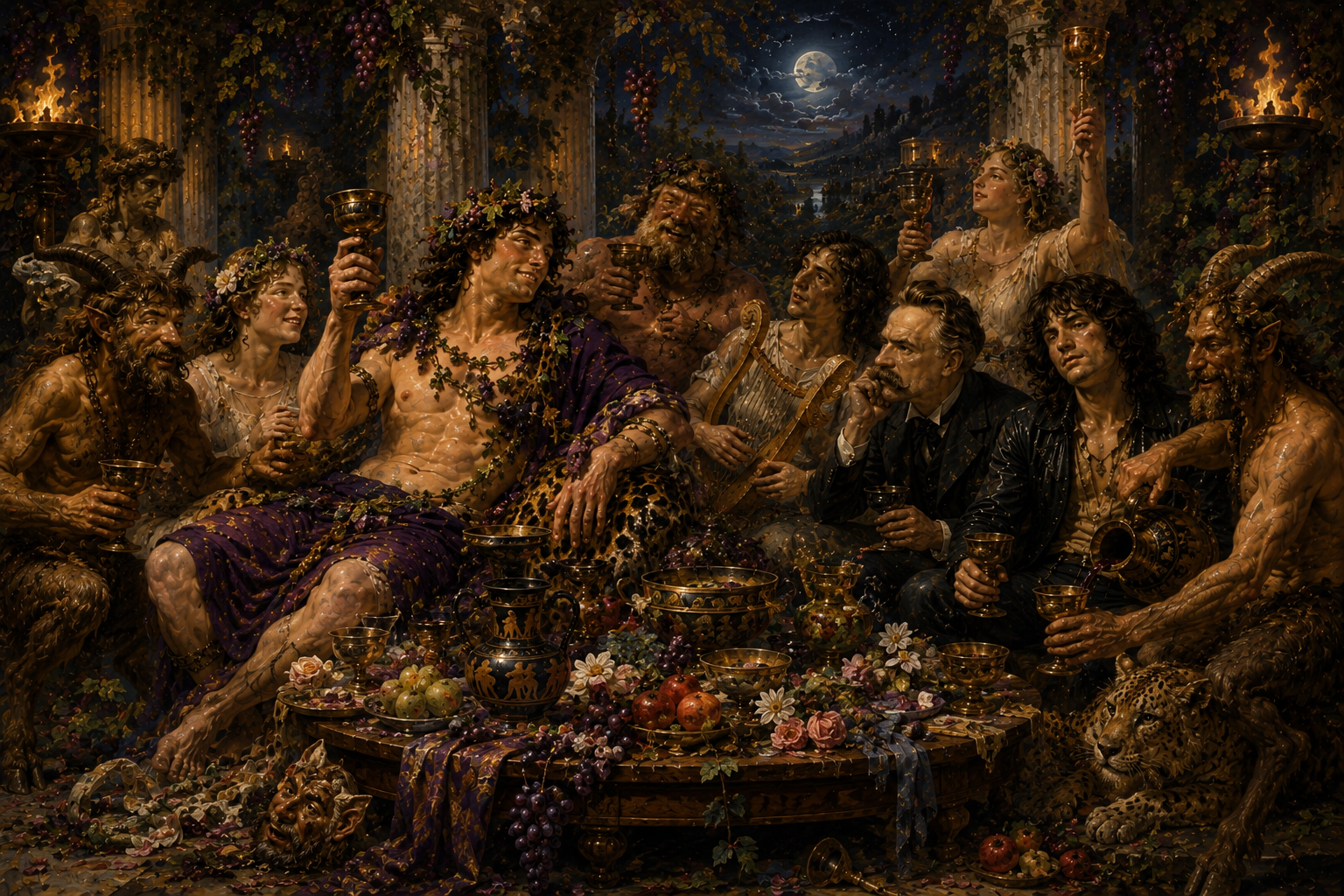
Still more heroic are the blessings which Musaeus and his son bestow upon the righteous from the Gods. They conduct them into Haides, and lay them on couches, and establish a kind of symposium of saints, and set garlands on their heads, and make them live for ever in a state of intoxication, esteeming the fairest reward of virtue to be an eternity of drunkenness. […] But the most astounding of all these arguments concerns what they have to say about the Gods and virtue. They say that the Gods, too, assign misfortune and a bad life to many good people, and the opposite fate to their opposites. Begging priests and prophets frequent the doors of the rich and persuade them that they possess a God–given power founded on sacrifices and incantations. If the rich person or any of his ancestors has committed an injustice, they can fix it with pleasant things and feasts. Moreover, if he wishes to injure some enemy, then, at little expense, he’ll be able to harm just and unjust alike, for by means of spells and enchantments they can persuade the Gods to serve them. And they present a hubbub of books by Musaeus and Orpheus, offspring as they say of Selene and the Muses, according to which they arrange their rites, convincing not only individuals but also cities that liberation and purification from injustice is possible, both during life and after death, by means of sacrifices and enjoyable games to the deceased which free us from the evils of the beyond, whereas something horrible awaits those who have not celebrated sacrifices. (Plato, Republic 363c; 364a–365b)

