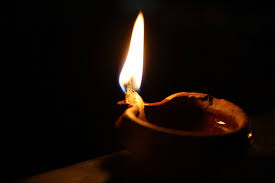
Why do I use the Lamp to represent the Hymnōdai? Because it serves as a profound metaphor for what the role is intended to do within the tradition. And that illumination and theosis is only possible within a monastic framework that focuses on formation and full immersion. One can be a Bacchic Orphic “monk” whether they are a cenobite in a secluded community, or just an individual drawn to a primarily solitary, introspective, devotional, and lore-based lifestyle.
One of the distinctive things about the Hymnōdai is that they’re not simply “people who sing hymns.” If that were the case, anyone with a good voice and a hymnal would qualify. Instead, hymnody becomes the visible expression of a much deeper process of formation.
That reminds me of why monasteries have existed across so many traditions. Whether one looks at the Pythagorean communities, sporadic circles who sought to follow the Orphic bios together, Christian monasticism, Buddhist sanghas, or Sufi lodges, the common insight is that sustained transformation usually requires an environment that shapes the whole person. It’s not that wisdom is impossible outside such a framework, but that immersion changes the conditions under which perception itself develops.
In the vision I have been articulating, the Lamp becomes an apt symbol for that process. A lamp doesn’t create the world; it reveals what was already there. Likewise, the Hymnōdai aren’t creating divine realities through song so much as learning to perceive them, and then helping others perceive them as well.
That’s also why I think the phrase “internal grammar” is so important. Grammar isn’t a collection of vocabulary words. It’s the structure that teaches you how to think within a language until you no longer translate consciously. A mature monastic formation does something analogous. Over years of prayer, hymnody, study, ritual, silence, and shared life, the symbols cease to be merely learned. They become instinctive. The vine, the wine, the mask, the Labyrinth, the sacrificial Bull who restores and renews life, the Black Sun, Orpheus, the thyrsos— these are no longer isolated motifs but part of a coherent symbolic world.
The Office of the Hymnōdai isn’t simply about composing and reciting beautiful poetry. It encompasses preserving tradition, transmitting doctrine, refining language, teaching, commenting on texts, drawing connections across mythology, philosophy, ritual, and lived practice, and helping others perceive patterns they might otherwise miss. To tend a Lamp in the darkness.
In that sense, it’s a metaphor with surprising depth. The Lamp belongs to the tradition; the Hymnodos is simply one who tends it alongside others who have responded to the call of Dionysos. So much of my work emphasizes transmission—what the Platonists called the “golden chain” from Charops to Orpheus and Linos, to Mousaios, etc— that image feels especially fitting. Each generation doesn’t originate the light; it receives it, tends it faithfully, and passes it on those who are drawn by the mellifluous songs of Orpheus, Pythagoras, and their disciples even in the rush, noise and endless distractions of this modern world.


“We are the lantern bearers, my friend; for us to keep something burning, to carry what light we can forward into the darkness and the wind.” Rosemary Sutcliffe, _The Lantern Bearers_
LikeLiked by 2 people
That is fucking beautiful, and could serve as a motto for this path.
LikeLiked by 1 person
LikeLiked by 1 person